On 18 June 2026, India launched the world’s first Shipbreaking Credit Note (SbCN) under the Shipbuilding Financial Assistance Scheme (SBFAS) 2.0. A shipowner who scraps an old vessel at an approved Indian recycling yard receives a credit that can be spent only on a new ship built at an Indian shipyard.
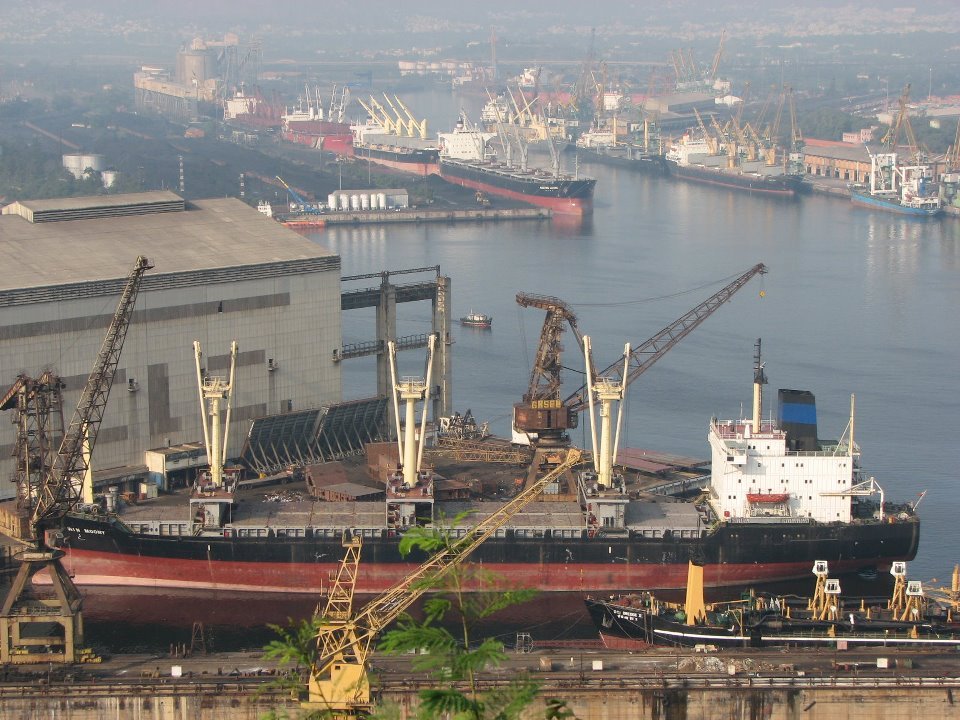
Until now, scrapping and shipbuilding had no financial link. Owners sent end-of-life tonnage to the breaking yards of Alang in Gujarat and ordered replacements from China, South Korea, or Japan. The scrap money stayed in one set of hands; the construction order went abroad. The SbCN forces both transactions into the same domestic circuit.
What the Credit Note Is Worth
The note equals 40% of the vessel’s fair scrap value. To qualify, the ship must be recycled at an Indian yard that meets the Hong Kong International Convention for the Safe and Environmentally Sound Recycling of Ships (HKC), the International Maritime Organization (IMO) treaty that took effect on 26 June 2025, 16 years after it was adopted. The credit is issued only once demolition is fully complete, not while it is under way, which stops an owner from claiming a benefit on a job left half-finished. The scrap value is fixed by independent valuation, not the owner’s own estimate.
Redemption and Transferability
The redeemable amount is the lower of the note’s face value or 5% of the new vessel’s fair price, and the order must go to an Indian shipyard registered on the SBFAS portal. If the owner has no plans to build, the note can be sold to another eligible buyer. Credits from several scrapped ships can also be stacked into a single newbuild order, and each note stays valid for three years. The Directorate General of Shipping manages the process through a digital module that tracks issuance and redemption. The government itself compares the SbCN to the consumer vehicle scrappage scheme, where a driver earns a rebate for retiring an old car. The maritime version applies the same trade-in incentive to assets worth hundreds of crore. Transferability and stacking matter because the firms that scrap ships are rarely the ones that build them. For the credit to generate a newbuild order, it has to be able to move from recycler to buyer.
Budget and Eligibility
Of the roughly ₹44,700 crore the Cabinet approved in late 2025 for shipbuilding assistance and capacity building, about ₹4,001 crore is earmarked for the credit note. Over a decade the assistance arm is expected to back projects worth around ₹96,000 crore, and the scheme runs until 31 March 2036. A scrapped ship counts only if its recycling permission was granted on or after 24 September 2025. Both Indian-flagged and foreign-flagged vessels qualify, as long as they are broken in India at a compliant yard. Subsidised newbuilds must clear a domestic-content floor of at least 30%, preferably 40%, so the subsidy reaches Indian steel, components, and labour rather than imported sub-assemblies. A separate Shipbuilding Development Scheme, worth about ₹19,989 crore, funds yard infrastructure and modernisation, alongside a new National Shipbuilding Mission to coordinate the effort.
The Hong Kong Convention Link
Before the HKC came into force on 26 June 2025, Alang competed mainly on price against beaching yards in Bangladesh and Pakistan, often at a cost to worker safety and the local coastline. Old hulls carry asbestos, heavy metals, hydrocarbons, and ozone-depleting substances; the HKC requires each vessel to carry an inventory of those hazardous materials before it can be sent for recycling. Compliant recycling carries higher operating costs because of those obligations. A certified yard that invests in safe practices needs a reason for owners to choose it over a cheaper, non-compliant alternative. The 40% credit is that reason. A certified yard must hold a valid authorisation, draw up a recycling plan for each vessel, and account for the hazardous materials aboard before cutting begins. By paying owners to meet those obligations rather than avoid them, the scheme channels business to authorised facilities.
The First Credit Note and India’s 2047 Shipbuilding Goal
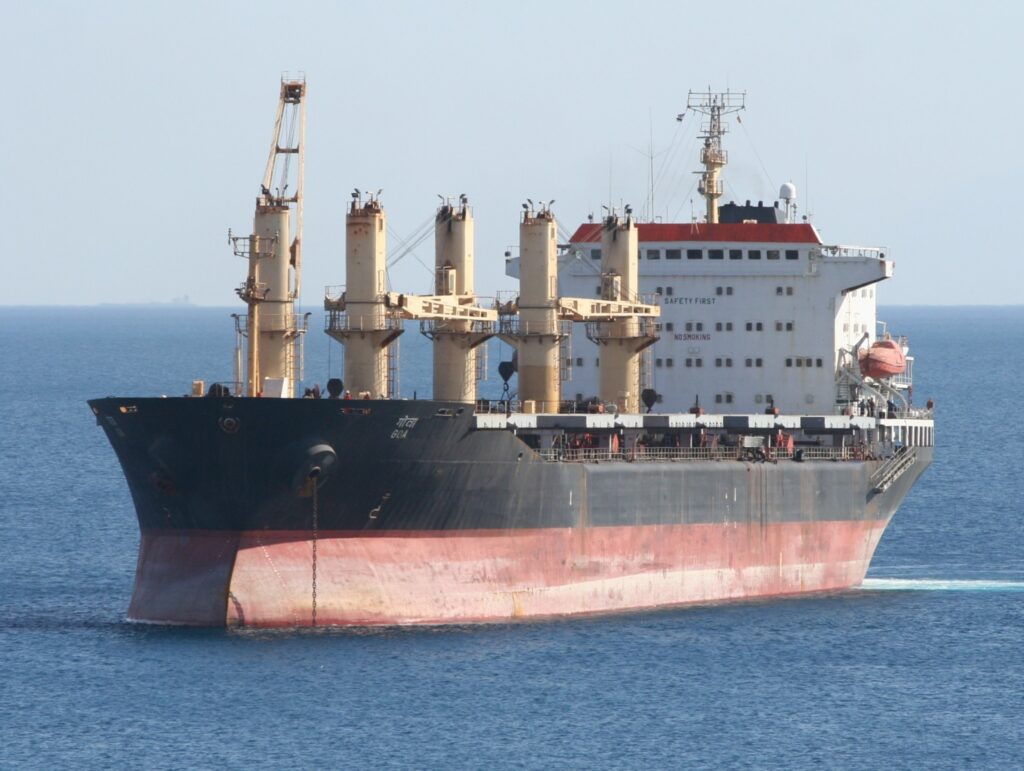
The first credit note has already been issued. On 2 June 2026, the government granted a credit note worth ₹29.81 crore to Bella Shipping India Pvt Ltd after the company completed the environmentally compliant recycling of a Capesize bulk carrier at an Indian yard. The note is valid until May 2029. A Capesize carrier is one of the largest classes of dry-bulk vessel, too big to transit the Panama or Suez canals, so even a single ship generates a substantial scrap value. According to the Economic Times, the same vessel was confirmed as the first recipient under the SbCN scheme. The Maritime Amrit Kaal Vision 2047 sets the goal of placing India among the world’s top five maritime and shipbuilding nations by the centenary of independence. China, South Korea, and Japan currently take the bulk of global newbuild orders, and India cannot easily undercut their yards on price. Keeping recycling revenue at home and converting it into domestic orders is one lever that does not depend on matching East Asian cost structures. A global shift to cleaner propulsion is expected to retire and replace tens of thousands of vessels over the coming decades, and India wants a share of the construction, not just the dismantling.
The Capacity Constraint
A credit capped at 5% of a newbuild’s price, drawn from 40% of a scrap value that is itself a fraction of construction cost, can tip a buyer who was already weighing an Indian order. It cannot build the yards that do not yet exist, and yard capacity is the binding constraint. The government’s own projection puts Indian commercial shipbuilding at about 4.5 million gross tonnage a year only by 2047. If Indian shipyards cannot deliver vessels on time and on cost, the note becomes a tradeable asset that recyclers sell on for its market value. That outcome is not failure, but it falls well short of the closed domestic loop the scheme is designed to create. Whether the loop closes depends less on the credit note than on the rest of the same package: the shipbuilding clusters, capital support, and credit-risk coverage meant to make Indian yards competitive enough to absorb the demand the SbCN tries to generate.
Note: This explainer has been researched, edited, and fact-checked by India’s World staff and prepared with AI assistance.