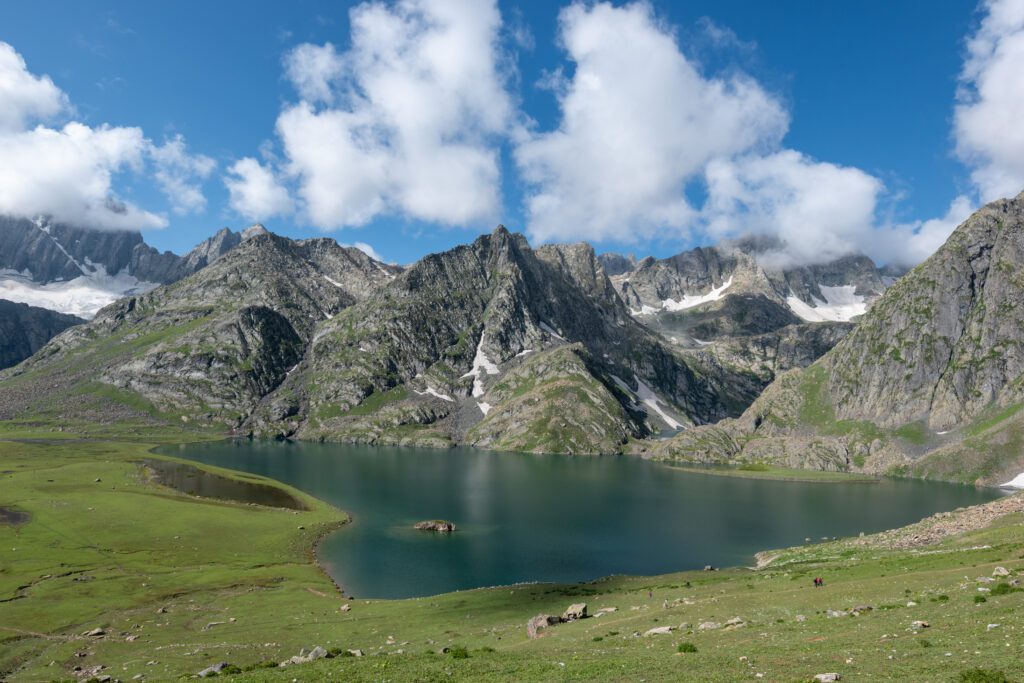
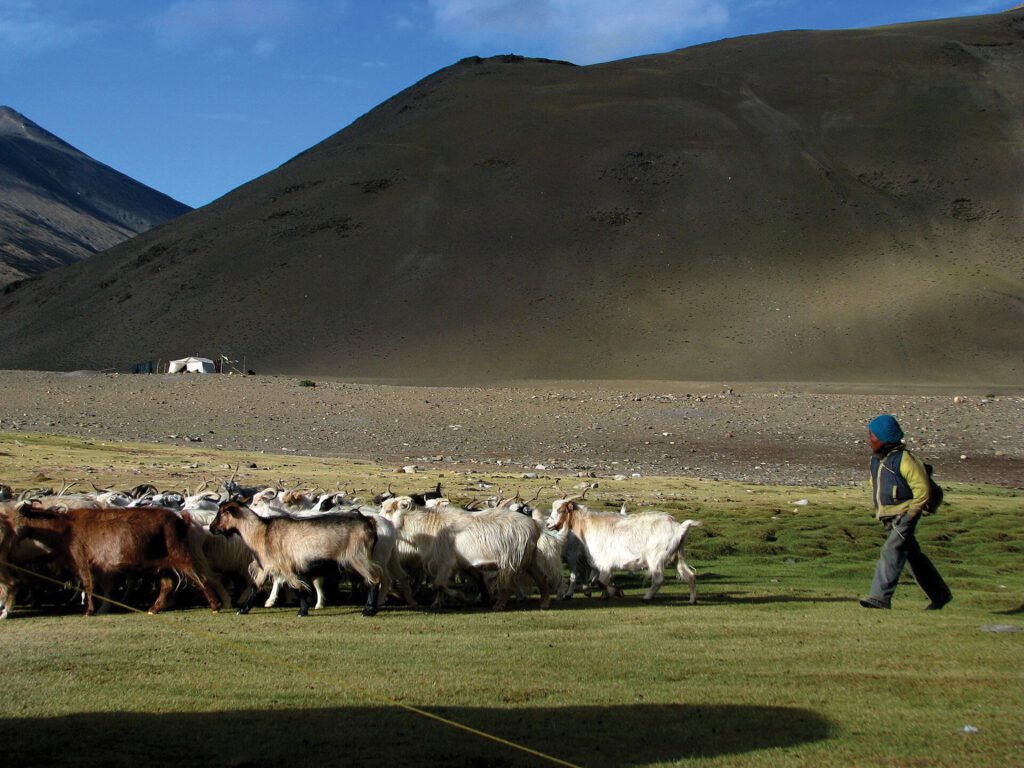
For centuries, pashmina has been prized as one of the world’s finest textiles, adorning emperors, aristocrats, and fashion icons. Yet the future of this iconic fabric may be decided not in fashion capitals, but on a remote Himalayan frontier. Behind every shawl lies a fragile ecosystem increasingly threatened by climate change, border tensions, and competing development priorities.
William Moorcroft, a British veterinary surgeon who travelled across the Western Himalayas on behalf of the East India Company between 1819 and 1825, spent the winter of 1822–23 in Srinagar. There, he documented in remarkable detail the thriving pashmina shawl industry, estimating that “the whole value of shawl-goods manufactured in Kashmir” was around £300,000. As can be guessed, the East India Company was pretty keen to secure a share. By the 1820s, the British were already attempting to control the pashmina wool trade and had smuggled a small number of pashmina goats out of Ladakh and Tibet, though most perished on the way to Europe. However, Moorcroft’s ambitions, as are obvious from his travelogues, did not start or end with the EIC. He diligently copied shawl designs and sent them over to his friends and contacts in England. This transfer of knowledge would have far-reaching consequences for the global shawl trade in the decades that followed.