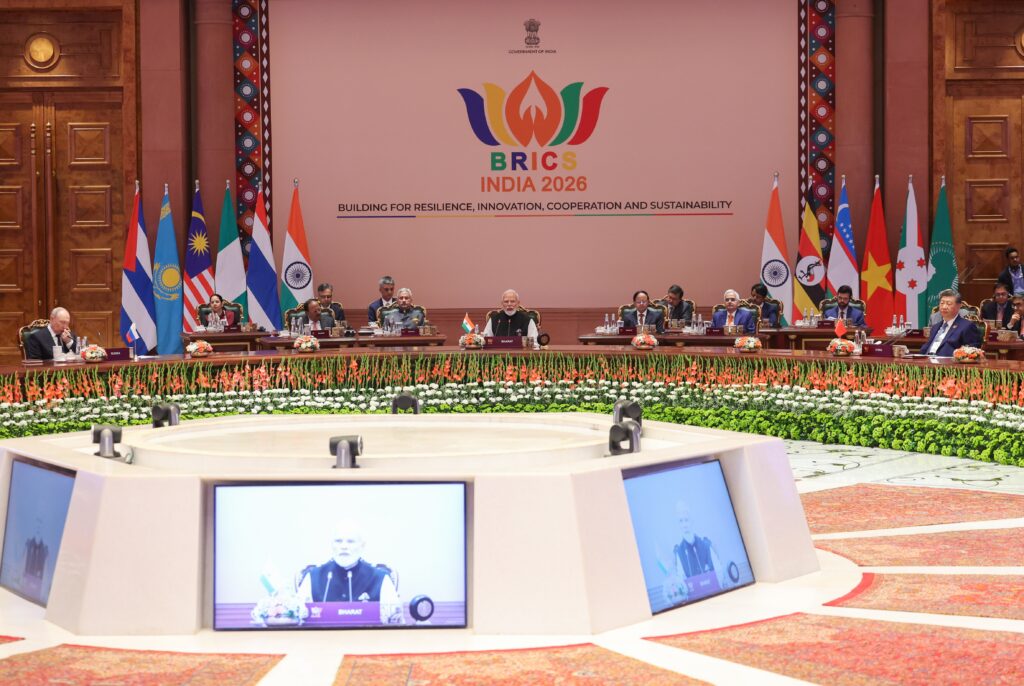
As the 18th BRICS summit concluded in New Delhi, the expanded 11-member grouping managed to produce a joint declaration despite sharp differences among its members. The declaration covered global governance, trade, finance, technology, and development, while reaffirming the group’s commitment to a more representative international order. India also secured consensus at a summit held against the backdrop of wars, trade tensions, and wider uncertainty over the direction of global politics.
But consensus is only part of the test. The larger BRICS becomes, the harder it is to reconcile the interests of its members. The New Delhi Declaration reflects this tension. It is broad in its range of issues, while its language on some of the conflicts dividing members remains carefully negotiated. The summit also brought into sharper focus the question of how India can strengthen BRICS without allowing the grouping to narrow its own strategic choices, particularly as China’s influence within the enlarged forum grows.
For India, therefore, the question is not simply whether BRICS remains relevant. It is what value New Delhi can draw from it. The grouping gives India a forum to engage China and Russia, work with a wider group of emerging economies, push for reform of global institutions, and strengthen its role in shaping the Global South. At the same time, India has little interest in seeing BRICS become an anti-Western bloc or an arrangement that limits its wider foreign-policy options.
India’s year as BRICS chair has put this balance to the test. New Delhi sought to emphasise practical cooperation alongside its agenda of reforming global governance and giving the Global South a greater role in shaping international rules. Prime Minister Narendra Modi called for developing countries to move from being rule-takers to rule-shapers, while the summit declaration committed the expanded grouping to deeper cooperation across its three pillars.
To examine what BRICS means for India after the New Delhi summit, India’s World invited four eminent Indian foreign-policy experts to reflect on the grouping’s relevance and what India stands to gain from remaining invested in it.
1. Nirupama Menon Rao
Nirupama Menon Rao is a former Indian foreign secretary and ambassador to the United States, China, and Sri Lanka.
BRICS matters to India not because it promises a replacement world order, but because it helps withstand any single power or coalition from monopolising the existing one. In an age of unstable multipolarity, it gives India additional room for manoeuvre.
The first gain is strategic autonomy. Membership enables India to engage China and Russia in a consequential non-Western forum while deepening its partnerships with the United States (US), Europe, Japan, and Australia. These relationships are not mutually exclusive. The Quad addresses specific Indo-Pacific security concerns; BRICS speaks to India’s interest in a more representative distribution of global power. Neither defines the entirety of Indian foreign policy.
Second, BRICS amplifies India’s claim to speak for – and with – the Global South. New Delhi wants developing countries to become rule-shapers in international finance, artificial intelligence, digital governance, biotechnology, and critical technologies. Its objective is reform without rupture: greater representation in the UN, IMF, and World Bank, without dismantling institutions that India continues to need.
Third, BRICS offers practical instruments of economic resilience. India supports national-currency settlements, interconnected payment systems, diversified supply chains, and development financing. These can reduce exposure to economic coercion without requiring an economically premature common currency or exchanging dependence on a dollar-centred system for dependence on a China-centred one.
The Delhi summit also demonstrated BRICS’s diplomatic utility. India secured a unanimous declaration despite sharp Iran-UAE differences over West Asia. Consensus was achieved through deliberately general language – revealing both the grouping’s value and its limitation. BRICS can keep difficult conversations alive, but it struggles to assign responsibility or organise collective action when members’ interests collide.
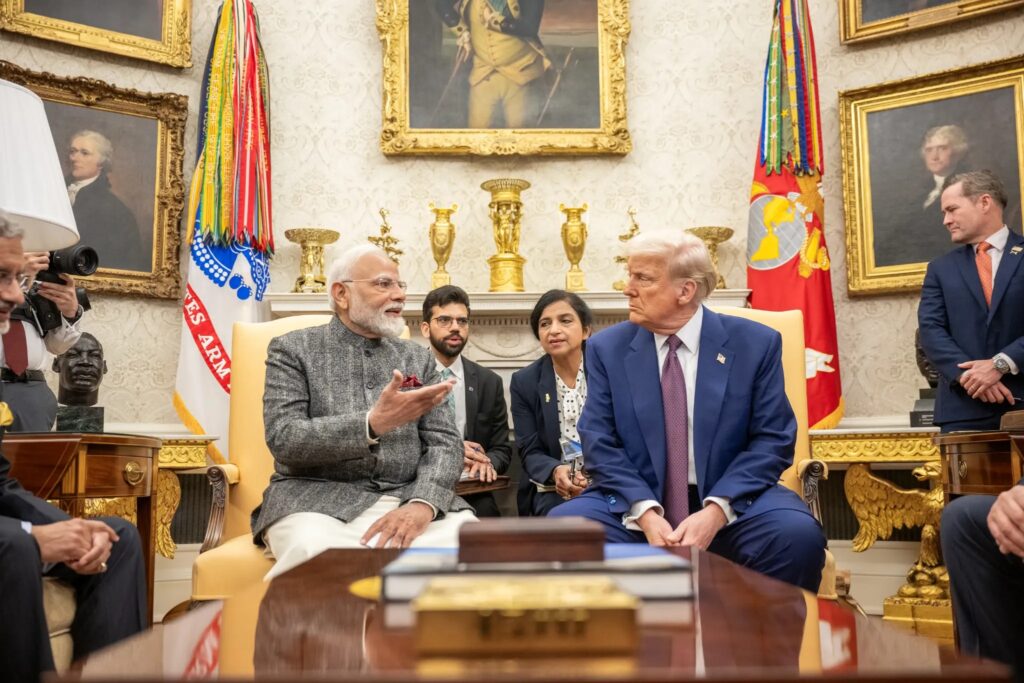
The Modi-Putin meeting reaffirmed a relationship India value in energy, defence, and strategic terms without signalling alignment with a Russian-Chinese bloc. The Modi-Xi meeting reopened political space after years of estrangement, but produced managed stabilisation rather than a strategic reset. BRICS thus remains one of the few settings in which India can practise competitive coexistence with China.
As C. Raja Mohan has suggested, India’s achievement may have been to keep BRICS “boring”: practical, plural, and resistant to ideological overreach. The real test will come during China’s 2027 presidency. India will support greater Global South representation, but resist the conversion of BRICS into a China-led anti-Western pole.
What India gains, ultimately, is not another camp to join, but another means of avoiding confinement within any camp.
2. Rajiv Bhatia
Rajiv Bhatia is a distinguished fellow at Gateway House. He served as India’s High Commissioner to South Africa from 2006 to 2009.
BRICS is the creation of India and four other nations. When their collaboration, a joint enterprise, began, there was no expectation that it would emerge, 20 years later, as a major plurilateral grouping in the world. The very fact of its survival, the growth in its influence, its tangible achievements, the expansion of its membership, its attractiveness for other nations that are keen to join it, and the global notice its summits receive – all this combines to make the captioned question somewhat irrelevant. Indeed, BRICS continues to be relevant to India’s interests and its relevance has undoubtedly increased in the past two decades.
BRICS has enabled India to showcase its strategic autonomy, practise its foreign policy of multi-alignment, advance the cause of reform of international governance institutions, and project its leadership capabilities concerning the Global South. Besides, gradual but incremental progress in intra-BRICS cooperation in diverse domains, covering its three pillars – political and security, economic and financial, cultural and people-to-people cooperation – has also brought benefits to its members, including India.
Yet, there is a pressing need to avoid both excessive romanticism and innate scepticism about BRICS. It is neither a panacea for a myriad of problems afflicting the global order, nor is it a worthless talk shop. A realistic perspective, imbued with some optimism, should allow us to correctly appraise the challenges and potential of BRICS as a counterweight to Western dominance represented by the G7, and as the apex forum of the Emerging Markets and Developing Countries (EMDCs).
In fact, the challenges have become more serious than before. Two continuing major wars of our time – in Ukraine and in the Gulf – involve four members of BRICS: Russia, Iran, Saudi Arabia, and the United Arab Emirates (UAE). The grouping has managed to define and project its reform agenda, but has failed to create global consensus and generate necessary political will among the key actors for its implementation. The expansion has turned internal decision-making more complex. Besides, its gains like the New Development Bank (NDB), the Contingent Reserve Arrangement (CRA), and new cross-border payment systems await further concrete progress.
At this critical juncture in its journey, BRICS undoubtedly needs that a believer like India and other fellow travellers remain fully invested in it. The just-concluded 18th summit in New Delhi has sent out this powerful message to the BRICS family and the world at large. Let us hope it will be heard loud and clear.
3. Mohan Kumar
Mohan Kumar is a former Indian ambassador to France and currently dean/professor at O.P. Jindal Global University.
Consensus was by no means preordained and unanimity far from assured. But it must be acknowledged that India pulled it off. The just-concluded 18th BRICS summit, coming after the successful holding of the G20 summit in 2023, demonstrates two incontestable facts: one, the sheer convening power of India under Prime Minister Modi; and two, the role of Indian diplomacy led by External Affairs Minister S. Jaishankar in forging consensus among adversaries.
The template followed by India for the BRICS summit mirrored that of the G20. For instance, close to 400 meetings were conducted prior to the final summit. BRICS contemplates three pillars, i.e. political and security, finance and economy, and cultural and people-to-people cooperation. India took an early call to focus on the second pillar, i.e. finance and economy, and in fact broadened this track to include, inter alia, technology, agriculture, and industry. The collective outcomes of the numerous meetings held in India constitute an excellent roadmap for BRICS in the years ahead. In this context, the proposal made by Prime Minister Modi for a digital repository is a good one and will ensure that proposals made from one summit meeting to the next are not forgotten. The various centres of excellence, the guiding principles of good practice, and things like the start-up fund are concrete outcomes under India’s stewardship which will provide a ballast for future cooperation among BRICS members.
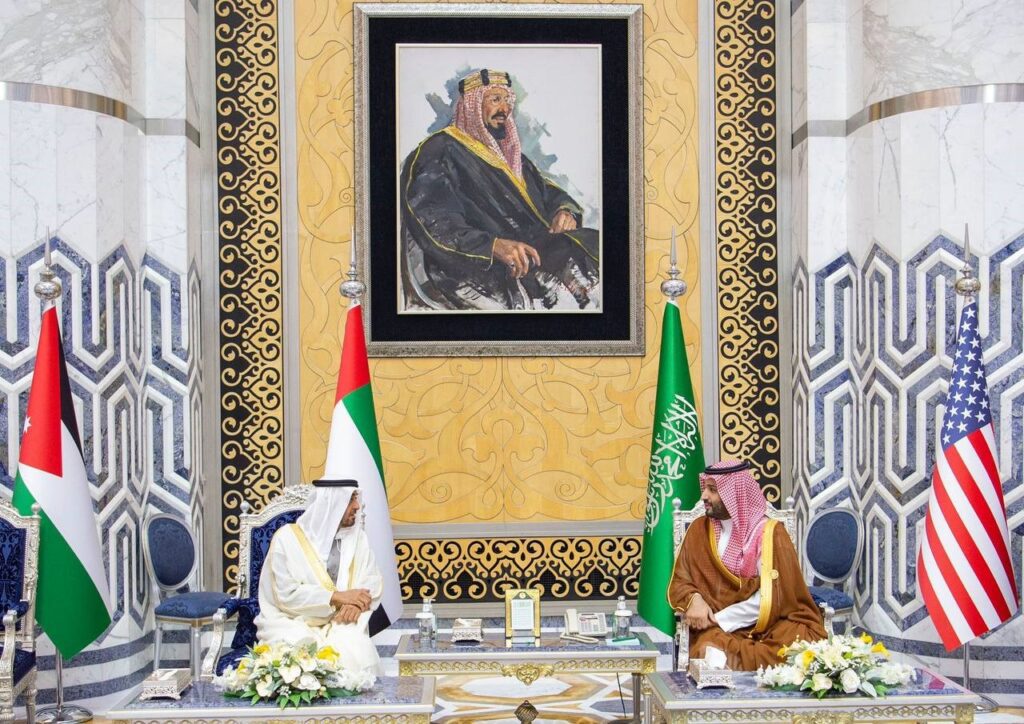
This summit was taking place against the backdrop of cascading geopolitical turbulence. So, the key lay in not letting geopolitics derail the summit. This is where Indian diplomacy played a vital role. By convincing Iran, the UAE, and Saudi Arabia that finger-pointing and naming countries in the final declaration would be counterproductive, India achieved major success. The bilateral meeting between the UAE and Iran was also very welcome, at a time when meetings elsewhere between adversaries were proving next to impossible.
The 18th BRICS summit held in Delhi leads one to the following geopolitical observations:
- India has “convening power” and its diplomacy is quite capable of bridging differences and achieving consensus under difficult circumstances.
- BRICS must avoid the trap of becoming anti-West in its orientation; instead, it should and ought to be pro-BRICS.
- It is clear that BRICS must make haste slowly when it comes to further membership expansion and avoid the temptation to have a permanent secretariat at least for now.
- There must be joint commitment among all BRICS members not to weaponise trade and technology between themselves.
- In the United Nations (UN), World Trade Organization (WTO), and International Monetary Fund (IMF), the BRICS countries could think of joint submissions aimed at reform and at providing a greater voice for the Global South.
Last, but not least, BRICS must continue to provide an opportunity for all its member countries to enhance their strategic options, rather than diminish them. This will be the real test for unity among all its members.
4. Gulshan Sachdeva
Gulshan Sachdeva is professor and Jean Monnet Chair at the Centre for European Studies, Jawaharlal Nehru University.
If India aspires to remain one of the world’s fastest-growing large economies over the next two decades and emerge as one of the leading pillars of the Global South, it must remain deeply engaged with BRICS. New Delhi will also need to play an active role in shaping the grouping’s future expansion as well as its institutionalisation, both of which appear increasingly inevitable. This does not mean that India will abandon its close partnerships with the US and Europe, which remain crucial for trade, investment, and technology. Rather, this approach is consistent with India’s policy of strategic multi-engagement and reflects the changing character of expanded BRICS itself.
Compared with the repeated crises experienced by the Global North, including the subprime and Eurozone crises, the Global South has witnessed a significant resurgence. It has emerged as a major contributor to the global economy and its growth. The economies of Asia, Africa, and Latin America now account for more than 42% of global gross domestic product (GDP), 65% of global inward investment flows, and about one third of global outward investment. South-South trade has also expanded dramatically, from around $500 billion in 1995 to approximately $7 trillion in 2025. At the heart of this Global South is BRICS. Its members account for nearly 70% of the Global South’s GDP and around 53% of its trade. A substantial part of this economic weight comes from China and India, which together constitute the core of the BRICS.
The way India’s 2026 BRICS presidency has culminated makes clear that New Delhi remains strongly invested in the grouping. This was evident not only in the prime minister’s interventions during the main summit sessions, but also in his bilateral meetings with key leaders, including those of China, Iran, and Russia. He proposed the establishment of a BRICS troika, promoting 10 proposals for global governance reform, and transforming the Global South from rule-takers into rule-shapers. If New Delhi is confident about its Viksit Bharat 2047 narrative, it must also start working towards deeper trade integration within BRICS rather than settling for soft commitments and sector-specific initiatives. It should also promote an energy-centred alternative financial architecture, explore alternatives to OECD DAC development architecture, and develop a BRICS connectivity strategy. If India and China genuinely believe, as their leaders have repeatedly stated since the Kazan summit, that they are development partners, deeper cooperation between the two countries could benefit not only their bilateral relationship but the wider Global South. In the process, these two large economies can reinforce each other’s growth for decades to come.