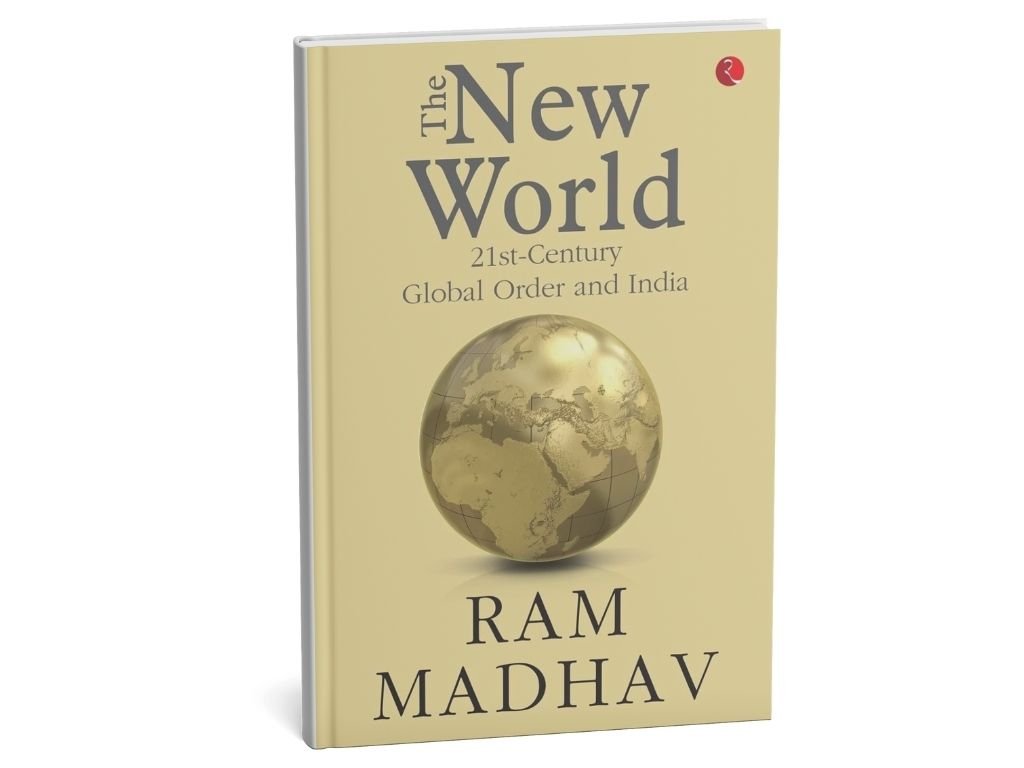
The New World: 21st Century Global Order and India, by Ram Madhav, a central figure of India’s ruling establishment, explores how a rapidly changing world has arrived at a pivotal crossroads. The 70-year-old order is crumbling, slowly yet steadily. The Western-led liberal hegemonic order is under challenge because of its obsession with internationalism and its rejection of national self-identity. According to Madhav, this is a rare opportunity for rising nations like India to play a decisive role in shaping what comes next.
Madhav’s most novel contribution is his explanation of how the emerging world order will extend beyond the traditional state-centric view of international relations. He describes the emergence of a heteropolar world order, where non-state actors will decisively influence policies and challenge the sovereignty of states.
He also criticises the approaches of previous governments to global affairs as romantic and lethargic. At the same time, he proposes a paradigm shift towards a pragmatic and realist approach to foreign policy. According to the author, the shift from passive non-alignment to proactive multi-alignment constitutes a doctrinal change. The book is not just limited to explaining history; it also provides a strategic blueprint to enhance India’s status in the world order. Madhav argues that India needs not only soft or hard power but an integration of both to project smart power. With the world changing rapidly, he advocates for a quantum leap in multiple domains—from the economy to biotechnology, from artificial intelligence to “Dharmocracy.”
The book’s most original and central concept is Dharmocracy, which, according to Madhav, is India’s unique contribution to global political wisdom. He defines Dharmocracy as a higher form of governance rooted in dharma, the righteous path. The concept is derived from ancient ideas, including Rajdharma (the ethical duty of a ruler), Kautilya’s Mandala, and the Upanishadic ideal of Vasudhaiva Kutumbakam (the world is one family).
Although the book is engaging, it suffers from contradictions. For instance, the author advises against the abandonment of value-based romanticism, yet introduces Dharmocracy—a value-based framework. The book also focuses more on aspirational ideas rather than concrete policy frameworks required for transformation. Madhav’s primary focus is on what India should become, but he offers little on how to overcome existing challenges.
Ultimately, the book provides a timely, ambitious, thought-provoking set of ideas, free from heavy-handed jargon.