India is essentially a middle power seeking to expand its capabilities and acquire the status of a global power. The principal distinction between middle and global powers lies in the geographical scope of their capacity to project power and influence. Global powers can shape political, economic, and security outcomes across multiple regions, whereas middle powers generally seek substantial influence, if not dominance, within their immediate regional environment.
Much has changed within India with the rise of the Bharatiya Janata Party ( BJP) and the emergence of a more assertive posture, domestically and internationally. This political transformation has coincided with India’s post-liberalisation economic growth, which has elevated it into the ranks of the world’s largest economies. Yet the central strategic challenge confronting India has remained remarkably consistent throughout its modern history: how to cope with an adversarial Pakistan and a more powerful China within its region while navigating a global order dominated by the far more powerful United States.
India possesses significant economic and military capabilities because of the sheer size of its territory, population, and economy. Indeed, its material capabilities exceed those of most conventional middle powers. Yet India has been unable to establish regional hegemony in South Asia. To put it bluntly, India has the aspirations of a global power and capabilities greater than those of non-nuclear middle powers such as Canada, Australia, and Japan. Yet it does not enjoy one of the principal privileges normally associated with great powers: primacy in its own region. Thus, although India is more powerful than Canada and many other middle powers, it cannot yet be considered a global power because it lacks both regional primacy and the capacity to project power and influence consistently across multiple regions.
This is largely because of China’s successful offshore-balancing strategy in South Asia. By maintaining a close military partnership with Pakistan, strengthening Pakistan’s military and economic capabilities, and cultivating relations with Sri Lanka, Bangladesh, the Maldives, and Nepal through the Belt and Road Initiative, China, without fully dominating South Asia, has successfully prevented India from establishing uncontested regional hegemony.
China also poses a direct challenge to India’s territorial sovereignty, as demonstrated by the deadly confrontation in the Galwan Valley in 2020 and continuing Chinese pressure on and claims involving Arunachal Pradesh. The strategic imbalance is compounded by the disparity in their economic and military resources. China’s economy is approximately five times larger than India’s, while its military capabilities are expanding at a substantially faster rate. India thus faces an enduring grand-strategic problem: it must manage a stronger rival that threatens its borders and constrains its influence in its own neighbourhood.
India’s modern strategic history has consequently been shaped by a persistent tension: the need to overcome domestic weaknesses while pursuing global aspirations in an international system populated by wealthier and more powerful states. The generic grand strategies available to middle and weaker powers are well known: balancing, bandwagoning, hedging, and niche diplomacy. India has generally pursued a hybrid strategy combining selective bandwagoning with persistent hedging.
During the early decades after independence, India presented non-alignment as its principal grand strategy in an international system defined by Cold War rivalry and ideological polarisation. Beneath the rhetoric, however, India increasingly relied on the Soviet Union for diplomatic support, security cooperation, and military equipment, while maintaining relations with the US and benefiting from American economic, technological, educational, and, on occasion, military assistance.
Several of India’s important developmental achievements – including the Green Revolution and the establishment of leading technical institutions such as the Indian Institutes of Technology – were undertaken with substantial American cooperation. The US also provided military assistance after Indian forces suffered serious setbacks in the 1962 border war with China. Thus, although India was geopolitically and ideologically more inclined towards the Soviet Union, non-alignment in practice was less a position of strict equidistance than a flexible strategy of selective alignment and hedging.
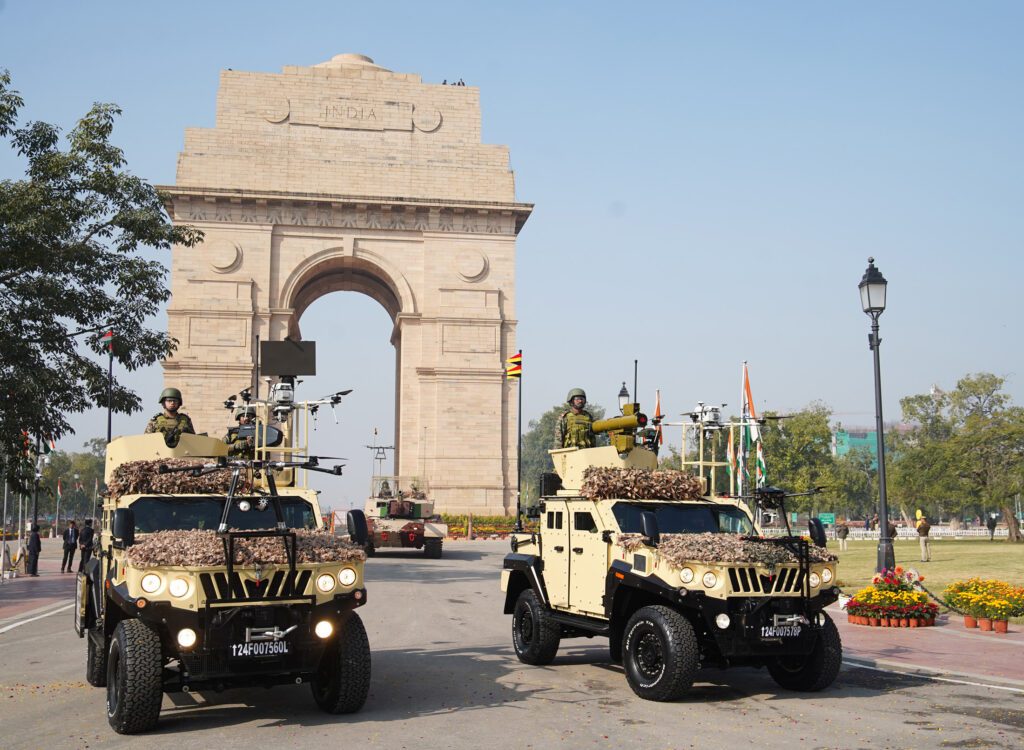
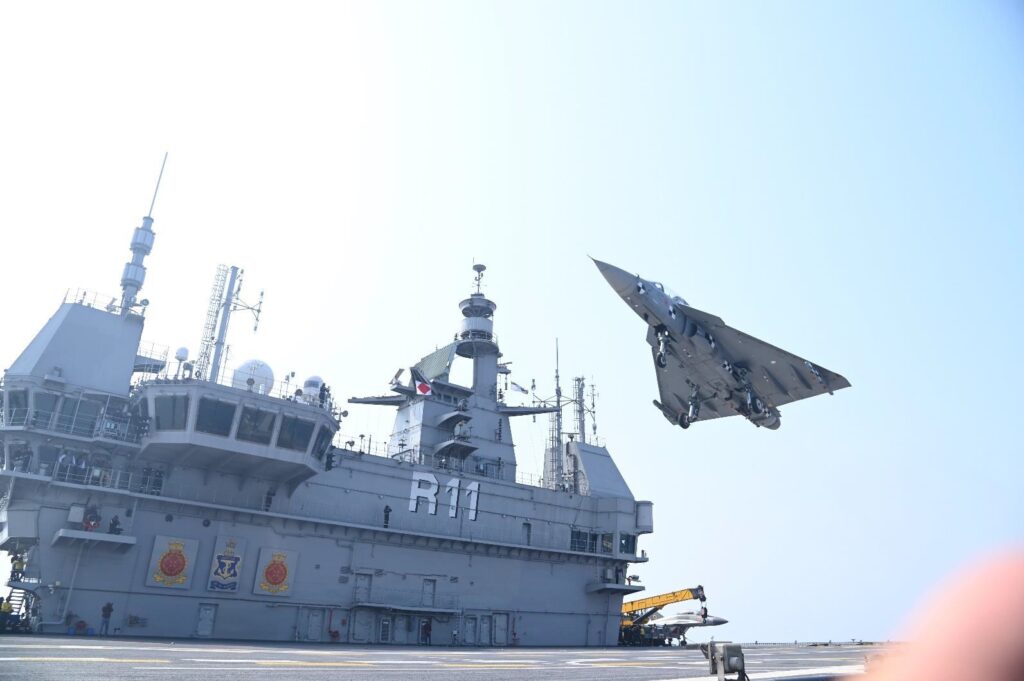
Under PM Modi, India’s strategic rhetoric has changed significantly. Non-alignment has been recast as “multi-alignment”, while the government has repeatedly emphasised Atmanirbhar Bharat, or national self-reliance. Yet this rhetoric coexists with continued dependence on foreign military technology. India seeks jet engines and advanced systems from the US, fighter aircraft from France, and weapons and surveillance technologies from Israel and other suppliers. India has become the world’s second-largest importer of major arms, surpassed only by Ukraine, a country heavily armed and financed by the West while fighting a war that has lasted nearly half a decade. This creates a striking contradiction between dependence on imported weaponry and the forceful rhetoric of self-reliance.
Multi-alignment is therefore better understood as an effort by a still-rising power to balance, diversify, and mitigate its strategic dependencies
Until recently – before the advent of what can only be described as the Trump turmoil in the international system – India spoke with considerable confidence, and at times self-satisfaction, about the transformation of its grand strategy from non-alignment to multi-alignment. Multi-alignment was presented not as a response to strategic weakness or necessity, but as the deliberate policy of an increasingly confident power pursuing its national interests.
New Delhi portrayed this engagement as a matter of choice rather than dependence, directed towards achieving a Viksit Bharat by 2047 and securing a seat at the table of global governance through the reform of multilateral institutions. Multi-alignment thus became both a description of India’s widening partnerships and an assertion that it could navigate great-power rivalry without becoming subordinate to any one power. The key claim was that India now exercised strategic autonomy.
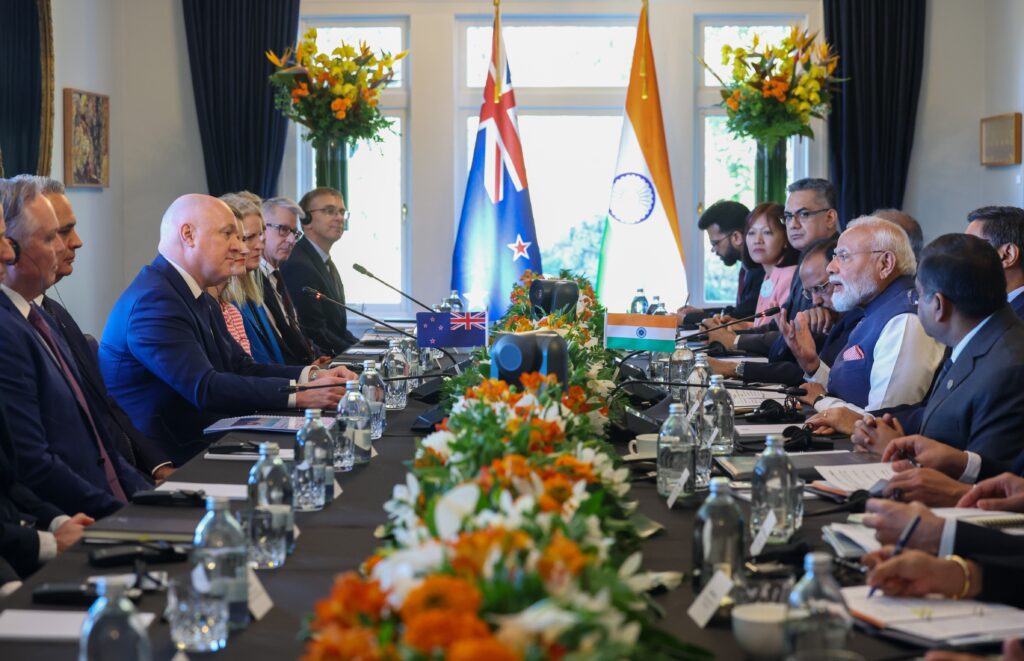
I have argued elsewhere, however, that India is not so much exercising strategic autonomy as pursuing a policy designed to mitigate and manage strategic dependencies. I identified three strategic triangles in which India operates: India-US-Russia, India-China-Russia, and India-China-US. In each, India seeks not to eliminate dependency – which may be impossible – but to balance one dependency against another and prevent any single external power from acquiring excessive leverage over its choices. India therefore practises a complex strategy of hedging, using its relationships with the US, Russia, and China to offset its dependencies on each.
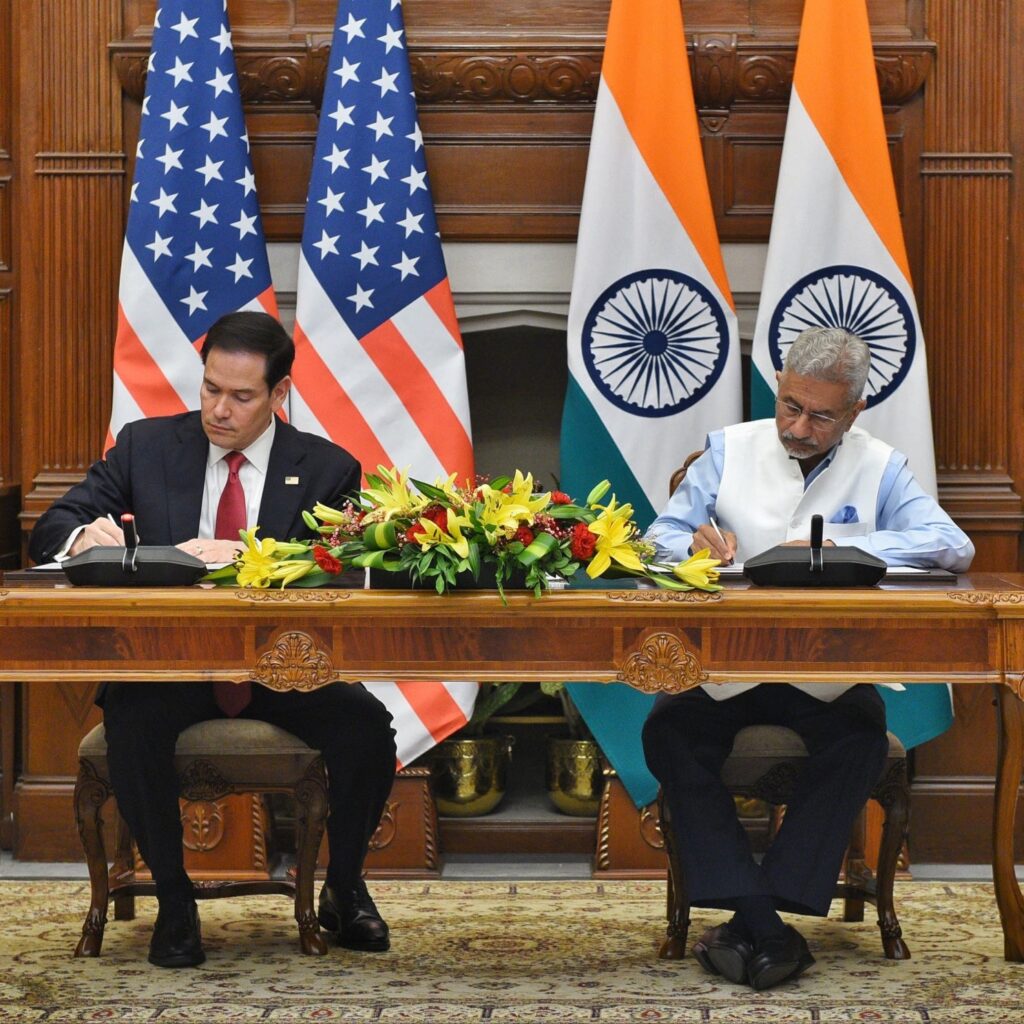
The India-US-Russia triangle illustrates this dilemma clearly. The US has long encouraged India to reduce its dependence on Russian military equipment and, more recently, has pressured New Delhi over purchases of Russian oil. India has attempted to diversify away from the Russian weapons ecosystem without becoming fully dependent on the American defence establishment. This helps explain why it seeks American jet-engine technology and other advanced systems while remaining outside the F-16 and F-35 fighter-aircraft ecosystems. India wants access to Western technology without exchanging dependence on Russia for a potentially more constraining dependence on the US.
The India-China-Russia triangle forms the geopolitical core of the Russia-India-China grouping and, more broadly, BRICS. Although India has moved considerably closer to the US since the India-US Civil Nuclear Agreement, it has continued to participate in these institutions. This allows New Delhi to preserve its relationship with Moscow, maintain a channel of engagement with Beijing, and prevent the Russia-China partnership from evolving into an exclusively bilateral arrangement in which Indian interests are marginalised.
The India-China-US triangle is perhaps the most consequential. It lies at the heart of India’s role in the American Indo-Pacific strategy and Washington’s perception that India is an indispensable partner in balancing China. India’s population, expanding economy, military capabilities, and geographical position have led American strategists to view it as a potential counterweight to Chinese dominance in Asia. India, in turn, has drawn closer to the US because of its deteriorating relationship with China and its need for American diplomatic, technological, and strategic support. Some commentators argue that India has abandoned hedging and moved so far towards bandwagoning with the US that they now call for decentring – and even de-Americanising – Indian grand strategy.
Yet this relationship is also driven by dependency rather than autonomy alone. India needs American support to balance China but does not want that support to become a source of political subordination. It therefore cooperates with Washington through the Quad, defence agreements, military exercises, and technology partnerships while preserving ties with Russia, remaining active in BRICS, and resisting the formal obligations of a military alliance.
To a casual observer, this juggling of relationships may appear to demonstrate strategic autonomy through multi-alignment. A closer examination reveals a more complicated reality. India is managing unavoidable dependencies: on Russia for important elements of its military establishment and energy security; on the US for advanced technology and support against China; and on the wider international economy for trade, investment, and development. Multi-alignment is therefore better understood as an effort by a still-rising power to balance, diversify, and mitigate its strategic dependencies.
In recent months, New Delhi has increasingly emphasised the importance of trust in international relations and strategic partnerships. This language constitutes a thinly veiled, and somewhat passive-aggressive, rebuke to Washington, reflecting Indian frustration with the unpredictability and inconsistencies Donald Trump has introduced into American foreign policy. Yet trust is not the most fundamental requirement for an effective grand strategy. The indispensable starting point is an honest assessment of a country’s capabilities, structural weaknesses, vulnerabilities, and external dependencies.
India unquestionably needs a coherent grand strategy, but developing one must begin with an unsentimental assessment of its material capabilities, structural vulnerabilities, and dependence on other countries for energy, advanced technology, weapons systems, investment, and diplomatic support. For reasons of domestic political convenience, New Delhi cannot simply rebrand the management of these dependencies as the exercise of strategic autonomy; rhetorical inflation cannot substitute for material capability. Only by acknowledging the constraints imposed by domestic weaknesses, regional pressures, and international dependencies can India formulate a grand strategy that advances its interests without confusing aspiration with achievement or diplomatic manoeuvrability with genuine strategic autonomy.