Tea’s recorded history begins in China, where people were drinking Camellia sinensis more than 2,000 years ago. By the Tang dynasty (618–907 CE), tea had moved beyond medicinal and practical uses to become an established part of everyday social and cultural life. From China, tea travelled across Asia and, much later, became a global commodity.
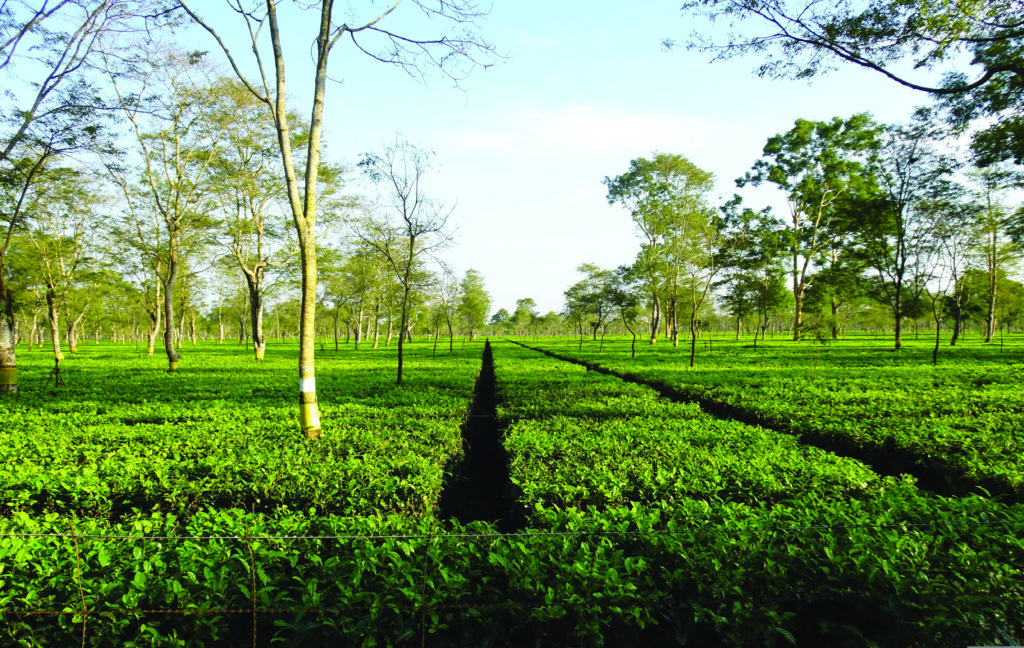
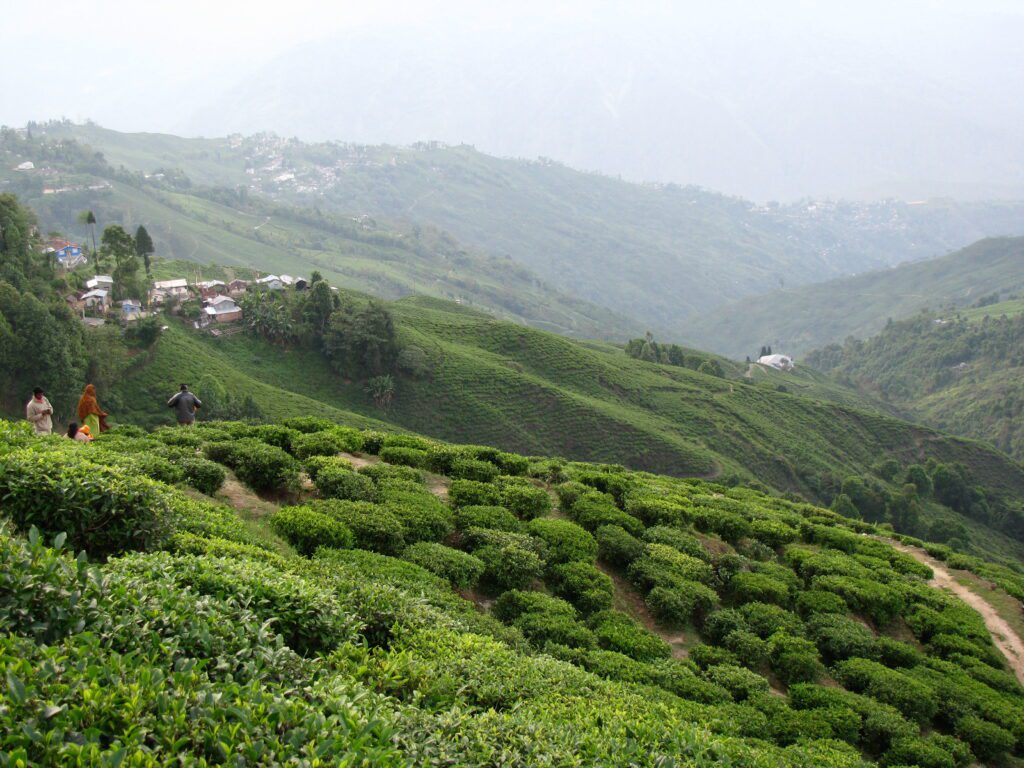
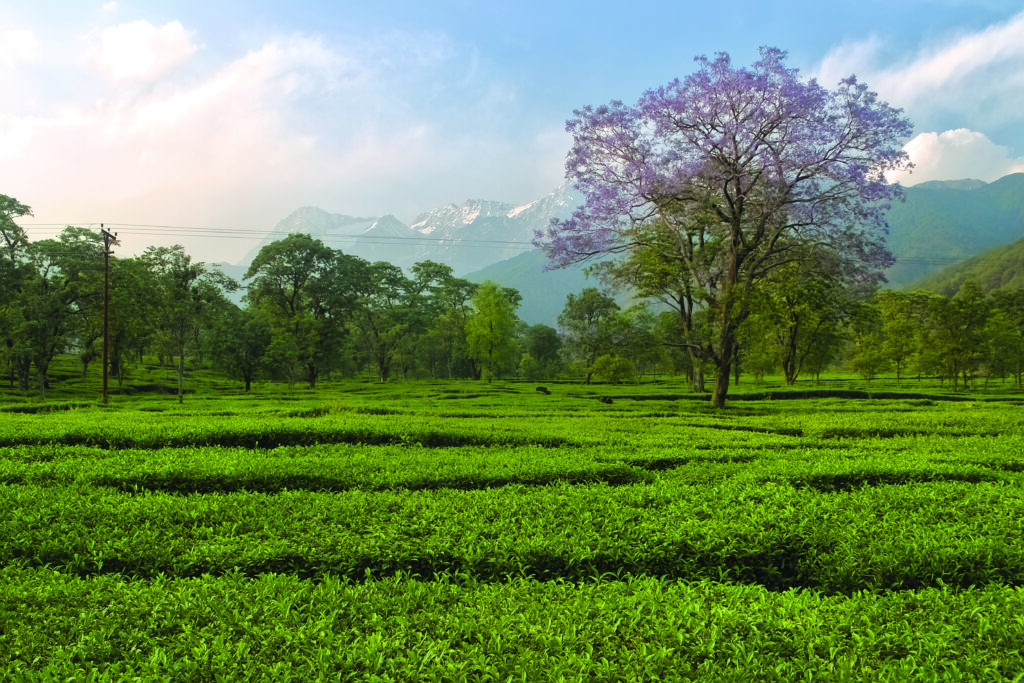
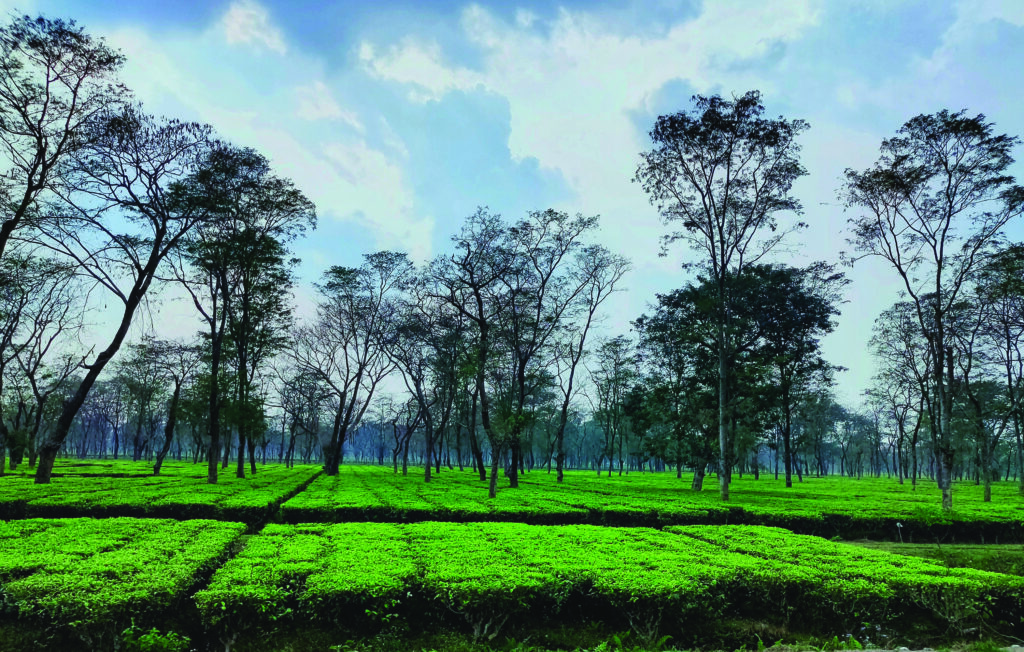
India’s tea story is different. The tea plant was already growing in Upper Assam, and communities such as the Singpho and Khamti knew the leaf, used it as a drink and had their own ways of preparing it. British accounts of the plant date to 1823, when Robert Bruce encountered tea-growing and tea-making practices in Upper Assam. The first English tea garden was established at Chabua in 1837; the Assam Company was formed in 1839, and commercial production began in 1840. From there, tea grew into one of India’s defining plantation industries.
The Tea Plant
All conventional tea comes from one species: Camellia sinensis, a perennial evergreen plant in the family Theaceae. The familiar distinctions between green, black, white, and oolong tea do not generally represent different species. They are largely the result of differences in cultivar, growing conditions and, crucially, processing.
At the broadest botanical level, tea is usually discussed in terms of two major cultivated types: China type, Camellia sinensis var. sinensis, and Assam type, C. sinensis var. assamica. China-type plants generally have smaller leaves and are associated with the long history of tea cultivation in China and Japan. Assam-type plants have larger leaves and are particularly important to the history of tea in India.
India’s commercial tea crop, however, is not simply a collection of wild Assam plants. Modern tea gardens contain numerous selected cultivars, clones and hybrids developed for yield, quality, adaptation and resistance to environmental stresses. Research from India’s tea-growing regions has documented substantial genetic diversity, including material developed through breeding programmes at the Tocklai Experimental Station and other research centres.
Modern genomic research is adding another layer to this story. Researchers have now produced a chromosome-scale genome of TV 1, a prominent Assam-type Indian tea cultivar. The work provides evidence of the evolutionary divergence between Assam- and China-type tea and helps researchers study traits including caffeine production and other secondary metabolites.
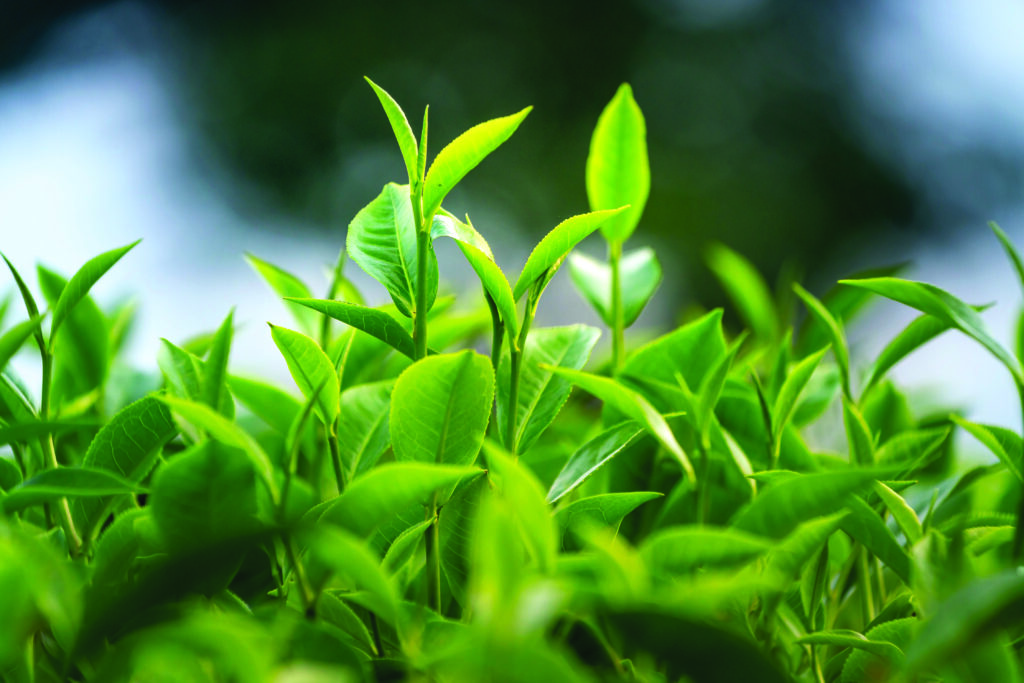
The tea plant also has a very particular harvesting habit. Commercial tea is commonly plucked as a bud and young leaves, rather than allowing the shoots to mature fully. These young tissues are particularly rich in the compounds that contribute to tea’s flavour, aroma and character.
Inside the Tea Leaf
The leaf itself is a small chemical factory. Among its most important constituents are polyphenols, including catechins; caffeine; the amino acid L-theanine; other amino acids; carbohydrates; pigments; minerals; and a large collection of volatile compounds responsible for aroma.
Catechins are particularly important. Green tea contains several major catechins, including epigallocatechin gallate (EGCG), epigallocatechin (EGC), epicatechin (EC) and epicatechin gallate (ECG). Their concentrations vary considerably according to cultivar, leaf age, season and growing conditions.
Caffeine has a different role. In the plant, it is part of the tea’s natural chemical defence system. In the cup, it is responsible for much of tea’s stimulating effect.
L-theanine is an amino acid strongly associated with tea. Together with caffeine and other compounds, it contributes to the distinctive sensory and physiological character of the drink.
Then there are the volatile compounds. These occur in relatively small quantities but have an enormous influence on aroma. Hundreds of volatile molecules have been identified in tea, helping produce the floral, fruity, grassy, woody, malty and other aromas used to describe different teas.
The composition of a leaf is therefore shaped by both genetics and environment. The plant’s variety, its age, the season, temperature, sunlight, water availability and other growing conditions can all influence the chemical profile of the harvested leaf.
From Leaf to Tea
The freshly plucked leaf does not yet have the characteristics we associate with a finished cup of black or green tea. Much of tea’s identity is created after harvesting.
The broad sequence is: plucking → withering → rolling or maceration → oxidation → drying.
The precise process varies according to the type of tea.For green tea, oxidation is rapidly inhibited through heat treatment, preserving much of the leaf’s catechin profile.
For black tea, the leaves are rolled or mechanically broken after withering, allowing enzymes and oxygen to interact. Catechins undergo oxidation and chemical transformation, producing compounds such as theaflavins and thearubigins. These contribute to the colour, body and characteristic flavour of black tea.
Oolong teas undergo partial oxidation, while white teas generally involve less processing and limited oxidation.
The word “fermentation” is often used in tea production to describe the black-tea stage, but this can be misleading. Unlike yoghurt, wine or bread, conventional black-tea manufacture is not primarily a microbial fermentation. The key process is enzymatic oxidation of compounds in the leaf.
This transformation is one reason a fresh green leaf can ultimately produce a deep amber or reddish-brown liquor with an entirely different flavour profile.
Tea as a Drink
Once tea reaches the cup, another chemical process begins: extraction.Hot water draws soluble compounds from the processed leaf. The amount extracted depends on several variables, including the type and quantity of tea, particle size, water temperature and brewing time.
Caffeine, polyphenols, amino acids and aroma compounds do not all behave in exactly the same way during brewing. This is why changing the brewing conditions can alter the taste and character of the same tea.
Astringency is particularly important. Tea’s polyphenols can interact with proteins in saliva, producing the drying or puckering sensation familiar to tea drinkers. Bitterness, meanwhile, comes from a combination of compounds, including caffeine and certain polyphenols.
Water matters too. Minerals and hardness can affect extraction and the perception of flavour. Tea is therefore not simply the leaf; it is the product of an interaction between leaf, water, heat and time.
What Happens When We Drink Tea?
The chemistry of tea does not stop at the cup.Caffeine is absorbed from the digestive tract and enters the bloodstream. It reaches the brain, where it primarily works by blocking adenosine receptors. Adenosine is involved in signalling sleepiness and regulating neural activity. By interfering with this signalling, caffeine can increase alertness and reduce the perception of fatigue.
This is one of tea’s most familiar effects, and one of the reasons it has become such a successful everyday beverage.
Tea also contains L-theanine. Research has examined whether theanine, particularly in combination with caffeine, affects attention, mood, and cognitive performance. A 2025 systematic review and meta-analysis of randomised controlled trials found evidence suggesting that theanine plus caffeine can produce modest improvements in some measures of attention and cognition, although the researchers also stressed that the evidence is not uniform and that more studies using ordinary tea beverages are needed.
The story of tea’s polyphenols is more complicated. They are not simply absorbed into the bloodstream unchanged. Only a proportion is absorbed in the small intestine, while other compounds pass into the colon and are transformed by gut microorganisms. The metabolites produced during digestion may therefore differ substantially from the compounds originally present in the tea leaf.
Tea and Health
Tea has been investigated extensively for its possible relationship with cardiovascular and metabolic health. Large observational studies have often found that people who regularly drink tea have lower risks of cardiovascular disease and, in some studies, lower overall mortality.
A systematic review and meta-analysis of prospective population studies found an association between tea consumption and lower risks of cardiovascular events, cardiovascular mortality and all-cause mortality. However, most of this evidence comes from observational research. Such studies can identify associations but cannot establish that tea itself caused the difference.
Tea is not a medicine, and it should not be presented as a cure for disease. For healthy adults, moderate tea consumption is generally considered compatible with a healthy, balanced diet.
How Much Is Too Much?
Caffeine can produce tolerance and physical dependence with regular consumption. Someone accustomed to daily caffeine who stops suddenly may experience headache, tiredness, irritability or difficulty concentrating. This is different from saying that ordinary tea drinking constitutes an addictive disorder.
Caffeine sensitivity also varies considerably between individuals. For healthy adults, the European Food Safety Authority considers single doses up to 200 mg and habitual intake of up to 400 mg per day from all sources unlikely to raise safety concerns. For pregnant women, the corresponding recommended upper level is 200 mg per day.
Tea’s caffeine content varies with the type of tea, quantity used and brewing method, so there is no universal caffeine content for a “cup of tea.”
There is another nutritional consideration. Tea polyphenols can reduce the absorption of non-haem iron, the form of iron found mainly in plant foods. This is particularly relevant to people who are already at risk of iron deficiency. For healthy people with adequate iron status, there is generally no reason to avoid tea; for those vulnerable to iron deficiency, drinking tea between meals rather than with meals can reduce this effect.
The Science in the Cup
The remarkable thing about tea is that its story can be followed all the way from the plant’s genome to a person’s morning cup.
That makes tea much more than a familiar beverage. It is a living connection between botany, genetics, chemistry, agriculture, food science and human physiology.
For India, the story is especially rich. The country’s tea industry grew from an indigenous plant and indigenous knowledge in Assam into a vast landscape of cultivars, gardens, research institutions and distinctive regional teas. The science behind that leaf is equally diverse. The next time a cup of Indian tea reaches the table, what looks simple is anything but. Inside it is the chemistry of a plant, the history of a landscape and a sequence of transformations that continues long after the tea leaves have left the garden.