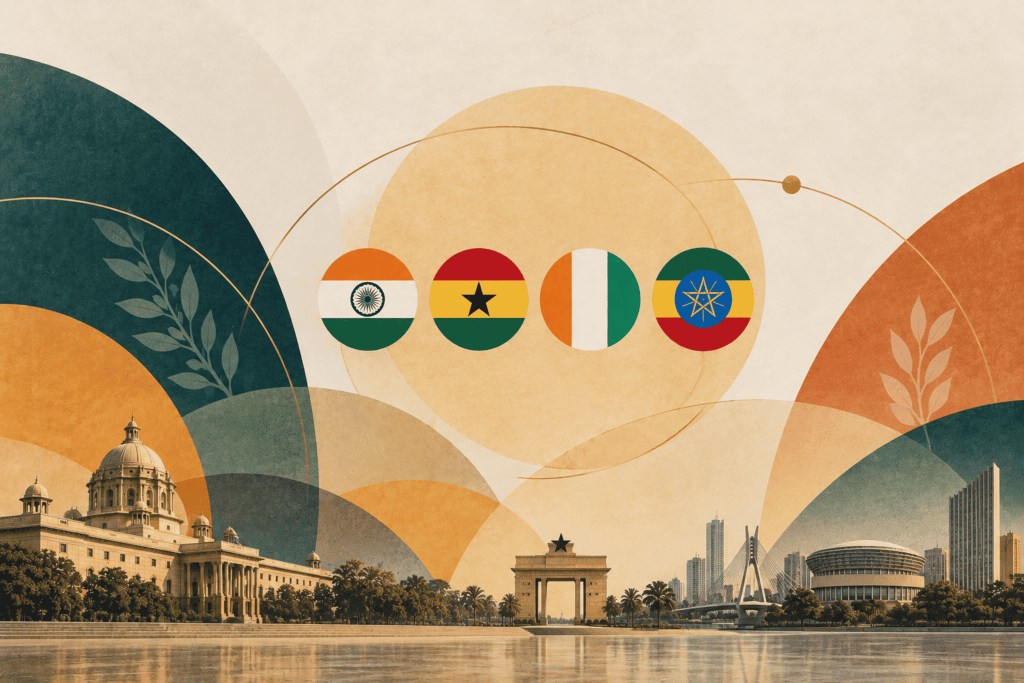
The external affairs minister’s recently concluded visits to Ghana, Côte d’Ivoire, and Ethiopia sought to expand economic cooperation while strengthening India’s engagement with Africa on global governance.
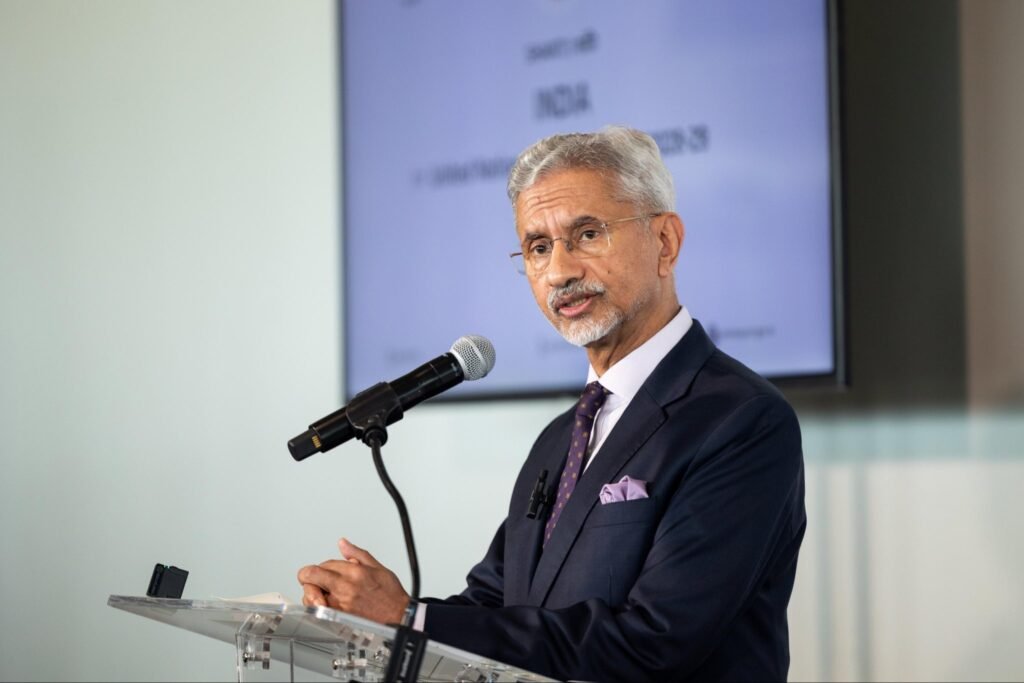
From Accra to Abidjan and Addis Ababa, External Affairs Minister S. Jaishankar’s five-day African tour, from 6 to 10 October 2026, focused on expanding India’s relations with three countries of regional importance. The Ministry of External Affairs (MEA) identified trade, development cooperation, capacity building, and people-to-people ties as the principal areas of engagement. In Addis Ababa, Jaishankar also chaired a conference of Indian ambassadors and high commissioners serving across Africa.
The visit followed a period of intensified diplomatic engagement. Prime Minister Narendra Modi visited Ghana in July 2025, when bilateral relations were elevated to a Comprehensive Partnership, and Ethiopia in December 2025, when the two countries established a Strategic Partnership. Ethiopian Prime Minister Abiy Ahmed subsequently visited India in September 2026.
The tour also came amid India’s efforts to expand its economic engagement with Africa and press for greater representation of developing countries in international institutions. In an address at the Adwa Victory Memorial Museum on 9 October, Jaishankar described India as Africa’s fourth-largest trading partner, with bilateral trade nearing US$100 billion.
The itinerary raised a broader question about India’s approach to Africa: how can established political relationships be translated into deeper commercial ties and more effective cooperation on international issues? The three visits offer distinct answers.
Ghana: Making the Comprehensive Partnership Work
Jaishankar visited Ghana on 6 and 7 October, meeting President John Dramani Mahama and Foreign Minister Samuel Okudzeto Ablakwa. The visit followed Modi’s July 2025 trip, which elevated bilateral relations to a Comprehensive Partnership.
The discussions covered trade and investment, pharmaceuticals, healthcare, defence, digital technology, and agriculture. Two memoranda of understanding (MoUs) were signed: one on agricultural research and education between the Indian Council of Agricultural Research and Ghana’s CSIR-Crops Research Institute, and another on biodiversity involving the Zoological Survey of India and the University of Ghana.
Jaishankar identified parallels between Ghana’s Feed Ghana programme, Accra Reset health agenda, and One Million Coders initiative and Indian programmes in agriculture, healthcare, and digital skills.
In his remarks after meeting Ablakwa, Jaishankar said:
“We have both been champions of the Global South before that term was even invented.”
The two sides identified pharmaceuticals and healthcare, mining, defence, railways, digital technology, agricultural mechanisation, and industrialisation as priorities. Pharmaceuticals could prove particularly relevant. Ghana has expressed interest in developing domestic manufacturing capacity, while Indian companies have experience in producing affordable medicines. Cooperation could eventually include investment and technical expertise, although the visit’s official outcomes did not announce a new pharmaceutical manufacturing agreement. Railway development offers another avenue, building on projects such as the Tema-Mpakadan railway.
The visit also produced a significant diplomatic development. Ghana announced that its Cabinet had approved a decision to apply formally to join BRICS and sought India’s assistance. Jaishankar expressed support for Ghana’s aspirations while noting that membership would require consideration by all BRICS members. The announcement therefore marked the beginning of an accession effort, not a decision to admit Ghana.
Jaishankar also welcomed Ghana’s advocacy of reparatory justice and the restitution of cultural property. Ghana submitted its Instrument of Acceptance for the International Big Cat Alliance, extending cooperation into wildlife conservation.
Implementation of the research agreements and proposed sectoral initiatives will determine how much the Comprehensive Partnership delivers.
Côte d’Ivoire: Trade and Security Cooperation in West Africa
Jaishankar’s second stop was Côte d’Ivoire, where he held meetings on 7 and 8 October with President Alassane Ouattara, Vice-Prime Minister and Defence Minister Téné Birahima Ouattara, and Minister of State for Foreign Affairs and International Cooperation Nialé Kaba.
According to the MEA, bilateral trade exceeds US$1.5 billion. India imports cashews, natural rubber, cotton, and teak wood from Côte d’Ivoire. The two countries discussed expanding commercial relations through investment, local manufacturing, processing, and value addition.
Processing could help Côte d’Ivoire capture more value and expand employment, while opening opportunities for Indian firms in agriculture, pharmaceuticals, and infrastructure.
Defence and security cooperation formed the other major part of the discussions. Jaishankar’s meeting with the Ivorian defence leadership covered training, capacity building, institutional exchanges, and counter-terrorism. These subjects have wider regional relevance, given the security pressures confronting countries in West Africa and the Sahel. The published outcomes, however, did not announce a new major bilateral defence agreement.
Jaishankar also interacted with Ivorian alumni of the Indian Technical and Economic Cooperation (ITEC) programme. He said Côte d’Ivoire had utilised approximately 800 ITEC training slots over the preceding twelve years, including 123 committed slots on the defence side and 100 on the civilian side.
Explaining the importance of these exchanges, he observed:
“These are really the capital for a relationship.”
ITEC connects the bilateral relationship to professional and institutional networks. Training in areas such as public administration, technology, and defence can help officials develop expertise relevant to their own institutions while maintaining links with Indian counterparts. Its longer-term value will depend on how effectively the skills acquired are applied and whether future programmes reflect Côte d’Ivoire’s changing requirements.
Ethiopia: Strategic Partnership and the Global South’s Voice
Ethiopia was the final stop of the tour. Jaishankar arrived in Addis Ababa on 8 October and met Prime Minister Abiy Ahmed and Foreign Minister Gedion Timothewos. Discussions covered trade and investment, agriculture, renewable energy, healthcare, education, defence, mining, artificial intelligence, and digital public infrastructure.
The visit followed the establishment of an India-Ethiopia Strategic Partnership during Modi’s December 2025 visit. The two countries have a longstanding relationship, supported by commercial links and educational exchanges. More recent cooperation has included plans for a data centre for Ethiopia’s Ministry of Foreign Affairs and training initiatives.
Indian investment is a major feature of the economic relationship. In his address at the Adwa Victory Memorial Museum, Jaishankar said more than 600 Indian companies had registered investments in Ethiopia over the preceding two decades. He estimated that these investments had generated more than 75,000 jobs. Indian businesses are active in manufacturing, textiles, agro-processing, pharmaceuticals, engineering, and information technology.
Technology featured prominently in the discussions, including a data-centre project for Ethiopia’s Ministry of Foreign Affairs. Jaishankar also announced that India would organise another Jaipur Artificial Limb Fitment Camp in Ethiopia. A camp held in the Afar region in 2024 had provided prosthetic limbs to approximately 450 beneficiaries. India additionally offered specialised training for Ethiopian officials in forensic sciences, women and child development, and media governance.
The most prominent political event was Jaishankar’s address at the Adwa Victory Memorial Museum. Ethiopia’s victory over Italian forces at Adwa in 1896 became a lasting symbol of resistance to colonial domination. Speaking at the memorial, Jaishankar connected that history with India’s independence movement and contemporary debates over international representation.
He set out the development principle underpinning India’s stated approach to Africa:
“Partnerships of the future must help create capabilities, not promote dependencies.”
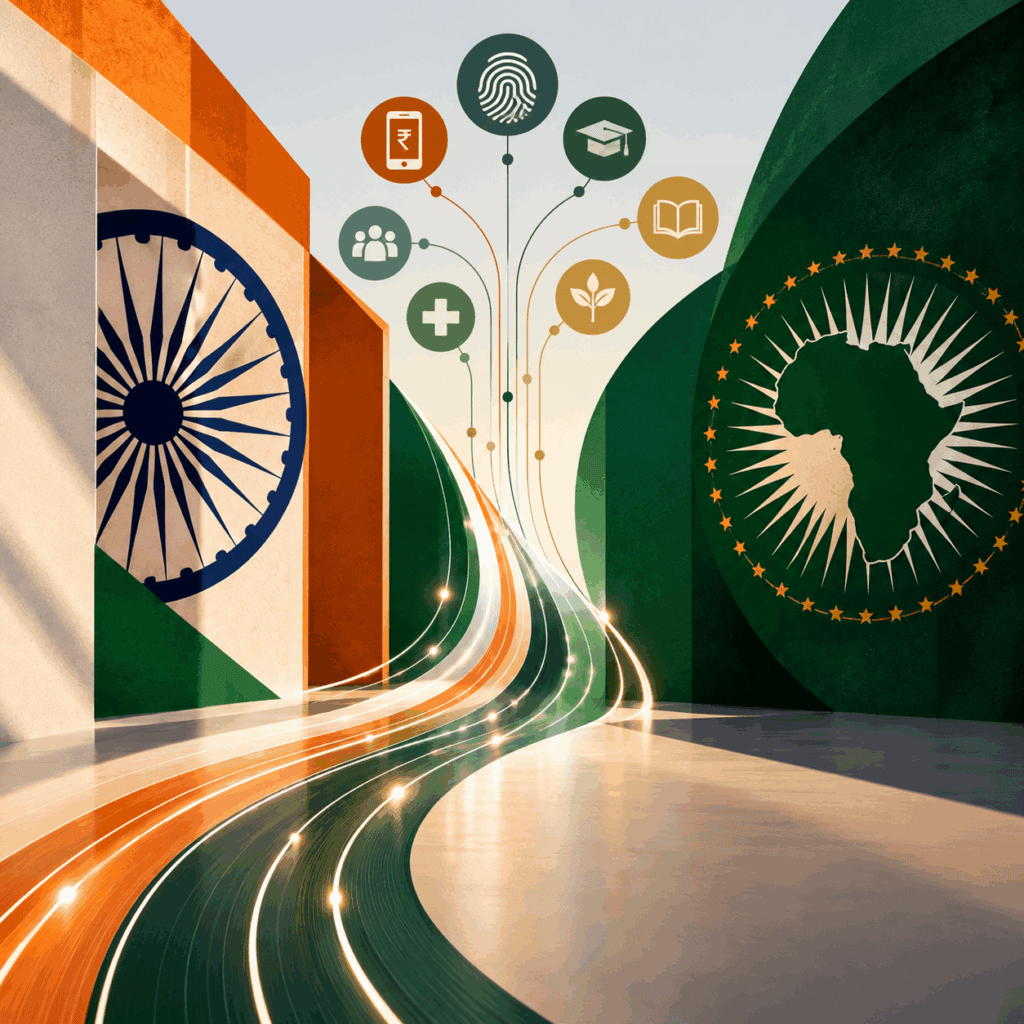
Jaishankar linked India’s Viksit Bharat 2047 ambition with Africa’s Agenda 2063, highlighting industrialisation, infrastructure, and technological development. He argued that the relationship should move beyond the export of raw materials towards value creation, and from technology consumption towards technology development.
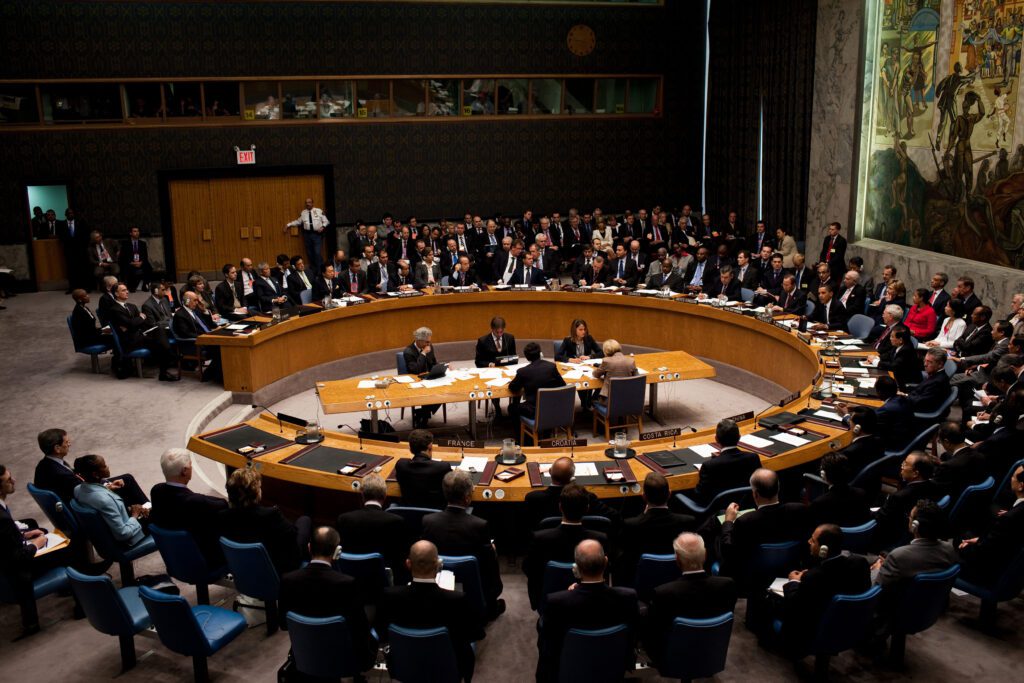
He also called for reform of the United Nations Security Council, arguing that Africa must be fairly represented in both permanent and non-permanent membership categories, in line with the Ezulwini Consensus and Sirte Declaration. The issue has long been part of India’s multilateral diplomacy, including its support during the 2023 G20 presidency for the African Union’s permanent membership of the G20.
Addis Ababa hosts the African Union headquarters. Jaishankar’s chairing of the Regional Heads of Mission Conference gave Indian envoys a forum to discuss engagement across Africa alongside the bilateral agenda with Ethiopia.
India’s Africa Push: Trade, Technology and the Global South
The visits reveal three different strands of India’s Africa engagement. Ghana’s new agreements provide a basis for research and sectoral cooperation; Côte d’Ivoire’s agenda combines commercial expansion with defence ties; and Ethiopia’s established investment relationship is being extended through technology initiatives and closer diplomatic coordination.
For New Delhi, the tour sought to connect commercial interests with partnerships that can help advance its priorities in regional and multilateral forums.
The approach also has limits. Areas identified for future cooperation do not automatically lead to investment or completed projects. Ghana’s BRICS application, for example, remains subject to collective consideration, while the published outcomes of the tour did not announce a new critical-minerals agreement despite the issue receiving attention before the visit. Such distinctions are essential when assessing diplomatic results.
Nor do India and its African partners necessarily share identical priorities. Each government will judge the relationship according to its own development needs, security concerns, and international objectives. The durability of the partnerships will depend on whether cooperation produces practical benefits and can accommodate these differences.
Jaishankar’s tour was therefore a continuation of India’s effort to deepen its presence in Africa rather than a departure from its established policy. Its significance will become clearer through the implementation of the agreements, the expansion of economic activity, and the coordination that follows the diplomatic meetings. The central test is whether the engagement produces results that India and its African partners value.
Note: This explainer has been researched, edited, and fact-checked by India’s World staff and prepared with AI assistance.