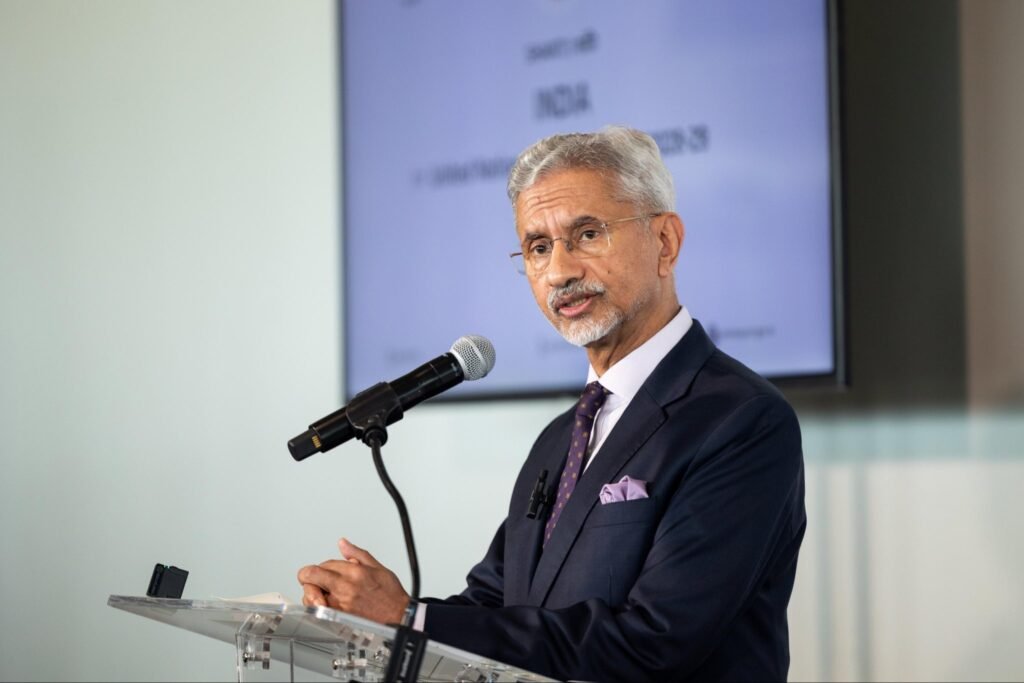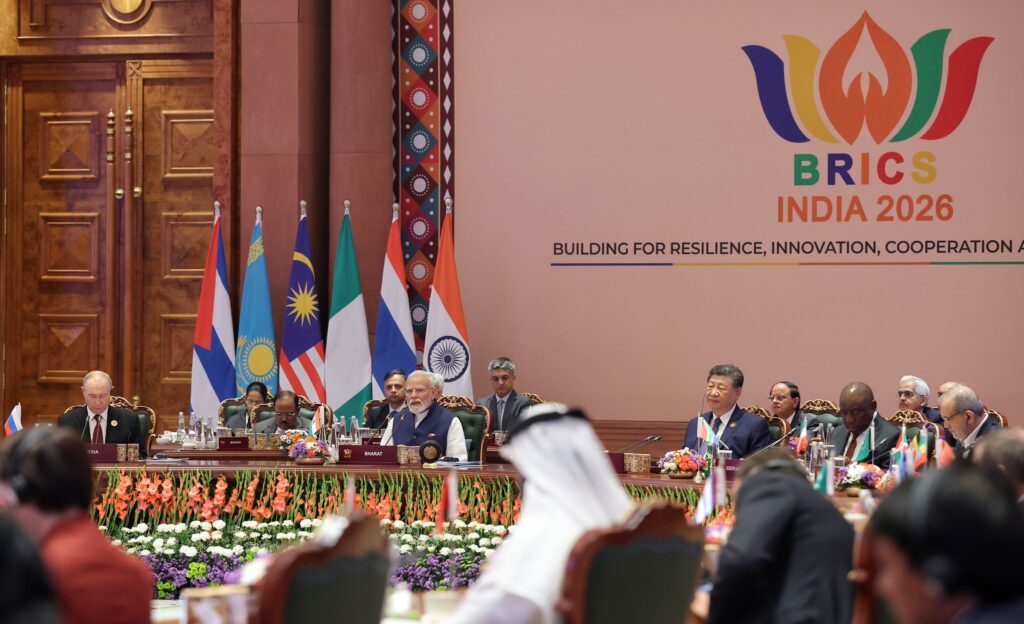
In their recent discussion document, “Does India Have Leverage Against the US and China? A Menu of Options for New Delhi”, published by the Takshashila Institution in September 2026, Lokendra Sharma and Pranay Kotasthane challenge the idea that India has to wait until it becomes a much stronger power before it can push back against Washington or Beijing. They argue that India already has ways of imposing costs on both countries, even with the existing economic and military imbalance. Their starting point is straightforward: “every state, big or small, has some leverage to wield”.
The argument is set against a series of recent problems in India’s relations with the US and China. The authors point to the deaths of Indian seafarers in a US strike off Oman, new US tariff measures over India’s purchase of Russian oil, and temporary restrictions on India’s access to Anthropic’s advanced AI models. With China, they cite restrictions on tunnel-boring machines, disruptions involving Foxconn’s transfer of equipment and personnel to India, and limits on fertiliser supplies. India has also been affected by measures taken in the wider US-China rivalry, including American controls on AI diffusion and Chinese restrictions on rare-earth exports. Despite these developments, New Delhi has generally tried to avoid confrontation. The authors see this as a consequence of the widespread belief that India is too dependent on the major powers to retaliate effectively.
To assess what India can actually do, the report focuses on where the balance of vulnerability lies. Sharma and Kotasthane use “asymmetry of vulnerability” as a central measure, asking whether the target would suffer more than India from a particular move. They also look at political salience, the availability of alternatives, whether a measure can be reversed, and whether it sends a clear signal. This leads them away from broad comparisons of national power and towards specific points of dependence where India may have room to manoeuvre.
In the case of the US, the strongest options are those that could create economic pain and then translate that into political pressure in Washington. The authors suggest that India could reconsider major defence purchases from US contractors and make clear that European or Indian suppliers are alternatives. They also propose creating a “SAMR-style regulator” that could subject mergers involving American companies to greater scrutiny, using India’s importance as a market as a source of leverage. Two other options are more immediate and easier to reverse: tariffs on California almonds and delaying the India-US trade agreement.
Not every form of retaliation, however, would achieve much. The report places measures such as freezing defence agreements or cancelling military exercises in a category that could affect US interests over time but may not generate significant political pressure. Symbolic gestures, including recalling diplomatic staff or boycotting Hollywood, are even less useful. The authors put these in the “dead zone”, where India would incur costs without creating enough pressure on the other side.
China presents a different problem because the relationship is more economically lopsided, India shares a contested border with China, and the political system works differently. For the authors, the relevant question is therefore how much pressure an Indian move can create for the Chinese Communist Party. They identify issues tied to “regime stability, territorial sovereignty, and core party narratives” as particularly sensitive. Taiwan is one such area. The report proposes concluding a free trade agreement with Taiwan and increasing high-profile political engagement with it, thereby signalling that Chinese actions could have consequences in India-Taiwan relations.
The authors also look beyond Taiwan. India could increase defence sales to China’s neighbours and recognise some of their claims in disputed maritime areas. It could conduct freedom-of-navigation missions in the South China Sea and East China Sea, building on existing naval deployments. Tibet offers another possible pressure point. India hosts the Dalai Lama and the Central Tibetan Administration, and the report proposes a “calibrated Tibet strategy” in response to Chinese transgressions. Depending on the severity of the provocation, this could involve greater public and political engagement with the Tibetan community and, in an extreme case, a declaration that China has no role in selecting the next Dalai Lama.
The report is careful to acknowledge the risks of these measures. The authors state that “all of them are bad options in normal times”, because they would also carry costs for India. Their broader point is that such options should exist for moments when Washington or Beijing crosses a line that New Delhi cannot simply absorb. India still needs to build its economic, technological, and military strength for the longer term, but that future strength should not become an excuse for ignoring the leverage available today. As they conclude, “India retains the ability to impose costs on both the US and China.”