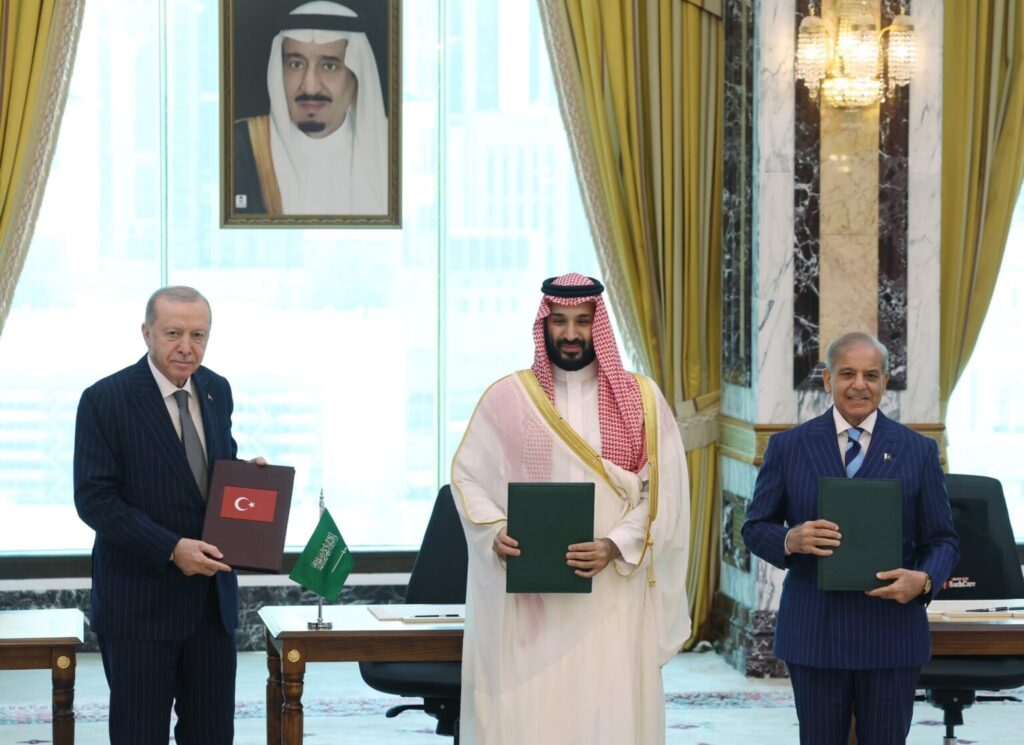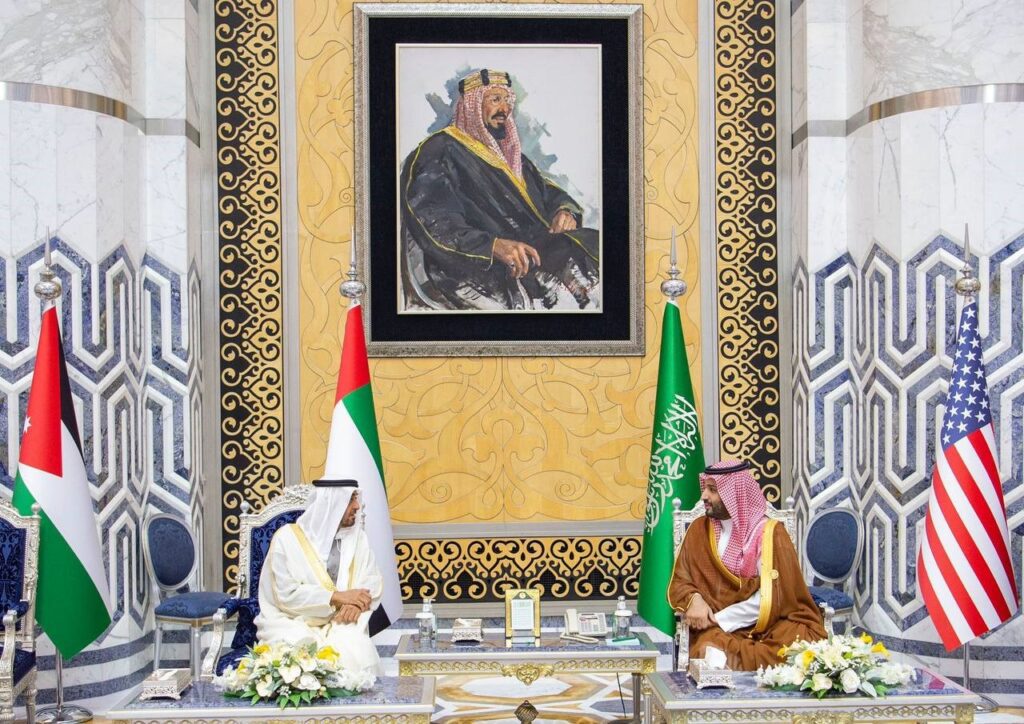
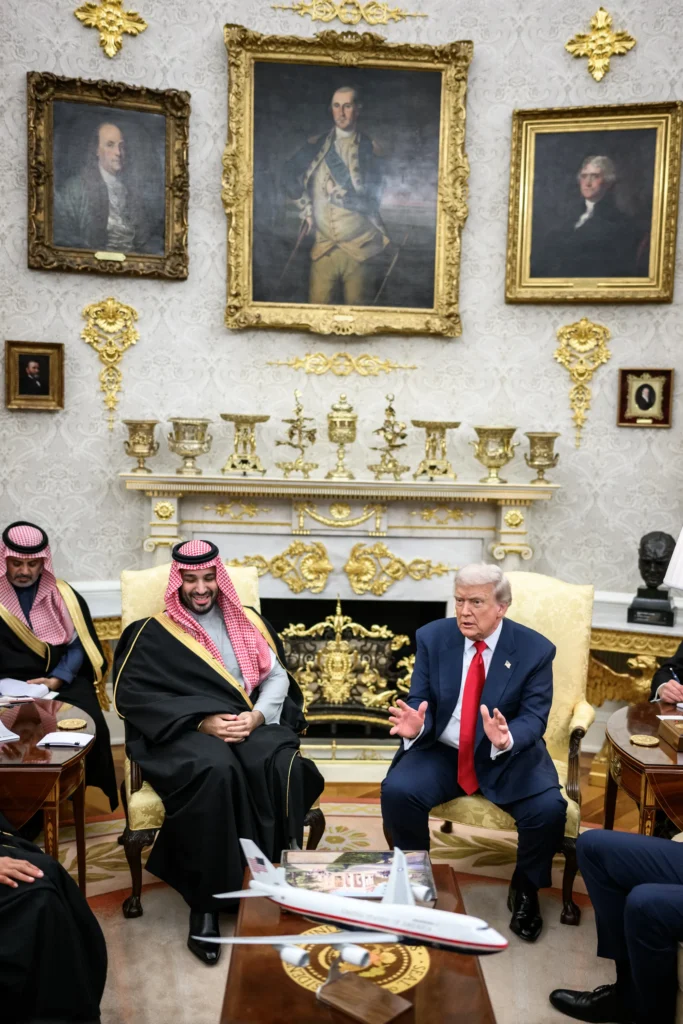
On 22 July, US Secretary of Energy Chris Wright and Saudi Energy Minister Prince Abdulaziz bin Salman signed a peaceful nuclear cooperation agreement, alongside a bilateral safeguards agreement. Washington and Riyadh have described it as a “decades-long, multi-billion-dollar partnership”. The deal will underpin Saudi Arabia’s planned civilian nuclear programme, placing American firms, technology and oversight at its core.
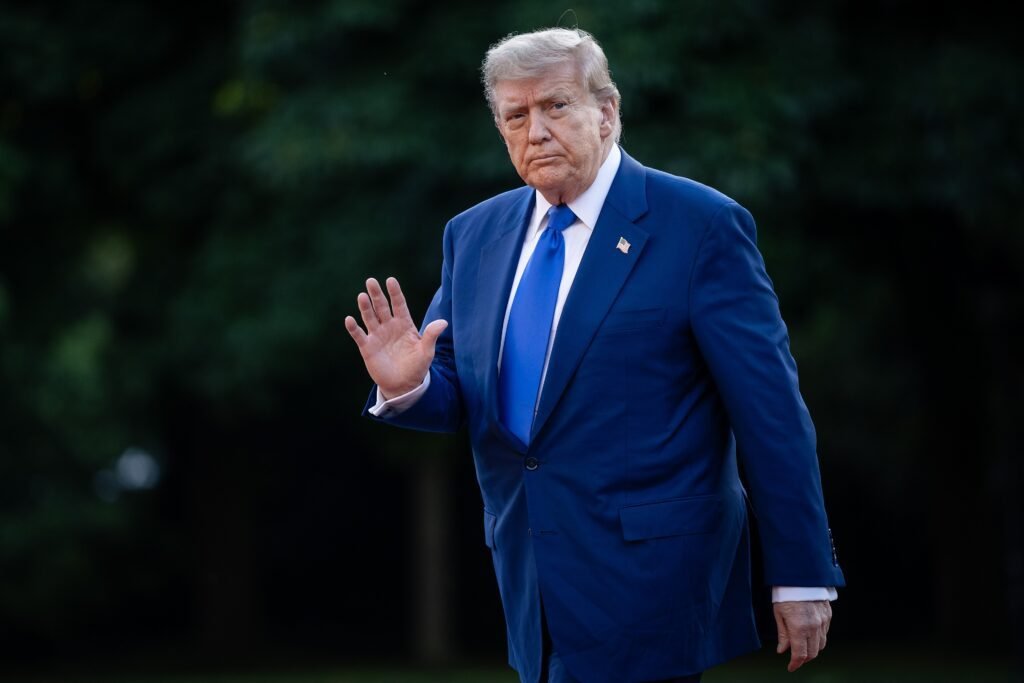
A day later, President Donald Trump changed the terms of the debate in a single Truth Social post. He wrote parenthetically that “there will be no enrichment of material” and added that the deal was “totally subject” to Saudi Arabia joining the Abraham Accords. Neither claim matches the reported terms, and the White House has not explained how either statement relates to what the two energy ministers signed.
That gap between the signed agreement and the president’s public statements now lies at the heart of the debate. It has reopened questions about uranium enrichment, American non-proliferation policy, the Gulf balance of power after the Iran war, and Saudi-Israeli normalisation.
What the Deal Actually Contains
The agreement is a Section 123 Agreement, named after the provision of the US Atomic Energy Act of 1954 that authorises civilian nuclear cooperation with other states. The United States has similar 123 Agreements with dozens of countries, including the 2009 accord with the United Arab Emirates. The Saudi agreement runs for thirty years and directs Riyadh’s nuclear procurement towards American firms. Reporting in The Wall Street Journal indicates that the terms exclude Russian and Chinese vendors, leaving only a limited role for foreign subcontractors working with US companies. Pittsburgh-based Westinghouse and its AP1000 reactor design are expected to be the centrepiece of the commercial build-out.
Two provisions distinguish the Saudi agreement from earlier US nuclear cooperation deals. First, it does not require Riyadh to adopt the IAEA Additional Protocol, which grants inspectors expanded authority to investigate undeclared nuclear activities. Second, unlike the UAE precedent, it does not require Saudi Arabia to forgo domestic uranium enrichment or spent fuel reprocessing. Instead, the two sides will conduct a two-year joint study on the commercial viability of enrichment on Saudi soil. If Washington concludes it is justified, US companies would build and operate the facility on a “black box” basis. If it declines, Riyadh must wait ten years before pursuing enrichment independently or with another partner.
These two departures have become the focus of debate. The IAEA has said it is awaiting a joint US-Saudi request before its Board of Governors can authorise verification measures under the bilateral safeguards regime.
The Enrichment Question and the Black Box
Uranium enrichment is not prohibited under the Treaty on the Non-Proliferation of Nuclear Weapons, to which both Saudi Arabia and the United States are parties. Low-enriched uranium at concentrations of three to five per cent fuels light-water reactors. The same centrifuge cascades, operated further, can produce weapons-grade material enriched above ninety per cent. This dual-use nature makes enrichment the most sensitive aspect of civilian nuclear cooperation.
The black-box arrangement gives American firms ownership and operational control of any future enrichment facility on Saudi soil. The plant would operate inside the kingdom, but the underlying centrifuge technology would remain beyond Saudi control. Washington is therefore retaining operational control rather than banning enrichment outright. Richard Nephew of Columbia University’s Center on Global Energy Policy writes that the arrangement would make it “harder for Saudi Arabia to build knowledge of this technology that it could use to produce nuclear weapons elsewhere”. He adds that such constraints would not necessarily prove “insurmountable roadblocks to a future Saudi state that was determined to get nuclear weapons”.
Trump’s claim that “there will be no enrichment of material” does not match the reported terms. The agreement defers any decision on enrichment for two years, ties it to a joint feasibility study, and preserves a Saudi pathway if the study is favourable and the White House agrees. Enrichment has not been ruled out. Washington has accepted it in principle, subject to conditions it believes it can enforce.
How the Deal Departs from the UAE Gold Standard
The 2009 US-UAE agreement illustrates the departure most clearly. When Sheikh Abdullah bin Zayed Al Nahyan and Secretary of State Condoleezza Rice signed the pact, the Emirati government committed to forgo enrichment and reprocessing on its own soil. Rice called it “a powerful and timely model for the world and the region”. Non-proliferation experts subsequently described the UAE terms as the “gold standard” for civilian nuclear cooperation. Barakah, the plant built under a South Korean-led contract, has since brought its reactors online, yet no other country in the region has followed the UAE model.
The Saudi agreement abandons both elements. It permits domestic enrichment in principle and omits the Additional Protocol. Michael Horowitz, a geopolitical analyst, has noted that if Riyadh had wanted only US backing for a conventional civilian programme, it “would have done so years ago”. Preserving an enrichment option therefore appears to have been one of Riyadh’s principal objectives. Matthew Kroenig of the Atlantic Council argues the two-year study should conclude that Saudi Arabia can rely on imported fuel, rather than opening what he calls a bomb-making capability in an already volatile region. Andrea Stricker of the Foundation for Defense of Democracies has called on Congress to block the agreement outright.
The concern extends beyond Saudi Arabia. By relaxing conditions that Washington has long insisted upon, the agreement offers other US nuclear partners a precedent to invoke. The larger question is whether the United States is quietly rewriting its own non-proliferation policy.
The Iran War Backdrop
The Iran war frames the entire agreement. Negotiations predated the war, but the conflict changed the terms on which they concluded. Washington and Israel launched their campaign to prevent Tehran from enriching uranium to weapons-grade levels, and the fighting has left Saudi Arabia more exposed to potential Iranian retaliation. The result is a clear political logic: Saudi insecurity has deepened, US urgency to reassure Riyadh has grown, and Washington has conceded terms it had previously refused.
Saudi officials have long said Riyadh would seek a nuclear weapon if Iran acquired one. Keeping an enrichment option open therefore changes what other regional powers may demand next. Egypt and Turkey already possess civilian nuclear infrastructure. Democratic Senator Chris Murphy has argued the agreement would “set off a nuclear race in the region, further disincentivizing Iran from limiting its own program”.
Washington has a different calculation. Earlier this year, the Trump administration told Congress that expanding civilian nuclear cooperation would preserve American leadership in the global nuclear industry while keeping strategic competitors out of the kingdom. Jennifer Gordon of the Atlantic Council makes a similar argument from the opposite direction: Saudi Arabia was going to buy nuclear technology from someone, and the only question was whether it came from the United States and its allies, or from Russia and China.
Allison Minor sees the agreement as part of Riyadh’s response to a war that, she argues, has emboldened Tehran and unsettled the Gulf. Securing terms more favourable than the UAE’s, she notes, was itself a signal Riyadh wanted to send. The Iran war explains only part of the shift. The rest reflects Washington’s judgement that a Saudi nuclear programme was going to happen regardless, and that retaining influence over it was worth the price paid on non-proliferation.
The Abraham Accords Complication
Under President Joe Biden, a Saudi civil nuclear deal was tied to a broader bargain: Saudi recognition of Israel, a credible pathway to a Palestinian state, and US-Saudi mutual defence commitments. That package was nearly finalised in mid-2024, but it remained conditional on an end to the war in Gaza and was never concluded. When the Trump administration revived the talks, it dropped the normalisation requirement. Daniel Shapiro of the Atlantic Council viewed the de-linking as Washington playing “a valuable card” that could have been held back for a normalisation agreement.
Trump’s Thursday post reversed the de-linking. The agreement, he wrote, “will be approved, but is totally subject to Saudi Arabia joining the very respected and successful Abraham Accords”. White House Press Secretary Karoline Leavitt confirmed that if Riyadh refuses, “the deal is off”. Neither condition appeared in the Department of Energy’s original announcement. Saudi Arabia has said nothing publicly, and joining the Accords would reverse a position Riyadh has maintained throughout the Gaza war. Steven Cook of the Council on Foreign Relations has described the resulting situation as “a state of diplomatic suspension”, highlighting the tension between a Washington that treats the president’s social media posts as official policy and a Riyadh committed to the signed agreement.
The Congressional Test
Under the Atomic Energy Act, a 123 Agreement is submitted to Congress for a ninety-day continuous-session review. Blocking it requires a joint resolution of disapproval in both chambers and, if the president vetoes it, a two-thirds override in each. That threshold has never been met for a 123 Agreement. Trump’s Truth Social condition has now made it unclear when the deal will actually reach Congress. Even so, the enrichment provisions and the omission of the Additional Protocol have already drawn bipartisan criticism, including from Democratic Senator Ed Markey and Republican Senators John Barrasso and John Kennedy. The safeguards text itself has not been made public, which has become another point of criticism.
What the pact will ultimately produce, whether reactors built to Westinghouse specifications, a joint enrichment facility under American supervision, or neither, depends on decisions taken by successive administrations over the next decade. The signed agreement sets the outer parameters. The commercial award, the enrichment decision, and the Abraham Accords test all remain unresolved. The agreement itself, however, settles three debates Washington has been having with itself for years, each on strategic grounds: non-proliferation traded for strategic influence, Iran containment for Saudi reassurance, and the UAE model exchanged for a bet on excluding Russian and Chinese suppliers. Whether that bargain reflects strategic realism or a lasting weakening of the global non-proliferation regime is the question Congress, America’s allies, and future US administrations will have to answer.
Note: This explainer has been researched, edited, and fact-checked by India’s World staff and prepared with AI assistance.