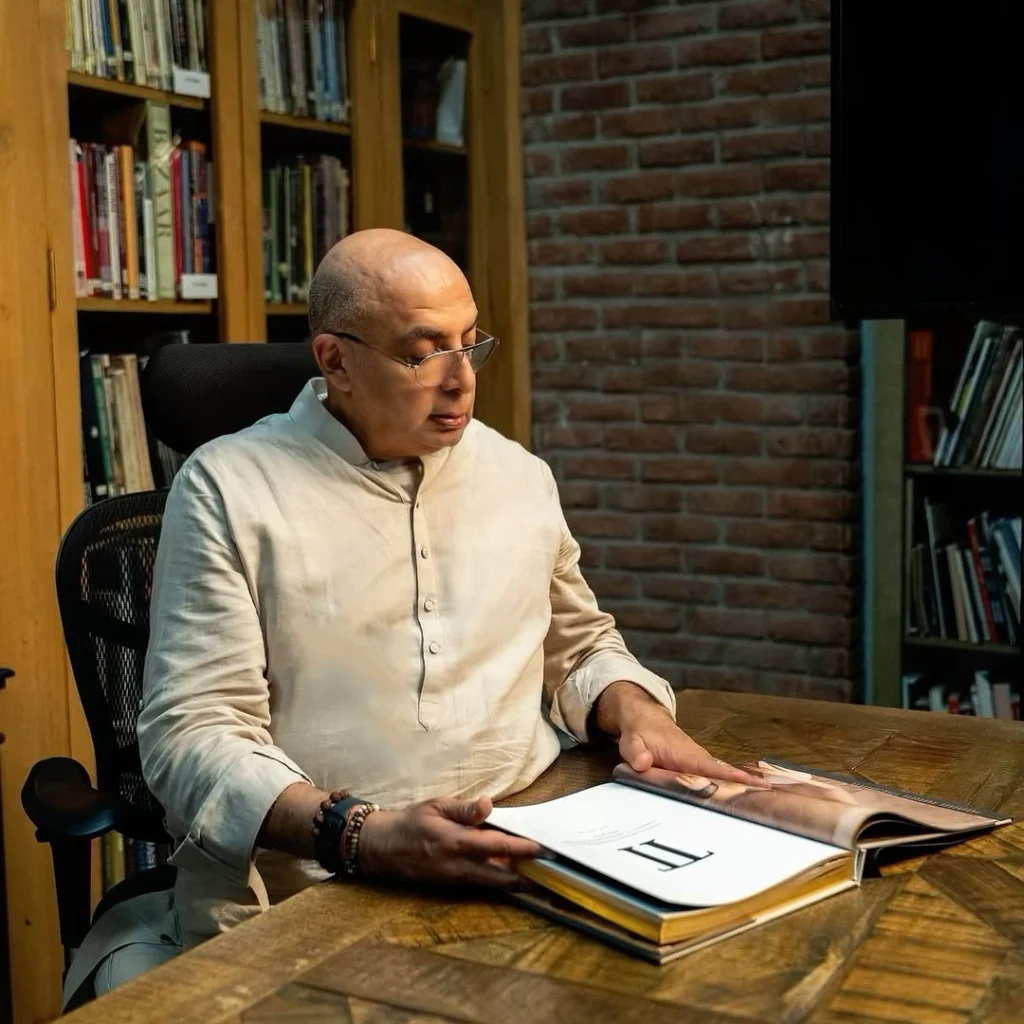
“Fashion Is One of the Most Powerful Ways to Carry Culture Across Borders”
Tarun Tahiliani is one of India’s pioneering fashion designers. Since founding his label in 1990, he has championed a design philosophy he calls India Modern—bringing together Indian craftsmanship, innovation, and contemporary luxury. His work has played a defining role in taking Indian fashion onto the global stage.
For more than three decades, Tahiliani has done more than shape Indian fashion—he has helped reshape how India presents itself to the world. His idea of India Modern is not simply a design philosophy but a vision of an India that is rooted in heritage, confident in its identity, and global in its outlook. In this conversation with Junjun Sharma Pathak for India’s World, Tahiliani reflects on fashion as cultural diplomacy, the untapped potential of India’s creative economy, the future of Indian design, and why creativity must become central to India’s global story. He also argues for stronger institutional support for the fashion ecosystem, greater investment in craft and design, and a renewed recognition of fashion as a strategic cultural and economic asset. For Tahiliani, fashion is not merely an industry but one of India’s most underutilised instruments of culture, commerce, and soft power.
The notion of “India Modern” appears to be central to your creative philosophy. How has it shaped your approach to reimagining Indian identity through fashion?
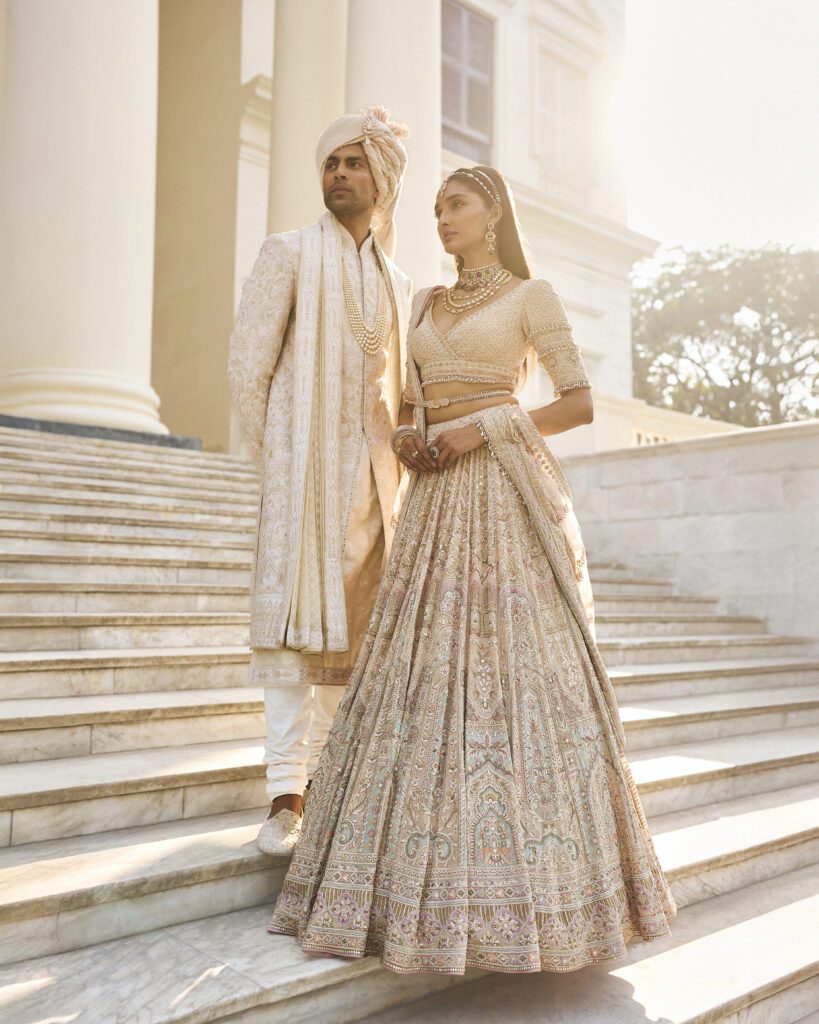
The notion of India Modern came to me very early in my journey. As I remember walking into this exquisite cement home in Ahmedabad, filled with pichwais, traditional Indian paintings. It was devoid of embellishment as the backdrop to the most exquisite art and it celebrated Indian heritage with remarkable elegance. That was the moment the phrase India Modern first came to me Of course, this came with deep understanding, study, and exposure.
To me, India Modern is about moving beyond treating our heritage as costume. It is about creating clothes and, indeed, ideas that allow us to wear our traditions with confidence in today’s world. Our challenge as designers is not to imitate the West or be western just for the sake of being western, but to reinterpret our own heritage in ways that feel relevant, contemporary, and effortless for modern life.
Your work draws deeply from India’s textile and craft traditions. How do you balance heritage with modernity?
This balance between heritage and modernity took a long time to achieve. In the beginning, we often tried to turn textiles woven for saris into structured garments. Those fabrics were designed to drape, not to be tailored. Very often, that didn’t work.
Looking back, I feel we hadn’t fully understood the traditions we were working with.
Over time, through collaboration with weavers, textile experts, and designers like Rahul Jain, we learned to respect both the craft and its purpose. That understanding helped us evolve.
Fashion is a serious creative industry with immense cultural, diplomatic, and economic value, and until it is recognised as such, India will never realise its full potential
I love everything about Indian textiles—the colours, the embroideries, the craftsmanship. But I don’t believe they should only exist as costumes or in clothes that feel impractical today. The challenge is to reinterpret that heritage in a way that fits contemporary life. That conversation between tradition and modernity is ongoing, and I think it always will be.
Looking beyond clothing, what aspects of Indian architecture, art, literature, or culture have most influenced your understanding of design and aesthetics?
Architecture has probably influenced my understanding of design more than any other discipline. I have always been fascinated by spaces where tradition and modernity coexist harmoniously. Indian architecture, from historic monuments to contemporary homes, demonstrates a remarkable sensitivity to proportion, craftsmanship, materiality, and detail. Indian art, miniature paintings, decorative traditions, and cultural practices have also informed my aesthetic perspective. What interests me most is the idea of continuity; how cultural influences can evolve without losing their essence. Design, whether in fashion or architecture, becomes most meaningful when it respects history while responding intelligently to the needs of the present.
India’s artisans and craftspeople remain central to your work. What role do traditional crafts play in building “India Modern”, and what more can be done to sustain these ecosystems?
Craft is fundamental to the idea of India Modern because it provides us with a unique cultural and creative vocabulary. India’s artisans possess extraordinary skills that have evolved over centuries, and these traditions give our design identity depth and authenticity. The challenge is not simply preserving craft, but ensuring it remains relevant to contemporary lifestyles and global markets. To sustain these ecosystems, we need greater investment in artisan communities, stronger design education, technological support, and fair economic opportunities. Most importantly, we must create products that people genuinely want to wear and live with today. When craft remains desirable, innovative, and commercially viable, it continues to thrive naturally.
Do you believe fashion can serve as a form of cultural diplomacy? How does Indian fashion shape global perceptions of contemporary India?
Fashion is one of the most powerful forms of cultural diplomacy. Everybody loves beauty, and everybody responds emotionally to fashion. There’s a natural curiosity in the world, especially about a country like India, where heritage is so diverse and so developed that it’s almost mind-blowing that so much could exist. The whole world came to India for luxury and spices. Surely, we must now use this to our advantage, but it can only be done if we have modern solutions. Therefore, it goes back again to India Modern.
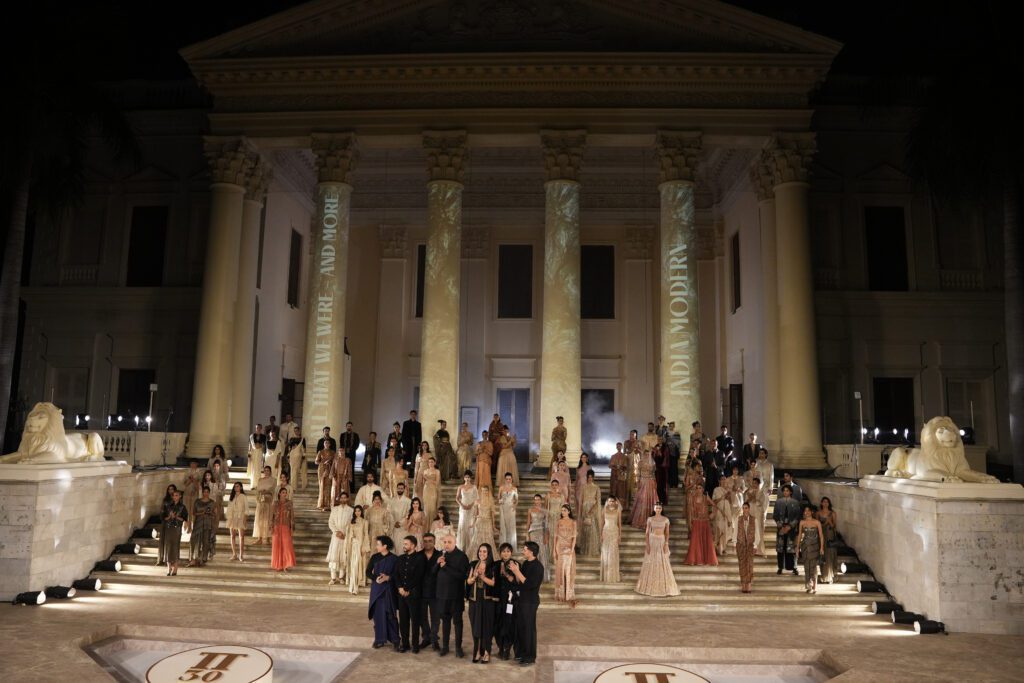
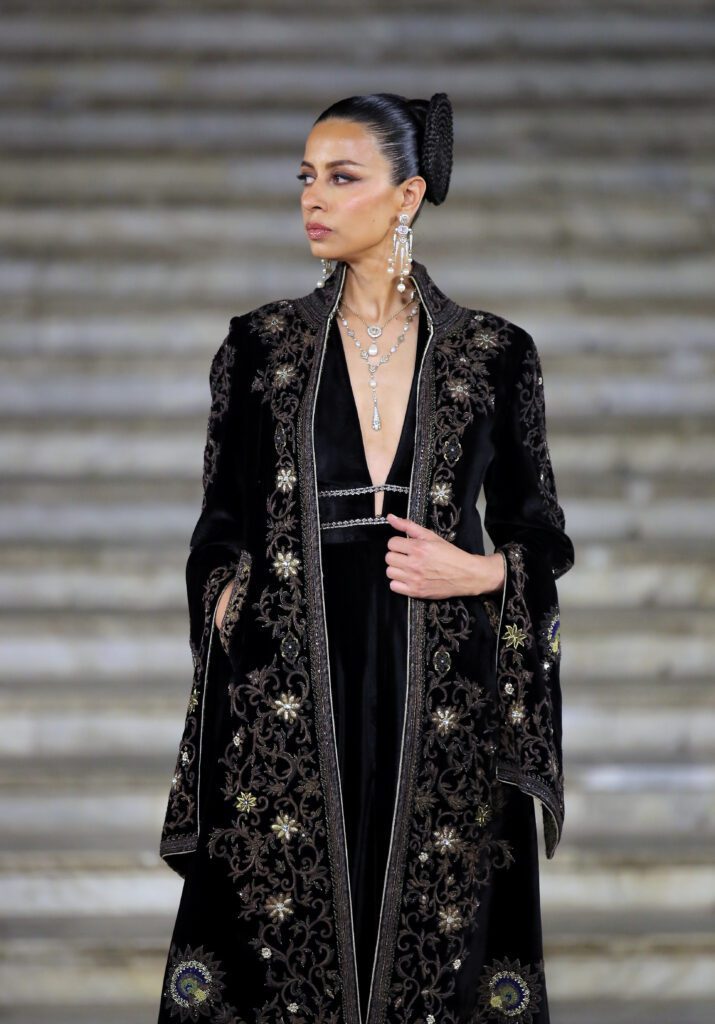
Indian fashion is finally being recognised in its own right. For years, India was a source of inspiration for the global fashion industry. Today, Indian fashion is finding its own voice, rooted in our cultural heritage yet relevant across the world. Much like Indian weddings and Bollywood, it has become a powerful expression of India’s love for craftsmanship, colour, luxury, and generosity of spirit.
Countries such as France, Italy, South Korea, and Japan have successfully leveraged their creative industries as instruments of national influence. Can India do the same?
Fashion is one of the most powerful ways to carry culture across borders. It is time for India, with the world’s largest craft base, to move from being the factory of the world to becoming a creator of original design and value. Today, we have a thriving, highly creative fashion industry, yet we continue to export our craftsmanship while others build global brands from our ideas.
What disappoints me is that this industry has received very little support from the Government of India. I don’t think policymakers fully recognise its economic or cultural potential. Fashion is often dismissed as an elitist industry because designers operate at the luxury end of the market. Yet the influence of design extends far beyond luxury. Even manufacturing hubs like Surat benefit by adapting trends created by designers. While the design community itself may be small, its impact reaches the smallest towns and villages across the country.
We are not even allowed to use the name Khadi when we create garments from Khadi fabric. How, then, are we expected to build the brand or promote it internationally?
With India’s growing global appeal and changing exchange rates, we have an extraordinary opportunity to export original Indian design, not just textiles. Yet the ecosystem to support that ambition simply doesn’t exist. We don’t have a dedicated design centre, Fashion Weeks receive little meaningful public support, and designers have been pushed out of city centres, even though every major fashion capital understands the importance of keeping studios close to the press, buyers, and the creative ecosystem. It reflects a lack of understanding of how the fashion industry actually works.
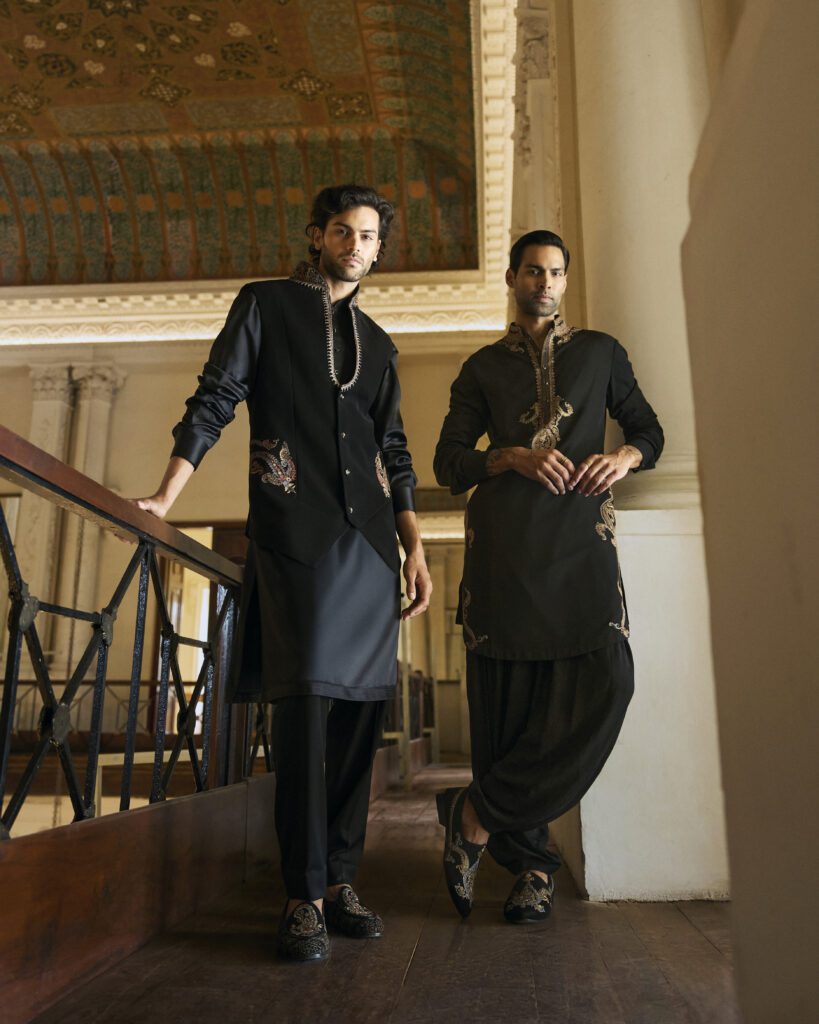
For years, we have had conversations with successive textile ministers, but very little has changed. We are not even allowed to use the name Khadi when we create garments from Khadi fabric. How, then, are we expected to build the brand or promote it internationally?
Too often, fashion is acknowledged only during major international events, when designers are called upon to stage a show. But we are not here simply to entertain. Fashion is a serious creative industry with immense cultural, diplomatic, and economic value, and until it is recognised as such, India will never realise its full potential.
What kind of cultural and urban ecosystems are needed for India to emerge as a global design and fashion hub? Are there lessons India can learn from cities such as Milan, Paris, London, or Seoul?
To begin with, we need a thriving Fashion Week—one that isn’t dependent on individual title sponsors or run by private companies. Delhi is the logical choice. If we have a world-class Fashion Week here, held twice a year on fixed dates in venues like Pragati Maidan, it will bring people from around the world to India.
Right now, it’s held in temporary tents scattered across the city, almost as an afterthought. With all the infrastructure coming up around the airport and elsewhere, we have a real opportunity to do much better.
We should have dedicated spaces for textiles, embroidery, fashion, and contemporary design. We have everything it takes; we simply need an ecosystem that brings it all together.
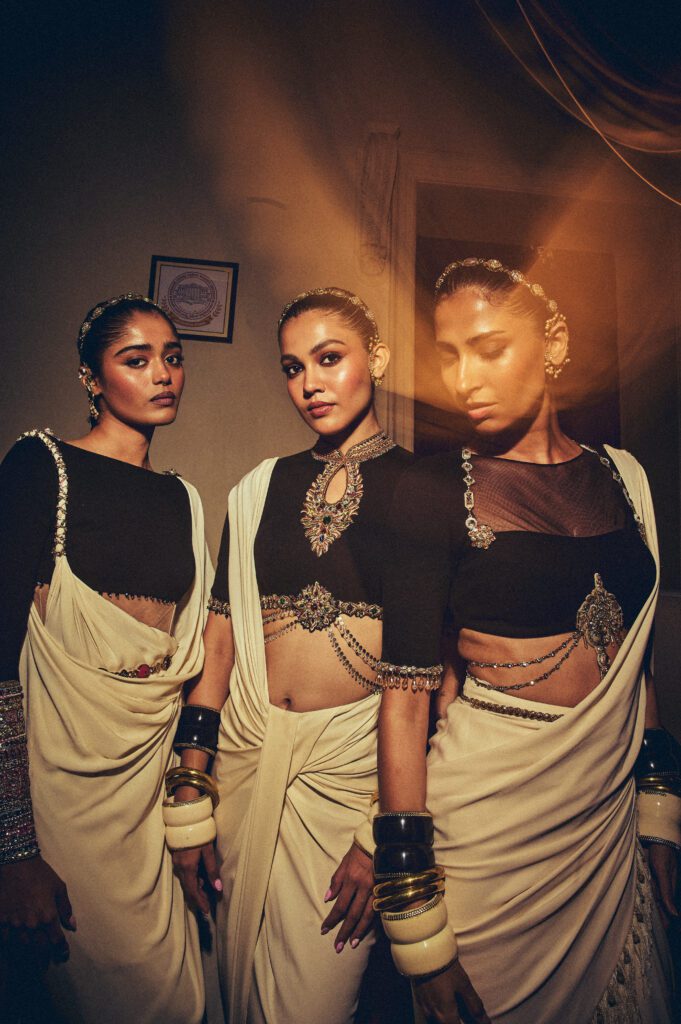
Sustainability has become a central concern for the global fashion industry. Do India’s traditional textile and craft ecosystems offer lessons for a more sustainable model of production and consumption?
There is nothing more sustainable than India’s ecosystem because so much of it is done by hand. What could be more sustainable than handmade products, and what could be more luxurious? At the same time, to meet the demands of a large and diverse market, major textile hubs such as Surat have emerged, and much of that production is not necessarily sustainable. However, it caters to a price point that may not have the luxury of choosing sustainable alternatives. Sustainability remains a significant consideration in international markets and, once again, points us in the direction I mentioned earlier.
How can India leverage its rich traditions, craft heritage, and indigenous knowledge systems to emerge as a global fashion capital?
India possesses an extraordinary combination of textile traditions, artisanal skills, cultural diversity, and design heritage. These are assets that many countries can only aspire to have. To emerge as a global fashion capital, we must focus on innovation, education, sustainability, and stronger international storytelling. Heritage alone is not enough; it must be translated into a contemporary language that resonates globally. We need to invest in creative talent, strengthen collaborations between design and craft, and build platforms that showcase Indian creativity on the world stage. The future lies in creating a distinctly Indian model of luxury that combines cultural depth with modern relevance.
Your career mirrors India’s journey from a relatively closed economy to a confident global presence. How has this transformation influenced your work and your vision of modern India?
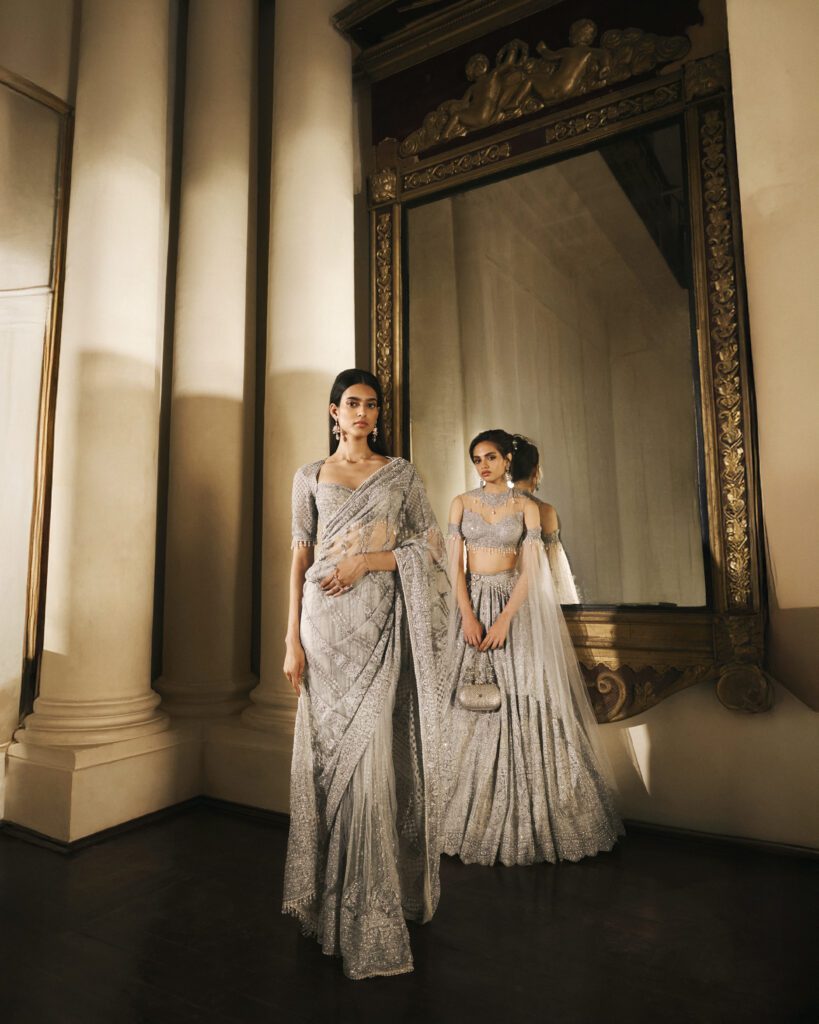
Over the course of my career, I have witnessed India become more open, connected, and confident in its place within the world. I witnessed the changes brought about by Rajiv Gandhi’s economic reforms, the arrival of colour television, the opening up of the economy, and the gradual shift from a culture centred largely around the draped textile tradition to one with a more global sensibility. In earlier years, there was often a tendency to look outward for validation, particularly in design and luxury. Today, there is a much stronger belief in the value of our own cultural heritage and creative capabilities. This shift has greatly influenced my work and my understanding of modernity. I no longer see being modern and being Indian as separate ideas. To me, modernity is about evolution and adaptation, not imitation. It is about engaging with the world while remaining deeply connected to your roots.
If we have a world-class Fashion Week here, held twice a year on fixed dates in venues like Pragati Maidan, it will bring people from around the world to India
Fashion has always reflected larger social, economic, and cultural transformations. Economic liberalisation expanded opportunities and aspirations, while globalisation introduced new influences and perspectives. More recently, technology and digital connectivity have accelerated access to ideas, trends, and information. As a result, Indians today are far more confident in expressing individuality through clothing. What is particularly interesting is that increased global exposure has not diminished interest in heritage; in many ways, it has strengthened it. People are increasingly combining traditional elements with contemporary lifestyles. This balance between global awareness and cultural rootedness has become one of the defining characteristics of how Indians dress and express themselves today.
If you had to describe the story that contemporary Indian fashion is telling the world today, what would that story be?
After being in fashion for decades, I can say that we have such unique conditions in this country. We have a population that is craft-based. People are hungry to work. We have technology. To a large degree, the country’s infrastructure has improved fantastically, and a lot of the weavers we work with have children who have grown up, understand how to use technology, and are much more aware of global markets and opportunities. That said, there is still a great deal to be done.
Contemporary Indian fashion is telling a story of confidence, complexity, and cultural self-assurance. For many years, Indian design was often viewed through a narrow lens of tradition or exoticism. Today, designers are presenting a far more sophisticated narrative, one that embraces heritage while engaging with global conversations around design, sustainability, and individuality. Indian fashion demonstrates that tradition and innovation are not opposing forces but can strengthen one another. It reflects a country that is increasingly comfortable with its own identity and capable of expressing that identity in contemporary ways. The story is ultimately about authenticity, creativity, and a renewed sense of cultural pride.