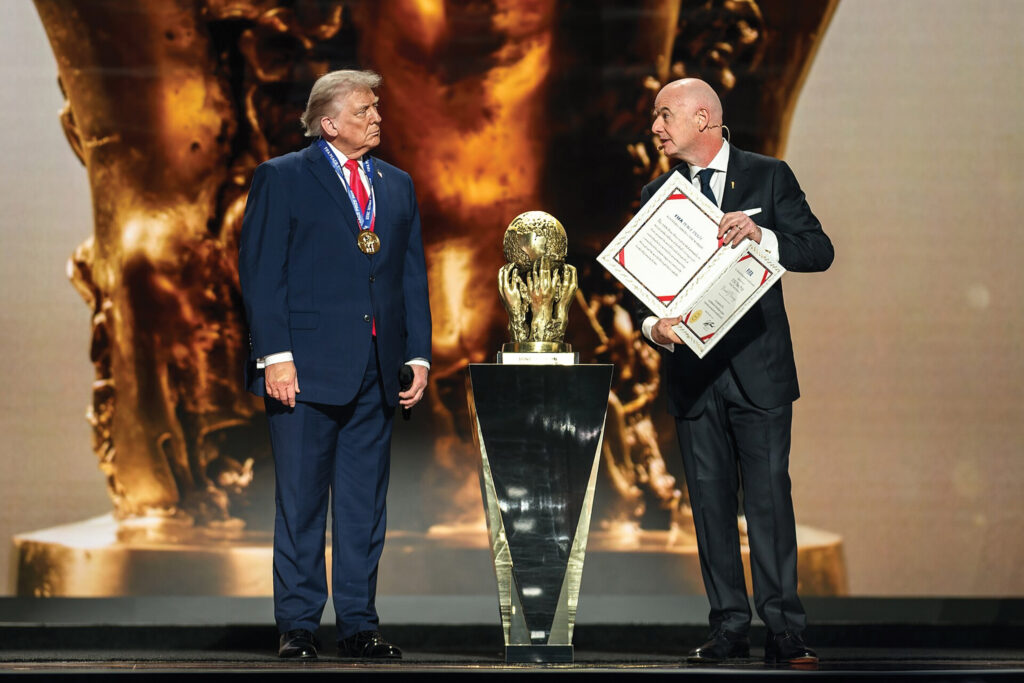
Hosted by three neighbours but divided by politics, the 2026 World Cup has become a revealing snapshot of contemporary North America. As the games begin, disputes over trade, migration, and sovereignty threaten to overshadow football’s promise of shared celebration.
By the time this letter is published, the 2026 World Cup of Football will be approaching its climax. On July 19, the two teams still standing from the 48, which began the tournament on June 11, will play the championship game in a stadium on the outskirts of New York, which was built to host the local version of football. In all, the World Cup will be an extraordinary event: 104 matches, spread across 16 cities over three host countries. The US will host 78 of them, with Canada and Mexico hosting 13 each.
The World Cup is supposed to be a celebration of international unity; of a shared global obsession with “the beautiful game.” To the extent it inflames nationalist passions, they are non-warlike, at least in theory. The sport being celebrated is one of the most egalitarian on the planet; any group of children with a field and something like a ball can play. The World Cup is, in a very real sense, the ultimate celebration of the ability of the “soft power” of sport to bring the world together.