For New Delhi, July is likely to be defined by three interconnected priorities: strengthening strategic partnerships, expanding market access, and preparing the diplomatic agenda for the BRICS summit later this year. Progress on each front will help determine whether India’s growing international profile can be matched by tangible economic and strategic outcomes.
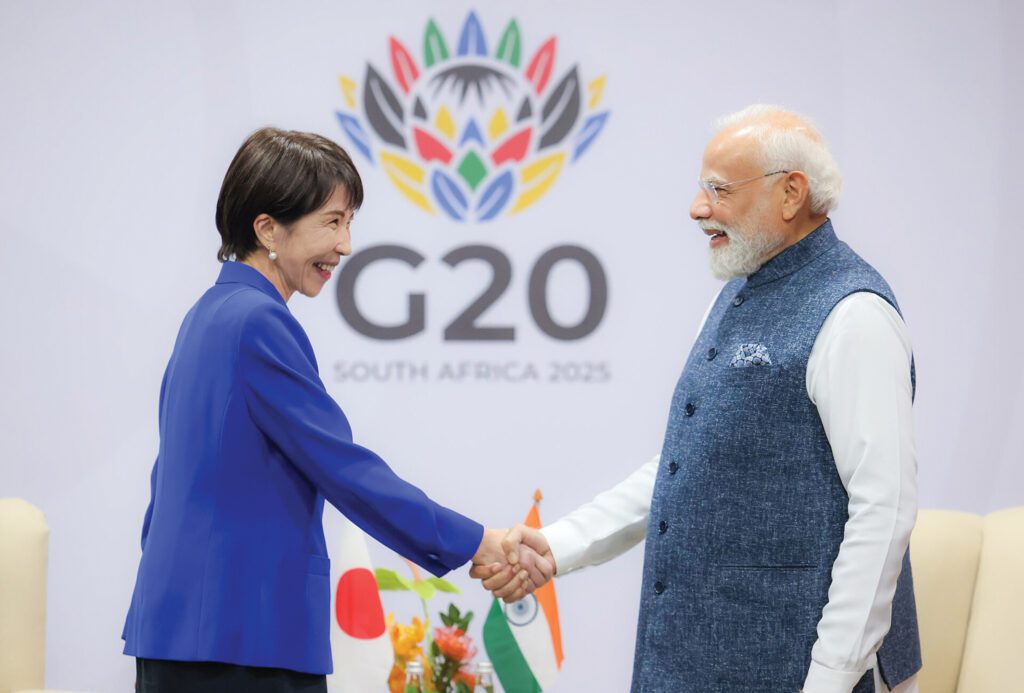
The month will begin with the 16th India-Japan Annual Summit from 1-3 July, during the official visit of Japanese Prime Minister Sanae Takaichi, her first visit to India since assuming office. The summit is expected to reinforce the India-Japan Special Strategic and Global Partnership, with discussions likely to focus on economic security, resilient supply chains, semiconductors, critical technologies, infrastructure and defence cooperation. As New Delhi seeks to deepen its engagement across the Indo-Pacific, the meeting will provide an early indication of how India intends to balance strategic, technological, and economic priorities with one of its closest regional partners.
Attention will then shift to trade and exports. Bharat Tex 2026, scheduled for 14-17 July, will offer an early indication of how quickly Indian exporters can translate new trade opportunities into commercial partnerships. Happening days before the India-UK agreement takes effect, the event is likely to serve as a showcase for New Delhi’s wider strategy of leveraging trade diplomacy to expand export markets.
The India-UK Comprehensive Economic and Trade Agreement will enter into force on 15 July, enabling exporters to begin accessing the concessions secured under the pact. At the same time, attention will also turn to negotiations with the United States, where officials are working towards an interim trade arrangement, and to the European Union, where legal scrutiny of the proposed free trade agreement continues ahead of a targeted signature later this year.
Technology will form another major pillar of India’s external engagement. The implementation of semiconductor projects, including Tata Electronics’ partnership with the Dutch firm ASML, will be closely watched as India seeks to position itself within emerging technology supply chains. Alongside investments in advanced manufacturing, digital infrastructure, and critical technologies, these initiatives are intended to reduce strategic dependencies while strengthening India’s attractiveness as an alternative production hub.
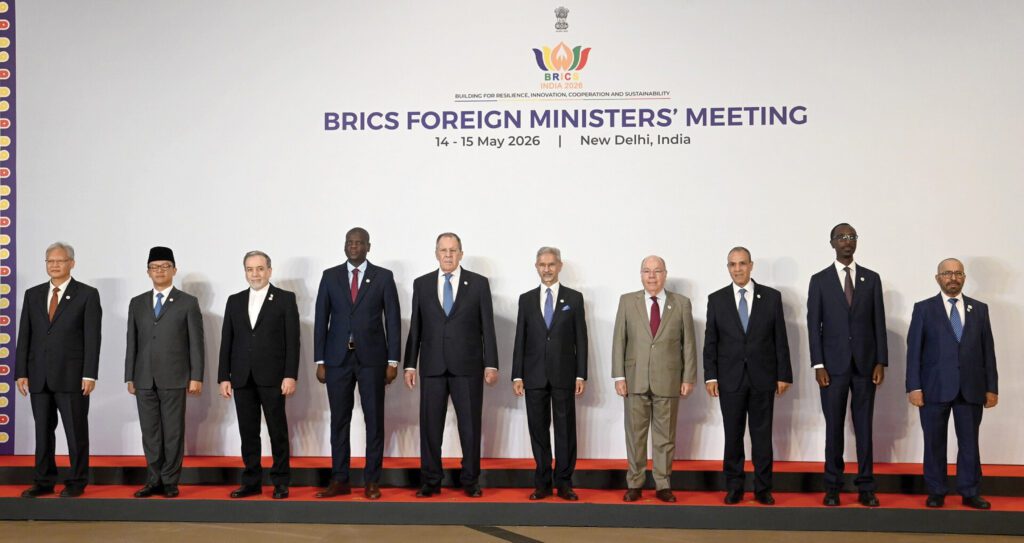
The latter part of the month will increasingly focus on multilateral diplomacy. As chair of BRICS in 2026, India will spend much of July steering preparatory consultations ahead of the leaders’ summit in New Delhi later this year. The discussions are expected to focus on development finance, global governance reform, artificial intelligence, and economic cooperation among emerging economies. At the same time, India’s assumption of the vice-presidency of the Financial Action Task Force (FATF) marks a notable expansion of its role in international financial governance.
Events in West Asia will continue to influence these agendas. While concerns over energy security and supply-chain disruptions remain, New Delhi’s broader response has centred on diversification rather than retrenchment. The coming month will therefore offer an early indication of whether India’s strategy of engaging simultaneously with Western partners, emerging economies and multilateral institutions can translate diplomatic activity into durable economic and strategic gains.