An explainer on Russia’s premier foreign-policy forum and its 2026 edition
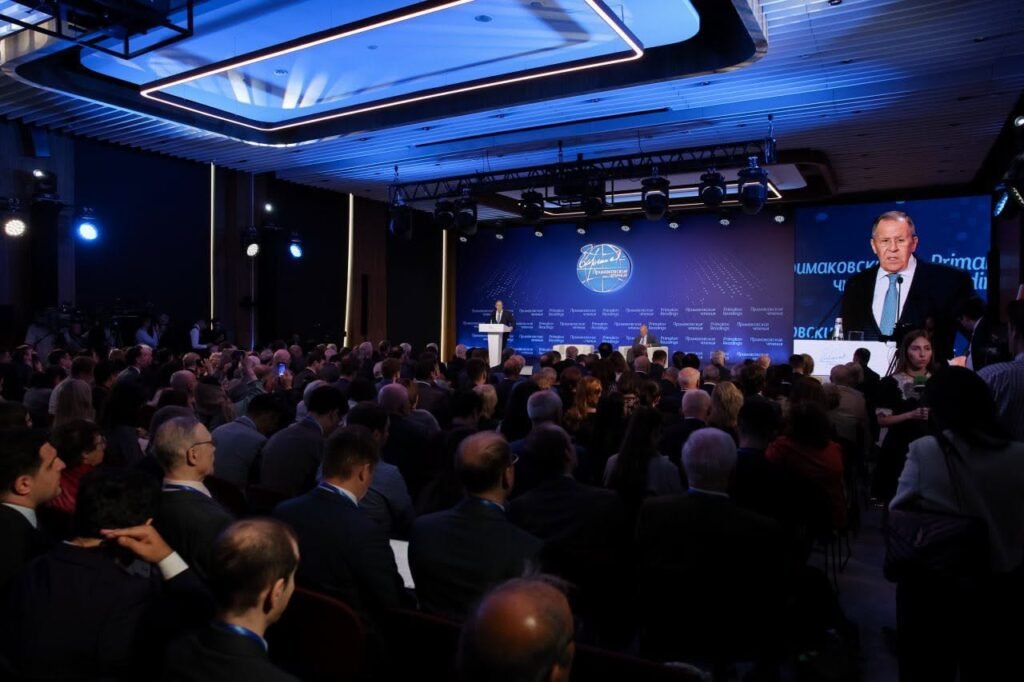
Every major power has institutions through which it presents its view of the world. For Russia, one of the most important is the Primakov Readings. More than an annual gathering of foreign policy experts, the forum has become Moscow’s principal intellectual stage for debating, defending and projecting its vision of an emerging multipolar order. The 2026 edition made that purpose particularly visible, with Foreign Minister Sergei Lavrov framing Russia’s contemporary foreign policy through the enduring ideas of Yevgeny Primakov.
The Primakov Turn
The forum is named after Yevgeny Primakov, the Soviet intelligence chief who later served as Russia’s foreign minister and prime minister during the turbulent 1990s. At a time when Russia was economically weakened and the United States appeared unrivalled, Primakov argued that a unipolar world would not endure. Instead, he urged Moscow to orient itself towards a multipolar order built alongside China, India and other emerging powers. He gave the thesis a physical gesture in 1999, ordering his plane to turn back over the Atlantic rather than land in Washington once NATO began bombing Yugoslavia. The forum exists to keep that posture alive and to wrap it in expert credentials.
It is organised by IMEMO, the Russian Academy of Sciences institute Primakov once directed, together with the Yevgeny Primakov Center for International Cooperation. Presidential aide Yury Ushakov chairs the organising committee and IMEMO president Alexander Dynkin is his deputy, which places the event squarely inside the Russian state rather than at arm’s length from it.
Formally, the Primakov Readings are an expert forum rather than an intergovernmental summit. They belong to the same ecosystem of strategic-affairs conferences as the Munich Security Conference and the Shangri-La Dialogue, but perform a different function. Policy is made in the Kremlin and the foreign ministry; the Readings explain, legitimise and project that policy to an international audience. If Munich largely debates how to preserve the existing security order, the Primakov Readings argue that the era of Western predominance is ending and that a multipolar order is taking its place. Since their launch in 2015, they have become a regular fixture on Russia’s diplomatic calendar, attracting figures such as Henry Kissinger while regularly featuring keynote addresses by Sergei Lavrov and greetings from President Vladimir Putin.
A World Without Rules
The conference theme itself framed the discussion before any speaker took the podium. The twelfth Primakov Readings met in Moscow on June 23 to 24, 2026, timed to IMEMO’s 70th anniversary, under the heading “World Without Rules: Power Game?”. Dynkin had already declared that the liberal “rules-based” order faded into history between 2022 and 2026, leaving what he called a “dictatorship of force.” Ushakov opened by accusing the “collective West” of trying to swap the post-1945 order for rules it writes and interprets for its own benefit. Each of these is a Russian argument rather than an agreed fact, and the diagnosis is the deliberate inversion of the standard Western reading: in this account the West, not Russia, broke the system.
Around 50 experts spoke across the panels, drawn from roughly 20 countries including China, India, Iran, Turkey, the United States, Britain and Switzerland, with the Indian delegation the largest from abroad. Organizers put total participation higher, citing more than 400 attendees from 17 countries. The handful of Western voices is part of the design, letting the forum claim genuine debate while the agenda stays inside Russian assumptions.
Lavrov’s Keynote: The West as Rule-Breaker
Lavrov’s June 24 address is the document worth reading closely, because it organises grievance into something resembling doctrine. He built it on Primakov, pairing the older man’s line that no country can face the world’s problems alone with US Secretary of State Marco Rubio’s near-identical admission that America cannot solve everything. The point was not agreement. It was to argue that the West now concedes the limits of its power in private while refusing to accept a multipolar order in public, propping up its position instead through sanctions, tariffs and threats aimed at forcing the “Global Majority” into line.
At the centre of Lavrov’s argument was the claim that the West applies international law selectively. He ran through cases where, in his telling, principles are invoked when they suit and discarded when they do not: Kosovo recognised without a referendum while Crimea’s referendum was rejected; a UN spokesman affirming Denmark’s territorial integrity over Greenland while denying Russia the same logic on Crimea. He folded the weaponisation of the dollar into the same indictment, citing Euroclear’s freeze on Russian reserves and the transfer of frozen-asset proceeds to Ukraine, and argued the West is dismantling the financial globalisation it built once that system started lifting Asian, African and Latin American economies. On security he returned to NATO enlargement and the principle of indivisible security, the idea that no state may strengthen its own safety at another’s expense, and pointed to Jens Stoltenberg’s Indo-Pacific framing and US action against Nicolás Maduro in Venezuela as evidence, in his account, of Western expansion without limit.
The same speech then pivots to diplomacy wherever Russia sees advantage. Lavrov welcomed the US-Iran de-escalation, offered Russian good offices on a Gulf settlement, and promoted Moscow’s updated Collective Security Concept for the Persian Gulf. He called for a Palestinian state alongside guarantees for Israel, and noted that Russia and China abstained rather than vetoed the autumn 2025 Gaza resolution at the request of Arab partners. The structure is consistent: catalogue Western hypocrisy, then present Russia as the patient party still open to talks.
Ukraine, on Russia’s Terms
On Ukraine, Lavrov restated the root-causes thesis, that the war was “artificially created by the West” through enlargement toward Russia’s borders, and made the rights of Russian-speakers a standalone, non-negotiable demand rather than a bargaining chip. He held that a settlement remains possible but requires legally binding security guarantees, including for Russia’s western frontier. He confirmed Moscow still considers itself bound by the August 2025 Anchorage understandings reached with Trump, framed those proposals as originating on the US side, and insisted the “ball is not in our court.”
His firmest line rejected any ceasefire along the current front as a precondition, invoking the 2022 Istanbul collapse and the Bucha episode as proof, he argued, that Russia would be deceived again. He recounted the June 7 London meeting at which, he said, a British-German-French troika demanded Russian capitulation and a halt at the line of contact, and dismissed it as the West’s idea of a contribution. Pressed by former Indian ambassador Pankaj Saran on whether Trump’s return opened a window, Lavrov was cautiously affirmative, crediting Trump for resuming dialogue while complaining that sanctions on Lukoil and Rosneft and new Pentagon programmes show “nothing positive” has changed in practice. The forum thus presented Russia’s longstanding war aims not as inflexibility, but as evidence of strategic patience.
The Global South Does the Talking
Some of the forum’s most valuable endorsements came from non-Russian participants. Samir Saran of the Observer Research Foundation declared the unipolar world dead and forecast no real superpower for 25 to 30 years; his ORF colleague Nandan Unnikrishnan argued multipolar stability depends on broad partnerships rather than regional dominance and warned against technological fragmentation. China’s Liao Fan pushed Beijing’s Global Development Initiative as an alternative to strategic rivalry. Kremlin spokesman Dmitry Peskov used a sideline exchange to spotlight the $100 billion Russia-India trade target.
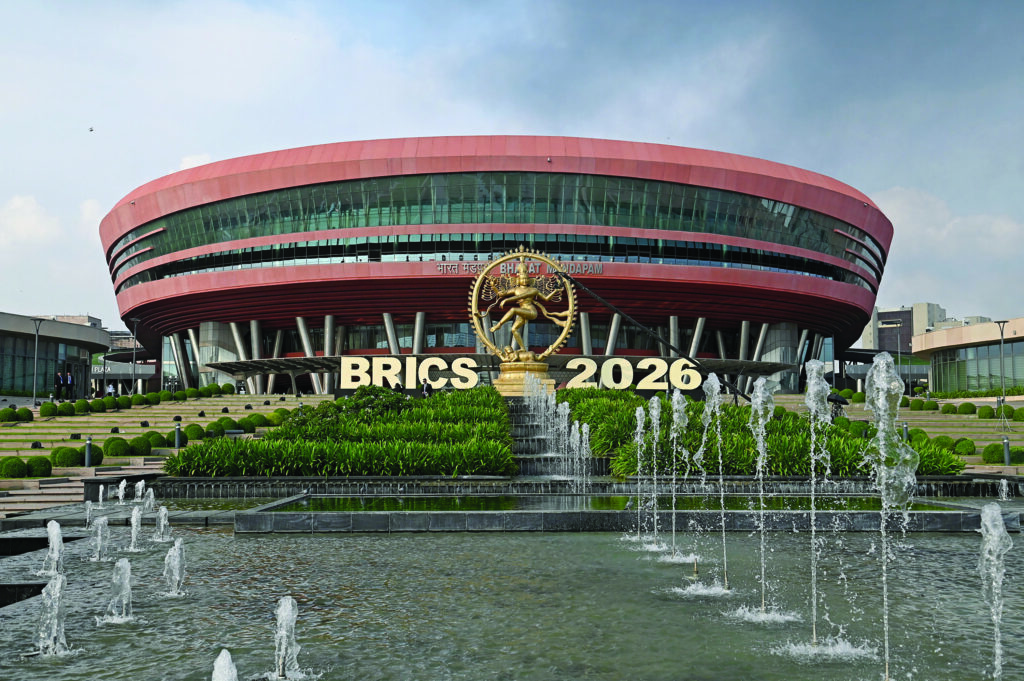
India sends a delegation for reasons that suit both sides. Moscow gets to showcase the relationship it most wants to display, and Indian institutions get a prominent stage on which their scepticism of American power travels well. New Delhi’s balancing act between Washington, Beijing and Moscow lends its experts unusual credibility on precisely the questions the forum poses, which is why their lines are quoted back so eagerly. Lavrov tied the thread to Primakov, reminding the room that the Russia-India-China format Primakov originated 30 years ago became the core of BRICS, now expanded from five members to ten, and pointed to the new Russia-China declaration on a multipolar world and Putin’s Greater Eurasian Partnership as the architecture meant to replace a Western-led one.
How Others Read It
Not all observers interpret the forum in the same way. Analysts at Chatham House argue that Russia’s language of multipolarity functions not only as a strategic objective but also as an ideological instrument, a benign-sounding vocabulary of sovereign equality that in practice expects smaller states to defer to regional hegemons, and they read Moscow’s framing of Ukraine as a deliberate recasting of an invasion into a global contest against a US-led order. On that reading the forum is not a venue for open debate about the future of the world but a stage for a settled position, and the non-Western speakers function less as interlocutors than as witnesses. The competing interpretation matters because the Readings are built to be quoted, and a reader who takes the quotations at face value absorbs the framing along with them.
The Strategic Functions of the Primakov Readings
Viewed simply as an academic conference, the Primakov Readings appear to encourage open discussion. Viewed as an instrument of statecraft, the forum performs three interconnected functions. First, the forum signals to domestic audiences that respected foreign experts come to Moscow and broadly validate Russia’s critique of the West. Second, the forum provides non-Russian voices, Indian, Chinese, and occasionally Western, whose scepticism of American power can be presented as independent corroboration of Russian arguments. Third, through the parallel youth programme, the forum socialises a younger generation into the same framework, ensuring that the worldview outlives the officials currently advancing it.
None of this necessarily makes the underlying diagnosis false. The fragmentation of international institutions and the growing confidence of middle powers are developments visible well beyond Moscow. The forum’s strategy is to take that credible diagnosis and channel it towards a single conclusion: that Russia is the victim of Western rule-breaking rather than an author of the disorder it describes. The sections on Ukraine make that shift most visible, recasting a war initiated by Moscow as one forced upon it. Dismissing the Readings as mere theatre underestimates their significance. The forum is not where Russian foreign policy is made, but where it is rationalised, refined, and reinforced through the accumulation of sympathetic voices and the discipline of annual repetition.
Note: This explainer has been researched, edited, and fact-checked by India’s World staff and prepared with AI assistance.