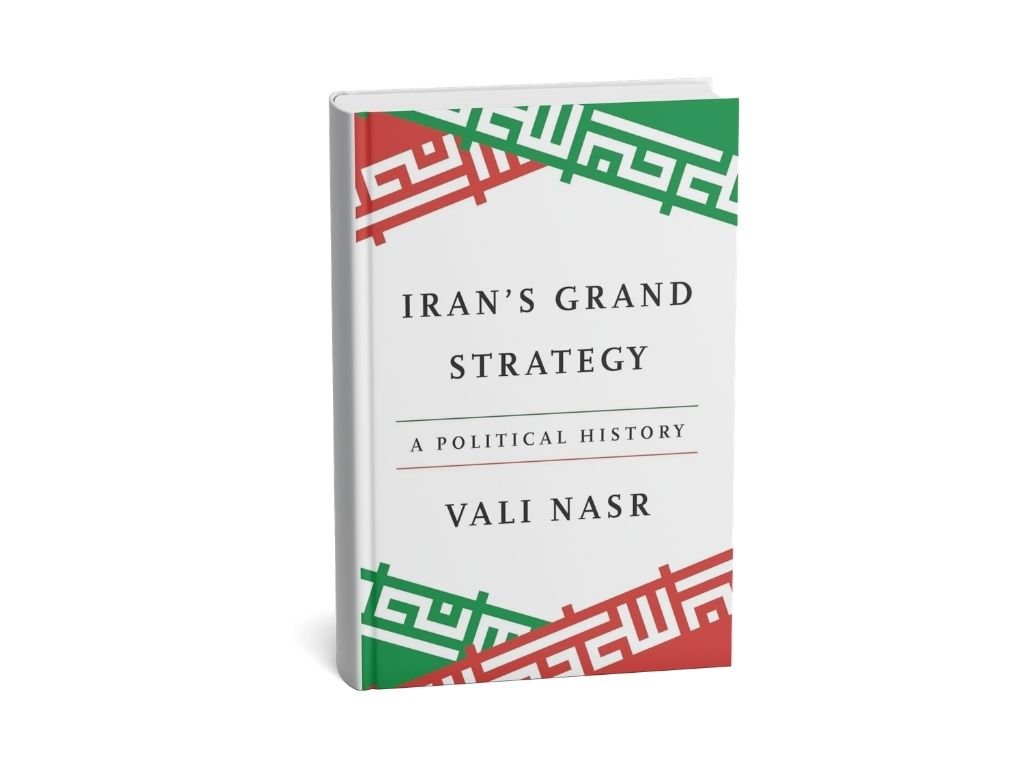
Comprising eleven chapters, Prof. Vali Nasr’s Iran’s Grand Strategy: A Political History revisits Iran’s post-1979 trajectory to separate Western perceptions from its strategic logic. Starting with the aftermath of Hamas’s attacks on 7 October 2023, he then revisits the historical roots of Iran’s strategic outlook. He traces, behind the revolutionary rhetoric and religious zeal, a calculating geopolitical actor pursuing coherent national interests shaped not only by theology but also by centuries of historical trauma.
Nasr’s starting point is history, through which he traces Iran’s strategic anxieties to the 19th century, when imperial Russia and Britain carved up Iranian territory and penetrated its economy, and to the 1953 CIA-backed coup that overthrew Prime Minister Mosaddegh. These experiences, he argues, ingrained a deep fear of foreign domination into the Iranian national consciousness, which Khomeini channelled in 1979, using Islam as the means to restore independence rather than as an end in itself.
The Iran-Iraq War (1980–1988) emerges as the book’s true centrepiece. Nasr convincingly shows how this eight-year catastrophe, in which the Arab world, the United States, and the West all backed Saddam Hussein, forged Iran’s enduring conviction that it is alone in a hostile world. From that crucible emerged the IRGC, the “Sacred Defence”, and the doctrine of self-reliance that continues to define Iranian strategic culture. Nasr argues that war did not merely shape Iran’s foreign policy; it built the institutions upon which the Islamic Republic still rests.
Nasr describes Iran’s core strategy as a “grand strategy of resistance,” which involves using proxies like Hezbollah, Hamas, the Houthis, and Iraqi militias to project power and keep enemies away from Iranian borders. This “forward defence doctrine,” along with nuclear ambiguity and a shift towards China and Russia (“Look East”), creates a consistent, though costly, geopolitical stance.
Nasr excels at illustrating how Iran’s 2015 nuclear deal was more a pragmatic move to lift sanctions and protect strategic interests than a purely ideological concession. One intriguing aspect in Nasr’s book is Mojtaba Khamenei’s rise in importance. His significance comes from family ties and his military background, having served in the elite Habib ibn Mazahir al-Asadi Battalion, and their roles in the Iran–Iraq War. Nasr’s scholarship is meticulous, and if there is a limitation, it is one that the author acknowledges. The book was published just before the Israeli and American strikes in June 2025, which has further transformed the regional landscape.
In conclusion, Nasr leaves us with an Iran that remains resilient yet weakened, constrained yet not fundamentally changed. In a policy debate often reduced to a choice between force or concession, Iran’s Grand Strategy provides a more nuanced perspective: real understanding. This isn’t just a book about Iran; it explores how nations turn survival into strategic thinking and incorporate historical burdens into every decision.