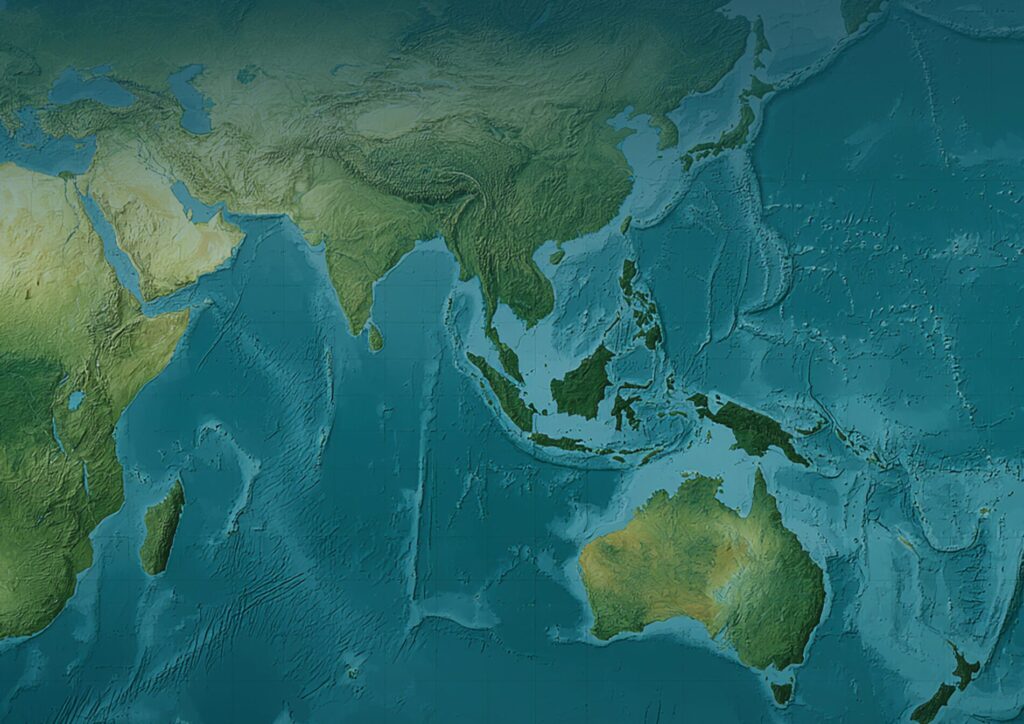
For two decades, the global apparel trade has been a contest among China’s scale, Bangladesh’s cost, and Vietnam’s speed, with India trailing in fourth or fifth. India’s textile and apparel exports, including handicrafts, reached $33.01 billion in FY 2025-26, up a modest 2.1%. By apparel value alone, India exported about $16.3 billion worth of clothing in 2025, accounting for less than 4% of global apparel trade. India’s broader textile-and-apparel share is 3.9%, good for 6th place globally, even as New Delhi targets $100 billion in textile exports by 2030.
How We Got Here
The current contest has roots in the Multi-Fibre Arrangement (MFA), which, from 1974, let rich-country importers cap textile imports through quotas, a system replaced by the decade-long phase-out under the Agreement on Textiles and Clothing, which ended on January 1, 2005. According to research by the Indian Council for Research on International Economic Relations (ICRIER), India’s share of textile and clothing exports actually fell during the late-quota years, from 3.02% in 1994 to 2.94% in 2004, before rising to 4.53% by 2014 after quotas ended. Vietnam and Bangladesh, however, expanded faster from smaller bases, with Vietnam’s share growing at a 10.94% compound annual rate, compared with 7.61% for Bangladesh. India’s Economic Survey 2016-17 later acknowledged that “the space vacated by China is fast being taken over by Bangladesh and Vietnam in case of apparels”, a diagnosis that still holds two decades on.
The 2025 Scoreboard
Full-year apparel export figures reported by each country’s official sources—China’s Customs, Bangladesh’s EPB, Vietnam’s GSO, and India’s Ministry of Textiles—show the order of magnitude plainly, even though the export baskets are not perfectly comparable.
| Country | Apparel/garment exports, 2025 (US$ bn) | Y-o-Y change | World rank (apparel only) |
| China | 151.18 | -5%* | 1 |
| Vietnam | 39.64 | +5.6% | 2 |
| Bangladesh | 38.82 | +1.2% | 3 |
| India | ~16.0** | +7.7% | ~6-7 |
*China figure is finished garments only, per Modaes Global/Customs data. **India’s RMG figure, per Ministry of Textiles/IBEF; total textiles and apparel, including handicrafts, was $33.01bn. Sources: Modaes Global; TBS News/EPB; Fibre2Fashion/VITAS; IBEF/Ministry of Textiles..
Vietnam overtook Bangladesh for second place by an $817 million margin, reversing the ranking that had held since 2021, while China’s garment exports kept shrinking, down 5.9% in Q3 2025 and 15.7% in October alone, year-on-year, as U.S. tariffs bit.
China’s Retreat, Tariffs, and Who Benefits
China’s clothing-export share fell to 29.6% of world trade in 2024, its lowest since 2010, even as its textile share—yarns and fabrics, the inputs others sew into clothing—rose to 43.3%. China is retreating from the sewing floor while tightening its grip on the textile supply chain: Vietnam’s apparel exports contain 44% foreign (mostly Chinese) value-added, compared with just 21% for India’s more vertically integrated industry.
Tariffs have driven much of the recent reshuffle. India’s reciprocal rate started at 26–27% in April 2025, lower than Vietnam’s 46%, Bangladesh’s 37% and China’s 125%, until an additional 25% Russia-oil penalty pushed India’s rate to 50% by August. A bilateral agreement on February 2, 2026, reduced that to 18%, but the entire framework was upended on February 20, when the U.S. Supreme Court ruled that the International Emergency Economic Powers Act (IEEPA) did not authorise the reciprocal tariffs. The Trump administration responded by replacing the country-specific regime with a temporary flat 10% tariff under Section 122 of the Trade Act of 1974, effective February 24, 2026, effectively eliminating India’s earlier tariff advantage. The Section 122 measure is limited to 150 days unless extended by Congress, and its legality remains under appeal.
Wages, Fabric and the Cotton Trap
Bangladesh’s manufacturing wages average $135–140 a month, the lowest among major apparel producers, according to Statista’s analysis of 2024 USITC competitiveness data, compared with roughly $300–400 in Vietnam and about $145 in India, according to Vietnam’s state-run news agency, citing Vinatex chairman Lê Tiến Trường. This leaves India too costly to compete in the basic-garment segment dominated by Bangladesh. India is among the world’s largest producers of man-made fibres, yet roughly 60% of clothing made worldwide is now synthetic, not cotton—a mismatch Policy Circle attributes to high import duties on polyester and viscose, anti-dumping actions and quality-control orders that have priced smaller Indian firms out of synthetics.
The Free Trade Agreement Race
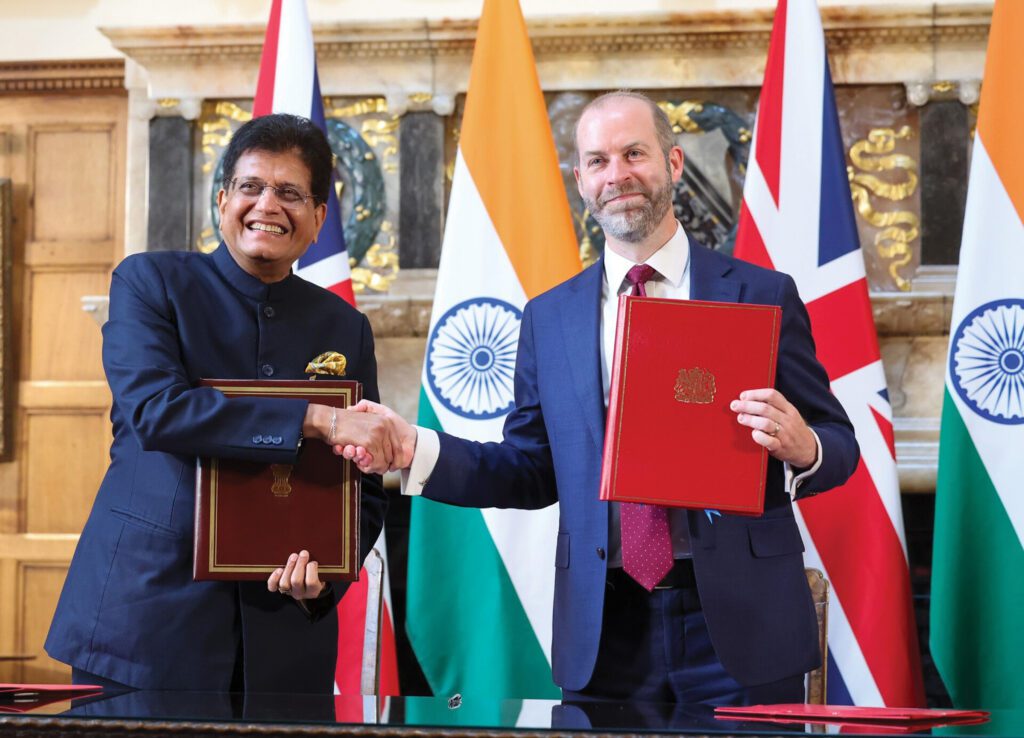
India’s recent edge has come from diplomacy: it concluded the India-UK CETA (July 2025), brought EFTA into force, and signed deals with Oman, New Zealand, and the EU within months—growth the Ministry credits for export gains across 111 countries, including Hong Kong (69%) and Japan (19.0%). But Vietnam’s edge predates this scramble: it already sits inside CPTPP, the EU-Vietnam FTA, and RCEP, a depth of access India is only beginning to match.
Why It Matters at Home
Apparel matters differently to each country. India’s industry contributes 2.3% of GDP and employs 45 million people directly, but Bangladesh’s RMG sector is far more export-concentrated, almost 13% of GDP, making Dhaka’s politics acutely sensitive to slowdowns, as seen in the 60% minimum-wage hike conceded in 2023 after deadly protests. India, by contrast, has a domestic apparel market worth $225 billion and growing 10-12% a year, a cushion that Vietnam and Bangladesh, far more export-dependent, lack on a comparable scale.
The Bottom Line
India’s apparel story in 2025-26 is stabilisation, not a breakthrough. It hasn’t closed the gap with Bangladesh or Vietnam, both around two-and-a-half times India’s RMG total, and the brief tariff advantage India enjoyed has now been erased by a flat-rate U.S. tariff regime that benefits Vietnam and Bangladesh more than it does India. What gains India has made instead come from diplomacy: its FTA push is, for the first time in years, narrowing Vietnam’s trade-access lead. Converting that into market share will likely hinge less on the next tariff headline than on the slower task this analysis keeps surfacing: building a man-made-fibre garment base to match the cotton one India has spent seventy years perfecting.