Few bilateral relationships have experienced such a dramatic reversal in recent years. Long-simmering disagreements over Khalistan separatism and Canada’s handling of anti-India activities escalated into a full-blown diplomatic crisis after the killing of Hardeep Singh Nijjar in 2023. Reciprocal expulsions, visa restrictions, and security allegations brought ties to their lowest point in decades. A change of government in Ottawa subsequently opened the way for a cautious reset, with both countries rebuilding diplomatic channels and expanding economic engagement.
The Timeline
2018–2022: The fault lines emerge
February 2018 – The Jaspal Atwal controversy: Canadian Prime Minister Justin Trudeau’s first official visit to India (17–23 February) is overshadowed by the presence of Jaspal Atwal at events associated with the delegation. Atwal had been convicted in connection with the 1986 attempted murder of Malkiat Singh Sidhu, Punjab’s Minister of Planning, on Vancouver Island. Atwal’s invitation to a reception at the Canadian High Commission in New Delhi was subsequently withdrawn. The episode exposes India’s concerns about Khalistan-related activities in Canada.
30 November 2020 – Farmers’ protests: Trudeau expresses support for farmers protesting against India’s agricultural laws, saying Canada will always defend the right to peaceful protest. India objects, describing his remarks as interference in its internal affairs.
2023–2024: From tensions to diplomatic rupture
June 2023 – Khalistan-related controversy: External Affairs Minister S. Jaishankar criticises a parade float in Canada depicting the assassination of former Prime Minister Indira Gandhi.
18 June 2023 – Hardeep Singh Nijjar is killed: Nijjar, a Canadian citizen and Sikh separatist leader designated a terrorist by India in 2020, is shot dead outside a gurdwara in Surrey, British Columbia.
September 2023 – Trade negotiations suspended: Canada pauses negotiations on the proposed Early Progress Trade Agreement (EPTA) and postpones a planned trade mission to India.
10 September 2023 – Modi raises security concerns: On the sidelines of the G20 Summit in New Delhi, Prime Minister Narendra Modi conveys to Trudeau India’s strong concerns about anti-India activities by extremist elements in Canada.
18 September 2023 – Trudeau makes allegations in Parliament: Trudeau tells Canada’s House of Commons that authorities are pursuing credible allegations of a potential link between agents of the Indian government and Nijjar’s killing. India rejects the allegations as absurd and motivated. Both countries expel a diplomat.
21 September 2023 – India suspends visa services: India suspends visa services for Canadian nationals, citing security concerns for its diplomatic personnel in Canada.
19 October 2023 – Canada withdraws 41 diplomats: Following India’s demand for diplomatic parity, Canada withdraws 41 diplomats and 42 dependants from India. India subsequently resumes visa services in selected categories.
3–11 May 2024 – Arrests in the Nijjar investigation: Canadian authorities arrest four Indian nationals in connection with Nijjar’s killing. They are charged with offences including first-degree murder and conspiracy to commit murder.
3 June 2024 – Canadian foreign interference report: Canada’s National Security and Intelligence Committee of Parliamentarians (NSICOP) releases a report on foreign interference in Canadian democratic institutions, identifying India among the countries of concern.
14 October 2024 – Diplomatic relations hit a new low: Canada identifies Indian High Commissioner Sanjay Kumar Verma and five other diplomats as persons of interest in its investigation into alleged violent criminal activity. Canada announces their expulsion. India rejects the allegations, withdraws its targeted diplomats and declares six Canadian diplomats persona non grata. The reciprocal action marks the most serious diplomatic confrontation in the crisis.
2025: The beginning of a reset
28 April 2025 – Mark Carney wins Canada’s federal election: The Liberal Party, led by Mark Carney, returns to power.
29 April 2025 – Modi congratulates Carney: Prime Minister Narendra Modi congratulates Mark Carney on the Liberal Party’s victory in Canada’s federal election and his election as Prime Minister. Modi expresses his willingness to work with Carney to strengthen bilateral ties, citing shared democratic values, the rule of law and people-to-people connections.
6 June 2025 – Carney invites Modi to the G7 Summit: In a telephone conversation, Canadian Prime Minister Mark Carney invites Modi to attend the G7 Leaders’ Summit in Kananaskis, Alberta, scheduled for 15–17 June.
17 June 2025 – First meeting at the G7 Summit: Modi and Carney hold their first in-person bilateral meeting in Kananaskis. They agree to appoint new High Commissioners and take calibrated steps to restore stability, while restarting senior ministerial and working-level engagement.
28 August 2025 – High Commissioners reinstated: Canada appoints Christopher Cooter as its new High Commissioner to India, while India appoints Dinesh K. Patnaik as its High Commissioner to Canada. Both appointments mark the restoration of senior diplomatic representation.
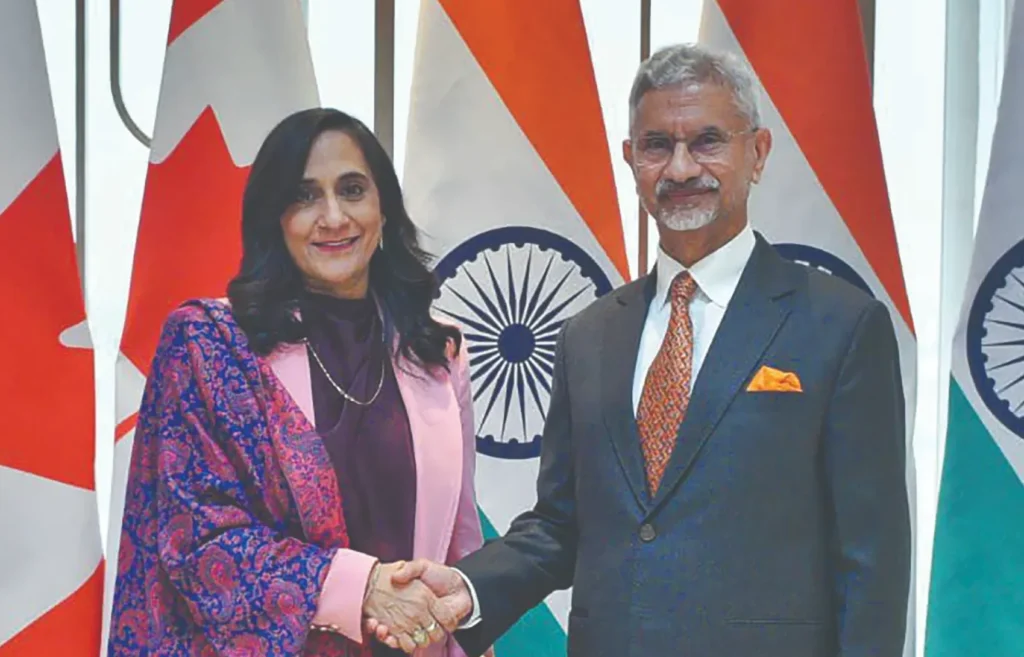
18–29 September 2025 – Security and diplomatic consultations resume: National Security Advisers Ajit Doval and Nathalie Drouin meet in New Delhi on 18 September, agreeing to address mutual security concerns and strengthen cooperation. Pre-Foreign Office Consultations follow on 19 September, while Jaishankar and Canadian Foreign Minister Anita Anand meet in New York on 29 September.
13 October 2025 – New Roadmap for bilateral relations: During Anand’s visit to India, the two foreign ministers announce a roadmap covering trade, investment, energy, critical minerals, agriculture, education, technology, research and people-to-people ties.
13–23 November 2025 – Trade dialogue and CEPA: The seventh Ministerial Dialogue on Trade and Investment takes place in New Delhi on 13 November. On 23 November, Modi and Carney meet at the G20 Summit in Johannesburg and agree to formally launch negotiations for a Comprehensive Economic Partnership Agreement (CEPA), targeting more than doubling bilateral trade to C$70 billion by 2030.
2026: From normalisation to strategic re-engagement
6–7 February 2026 – NSA Ajit Doval visits Canada: Doval meets Canadian Public Safety Minister Gary Anandasangaree and National Security and Intelligence Adviser Nathalie Drouin in Ottawa. Both sides agree on a shared security workplan, including reciprocal security and law-enforcement liaison officers.
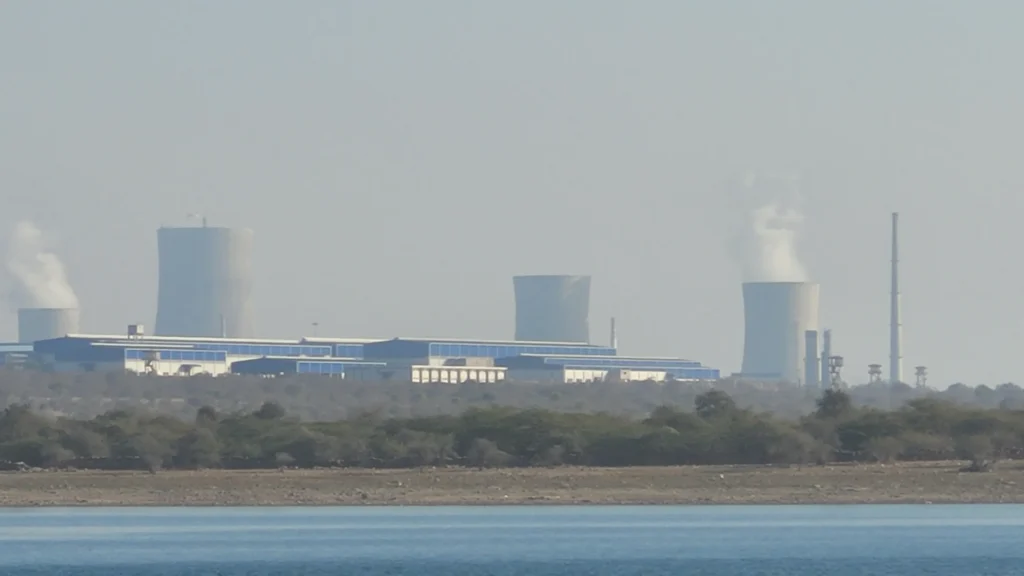
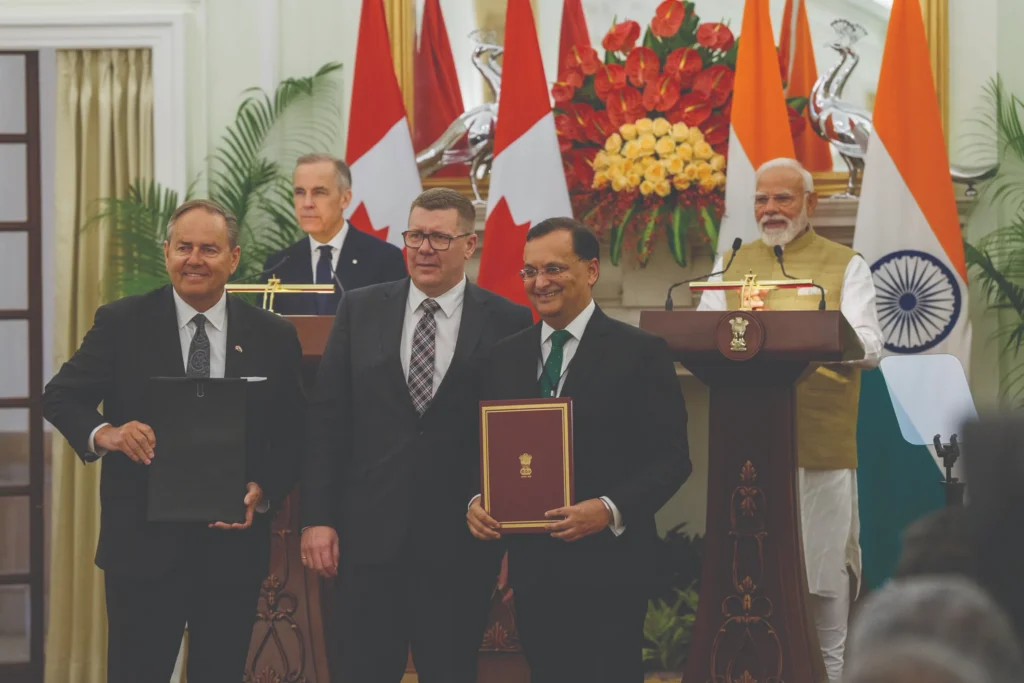
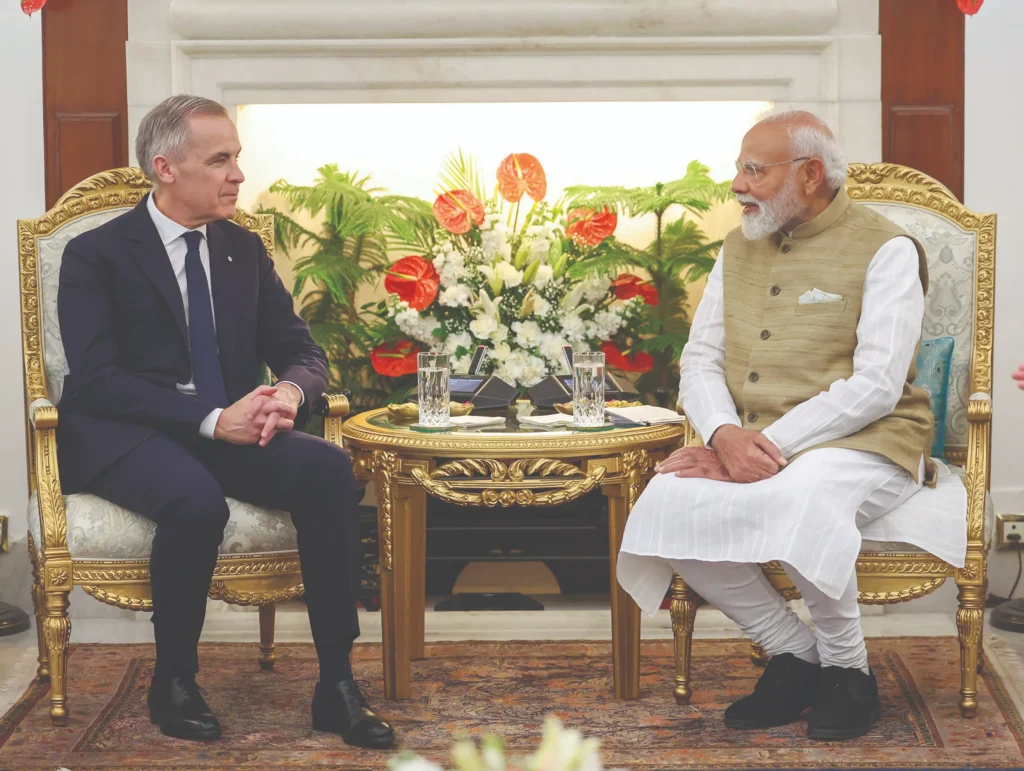
27 February–2 March 2026 – Carney visits India: The Canadian Prime Minister makes his first official visit to India and meets Modi in New Delhi. The leaders announce a renewed Strategic Partnership, formally launch CEPA negotiations and establish an India–Canada Defence Dialogue. A C$2.6-billion agreement between Canada’s Cameco and India’s Department of Atomic Energy for long-term uranium supplies provides a major boost to civil nuclear cooperation. Agreements also cover critical minerals, renewable energy and technology.
16 June 2026 – Modi and Carney meet at the G7 Summit: Meeting in Évian, France, the leaders review progress in bilateral cooperation and reaffirm their commitment to conclude CEPA negotiations in 2026. They also agree to launch negotiations on a General Security of Information Agreement (GSOIA). Modi accepts Carney’s invitation to visit Canada in 2026.
2 September 2026 – Foreign Office Consultations: Senior officials meet in New Delhi to review cooperation in trade, energy, critical minerals, science, security, defence, education and consular matters. Both sides reiterate their commitment to conclude CEPA negotiations before the end of the year.
5–17 October 2026 – Security and economic engagement intensifies: Canadian senior adviser David Morrison visits India from 5–7 October for security discussions with NSA Doval. Trade Minister Maninder Sidhu leads a Canadian business delegation to India, while Foreign Minister Anita Anand meets Modi and Jaishankar.
26 October 2026 – Migration and Mobility Dialogue inaugurated: India and Canada hold their inaugural Migration and Mobility Dialogue in New Delhi, co-chaired by MEA Secretary Sripriya Ranganathan and Canada’s Deputy Minister of Immigration, Refugees and Citizenship, Ted Gallivan. Both sides signed the Terms of Reference, establishing a regular mechanism for cooperation on student, professional and business mobility, and migration management.
The reset has restored diplomatic channels and created space for cooperation, but underlying security disagreements have not disappeared. Modi’s planned visit to Canada in December 2026 will be an important test of whether renewed engagement can move beyond crisis management and establish a durable strategic partnership between the two countries.