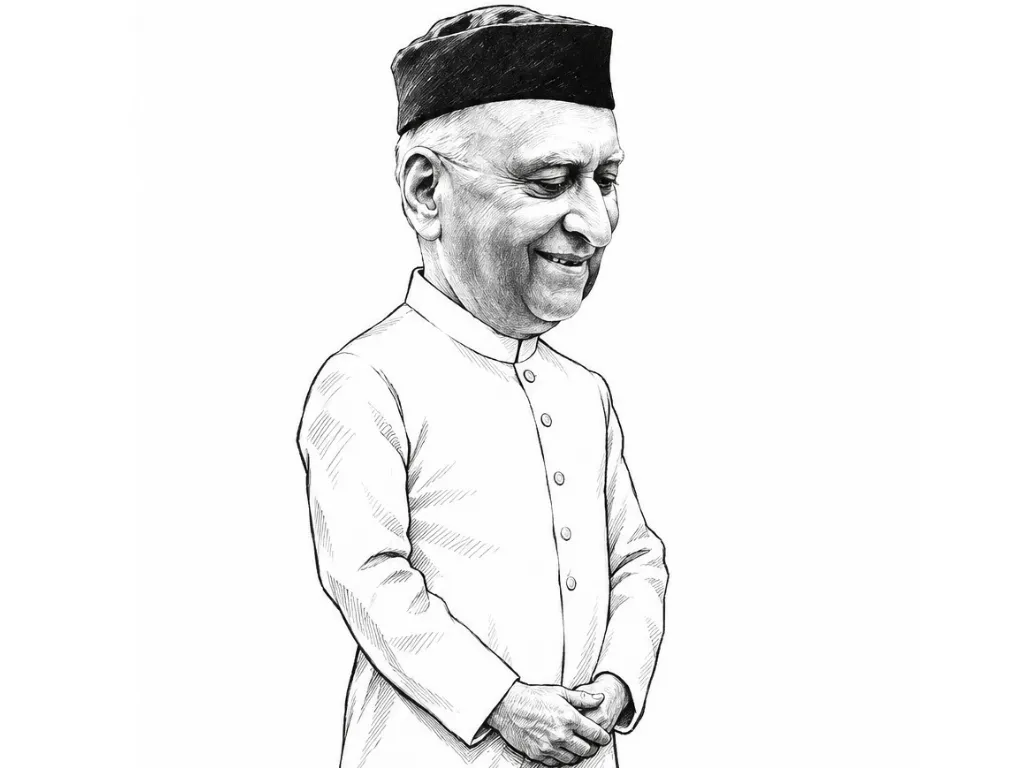
Maharaj Singh’s career offers a glimpse into the evolution of India’s overseas representation before and after independence. From investigating the conditions of Indian immigrants in Mauritius to raising racial discrimination at the United Nations, his work connected the concerns of overseas Indian communities with India’s growing engagement in international affairs.
Raja Sir Maharaj Singh was an Indian civil servant, administrator and diplomat whose career connected India’s early overseas representation with its emerging international engagement against racial discrimination. He investigated the conditions of Indian immigrants in Mauritius, served as India’s Agent in South Africa, and later joined India’s delegation to the United Nations General Assembly in 1946, where he opposed South Africa’s proposed annexation of South West Africa, drawing attention to its racial discrimination against Africans. He subsequently became the first Indian Governor of Bombay, serving from 1948 to 1952.
Born on 17 May 1878, Maharaj Singh was the second son of Raja Sir Harnam Singh of the Kapurthala royal family. He received his education at Harrow School in England and Balliol College, Oxford, where he completed his bachelor’s degree in 1900 and master’s degree in 1901. He subsequently studied law at the Middle Temple in London and was called to the Bar in 1902.
Returning to India, Singh entered the United Provinces Civil Service as a Deputy Collector in 1904. He held several administrative positions, including Registrar of Co-operative Societies in the United Provinces and Assistant Secretary in the Government of India’s Department of Education. He later served as Magistrate and Collector of Hamirpur, Deputy Commissioner of Hardoi, and Judicial and Educational Secretary to the Government of the United Provinces. Between 1927 and 1931, he served as Commissioner of Allahabad and Benares. In 1931, he became Chief Minister of Jodhpur State.
His overseas assignments began in 1925, when the Government of India deputed him to Mauritius to investigate the social and economic conditions of Indian immigrants.
In August 1932, Singh arrived in South Africa as the third Agent of the Government of India, succeeding Sir Kurma Venkata Reddi Naidu. His appointment came at a difficult moment for the Indian community. The Union of South Africa had introduced increasingly restrictive measures governing Indian land ownership, trade and residence. The Transvaal Asiatic Land Tenure Act of 1932 formalised racial segregation in property ownership, further aggravating tensions between the Indian community and the South African government.
Singh’s tenure was also marked by controversy over a proposed colonisation scheme. Following discussions between the Indian and South African governments, an enquiry was initiated to explore the possibility of relocating Indians to other territories. Singh supported cooperation with the enquiry. However, sections of the Indian community, particularly those born in South Africa, opposed the initiative. In an address published in Indian Opinion on 5 January 1934, Albert Christopher of the Colonial Born and Settlers’ Indian Association criticised the South African Indian Congress for participating in the enquiry. The association also accused the Indian Agent of agreeing to its terms of reference without consulting the community. Its members feared that the exercise would facilitate a reduction in the Indian population rather than identify genuine opportunities for voluntary emigration. Singh’s tenure ended in January 1935.
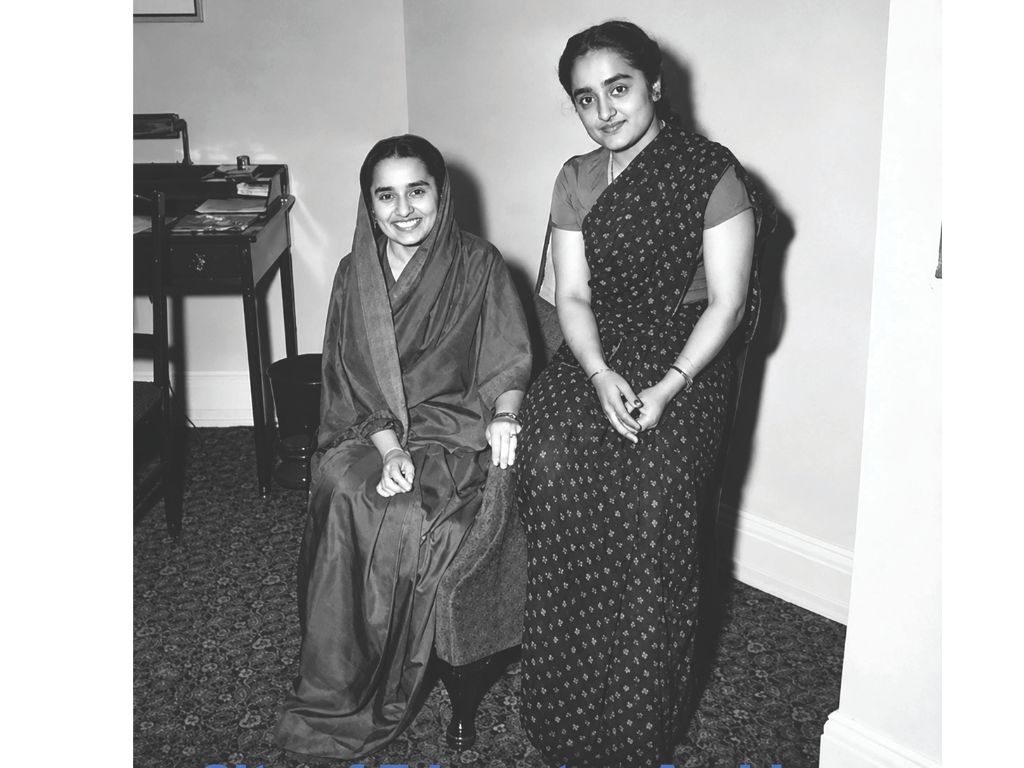
His diplomatic engagement with South Africa, however, continued beyond his assignment. In 1946, Singh joined the Indian delegation to the United Nations General Assembly as a representative, under the leadership of Vijaya Lakshmi Pandit. During discussions on South Africa’s request to annex the mandated territory of South West Africa (present-day Namibia), he described the treatment of the African majority in South Africa. Drawing on his experience as India’s former Agent, he argued that annexation would extend similar discrimination and oppression to the territory. According to historian E. S. Reddy, his intervention influenced delegations unfamiliar with conditions in the region and brought South Africa’s racial policies under international scrutiny. The General Assembly rejected the annexation request.
After returning to India, Singh served as Home Member of the United Provinces Government from 1935 to 1937. He subsequently held senior public positions, including Vice-Chancellor of Lucknow University and Prime Minister of Jammu and Kashmir (3 months). On 6 January 1948, he assumed office as the first Indian Governor of Bombay, a position he held until 1952. He died on 6 June 1959.