I am delighted to bring you the September 2026 edition of India’s World, titled “Diplomacy as Drama”. I suspect a lot of our readers will disagree with our choice of the title, but read on, and you will see why we made that bold choice.
What prompted us to consider an issue on this theme was what happened last year. On 10 May 2025, at 3.35 pm, Pakistan’s Director General of Military Operations called his Indian counterpart. The two Generals agreed that they would stop firing at 5 pm, and they did. Twenty-five minutes after that, the President of the United States posted that Washington had brokered the ceasefire and publicly took credit for it. The DGMO telephone call produced the outcome, and Trump’s social media post produced the story.
That gap between generating a substantive outcome and creating a narrative around it is the subject of this issue. Diplomacy was once conducted by people who were not very keen to be seen. They certainly refrained from conducting diplomacy in public. Today, diplomacy and diplomats are followed, liked and shared, and the negotiating room has a window facing the street.
Ajay Bisaria opens the issue by arguing that the target of diplomatic persuasion has shifted from governments to publics. The diplomat of today must understand the grammar of the feed and the logic of the algorithm, while retaining the older skills of judgement, discretion and human relationship-building.
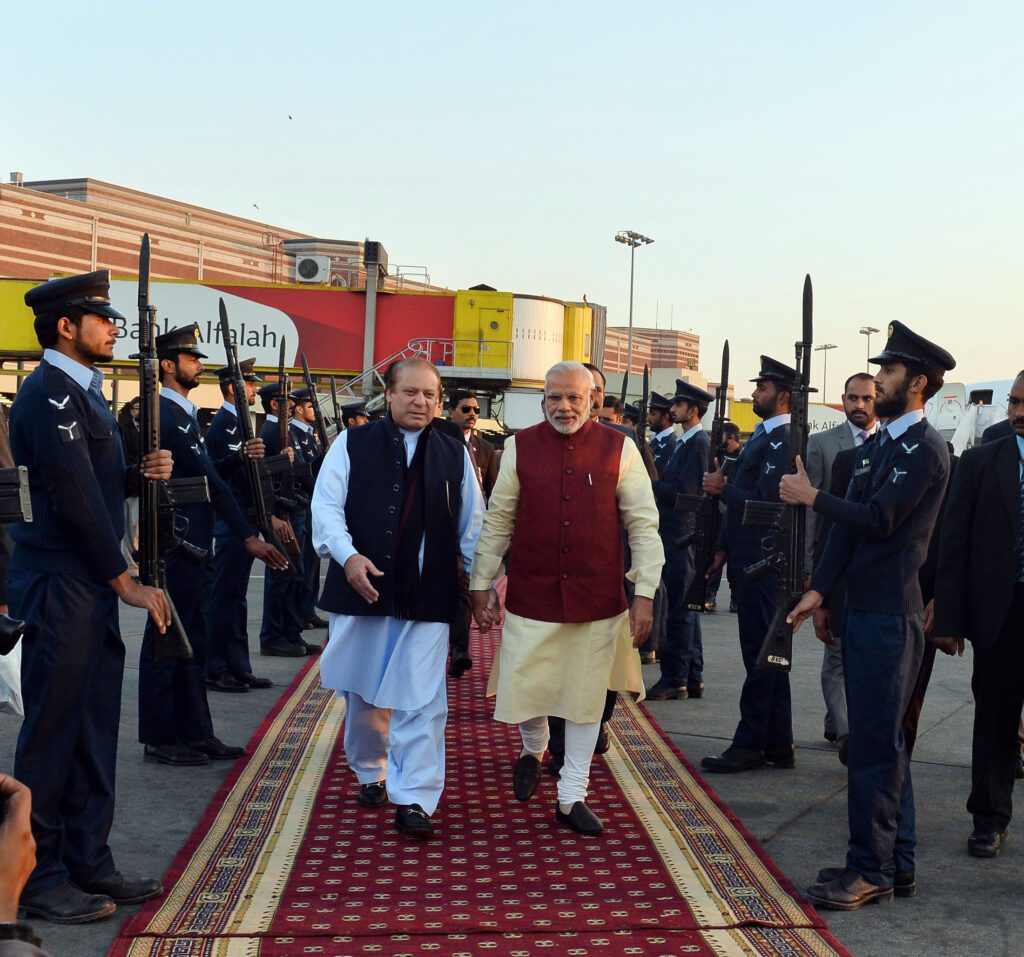
Our cover story looks at this shift from inside the room and outside it. Syed Akbaruddin, who was once the public face of the MEA, argues that public communication shaped diplomatic outcomes long before Twitter. Vikas Swarup remembers tweeting the photographs of Modi embracing Nawaz Sharif in Lahore on Christmas Day 2015, and makes the case that personal chemistry may well be a lubricant, but not a solvent. Ali Mamouri, who once advised an Iraqi prime minister, describes the officials’ new working environment, where the post becomes a commitment before the file becomes a policy. Svitlana Kovalchuk, writing from Kyiv, explores how Zelenskyy’s selfie video on the second day of the war changed its course.
Junjun Sharma Pathak’s conversation with Pushpesh Pant is a treat, and a must-read. It begins at the 2001 Agra Summit banquet, where the menu turned out to be the only document both sides signed, and ends with a much bigger political question about which India we choose to put on the plate.
In History, Vineet Thakur tells the story of Moosa ‘Mosie’ Moolla, who broke out of a South African jail, went into exile, and spent a decade and a half in Delhi conducting diplomacy for a movement that had no state, no power, and no conventional legitimacy, yet managed to reach the highest levels of the Indian state. Aparajith Ramnath writes on Ranjitsinhji, the cricketer, and his stint at the League of Nations, and asks why, of all the hundreds of princes, he was the one sent.
My personal favourite this time is Ambassador Sang-Woo Lim’s account of how the staff at the Korean Embassy in Delhi came to dance to Naatu Naatu, with his wife, also a diplomat, giving him the look that spouses reserve for outrageous ideas.
I hope you enjoy the rich fare of geopolitics, history, diplomacy, art and culture, book reviews, and much more.
I look forward to hearing from you. Write to me at editor@indiasworld.in.

Happymon Jacob