The story of India studies in China is also a story of knowledge, power, and intellectual agency. As Chinese scholars move beyond inherited Western frameworks and long-held strategic assumptions, they are asking new questions about India and rethinking what China needs to understand about its rise.
China has never lacked research on India. Both countries share deep civilisational ties and this has long shaped Chinese thinking on regional security and foreign affairs. Yet, research attention has remained uneven. Scholarship on China–India relations, Indian foreign policy, and security strategy has continued to expand, while sustained research on India’s economy and domestic politics has remained comparatively limited. This imbalance has deep roots in the disciplinary traditions and training pathways of India studies in China. To understand the changes now underway, one must first return to those traditions.
Traditions and Misalignment in India Studies
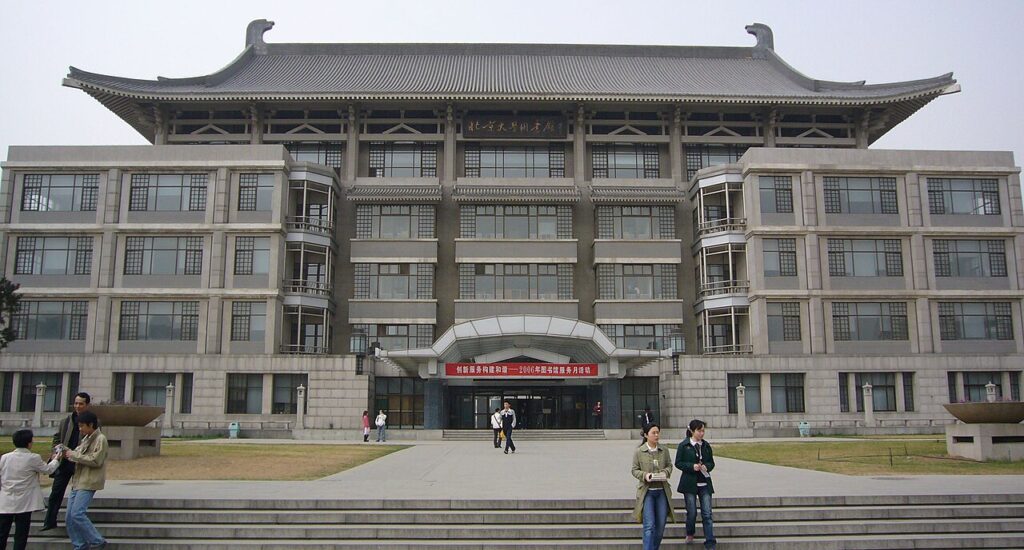
Modern Chinese scholarship on India developed mainly along two traditions. The first was classical Indology and language-based humanistic research. Ji Xianlin, Jin Kemu, and other scholars built a substantial body of work on Sanskrit, Buddhist texts, Indian literature, Indian civilisation, and the history of China–India cultural exchange. As a disciplinary form, classical Indology was also influenced by European Orientalism. It approached India mainly through language and ancient texts, with its centre of gravity in the civilisational past. Peking University pioneered this tradition. Students of Ji Xianlin and other scholars sustained its strong presence in China and influenced the orientation of university programs in languages such as Hindi and Tamil.
The second tradition focused on contemporary India, especially China–India relations, Indian foreign policy, and South Asian security. It directly served the need to understand bilateral relations and regional change and developed a strong policy-oriented character. In 1964, Sichuan University established an Indian Studies Office as part of China’s effort to strengthen research on foreign countries. Its work focused on Indian politics, economics, and foreign affairs and was strongly influenced by Marxist perspectives.
The two traditions made important contributions, but their purposes and methods differed sharply. This divide also shaped student training and the research skills expected of specialists. I studied Hindi and Indian literature as an undergraduate before moving into political science and international relations. The object of study was the same country, but the materials and questions came from almost different worlds: one entered India through its history and culture, while the other focused on its external relations. Both traditions shared one limitation: changes in the internal dynamics of modern India did not easily enter their field of vision.
Alongside these two traditions, there was a less visible line of India research within China’s government-affiliated research institutions. The economist Chen Hansheng (1897-2004), who published in English as Chen Han-seng, represented this approach. A pioneer of rural social surveys in China, Chen used Marxist methods to study land and agrarian questions. During fieldwork in British India, he divided the South Asian subcontinent into twenty-one agrarian regions and placed natural conditions, land relations, and the colonial economy within a single framework. The result was Ecological and Agrarian Regions of South Asia, circa 1930. In 1952, he helped establish the People’s Republic of China’s first institution devoted specifically to South Asian research within the Ministry of Foreign Affairs. From 1956 to 1961, its successor conducted systematic research on Indian land questions, the Five-Year Plans, and the Indian National Congress.
Chen offered another way to study India: to explain Indian society directly through the experience of Chinese social investigation and political-economic research. Following a Marxist path, he focused on how land institutions, relations of production, and colonial rule shaped modern India. Yet this approach did not develop into a stable, long-term tradition.
After reform and opening up, Chinese social science re-entered the international academic system. India studies in China rapidly absorbed European and American scholarship, and its research capacity expanded considerably. At the same time, however, its questions often followed Western agendas, while Western concepts, issues, and theories gained growing influence. Many studies also approached India through a democracy-centred ideological lens. India was frequently examined through the frameworks of “rise” or “balancing China”. Questions such as “Will Indian democracy produce India’s rise?” and “Can India balance China?” were repeatedly debated. By contrast, India’s industrialisation and the formation of its state capacity received far less sustained attention from a Chinese perspective. Knowledge grew, but intellectual agency did not keep pace.
A Shift in Research Questions
This situation has begun to change in recent years. The relative decline of the United States and Europe has weakened the authority and appeal of Western agendas. China’s growing national power and broader international experience have given its scholars greater scope to formulate questions according to their own needs. Research on India has therefore shifted from accepting established judgments in Western scholarship to an empirical assessment of India’s developmental capacity and national power.
This shift does not simply redirect the focus from strategic and diplomatic questions towards political economy. Rather, practical pressures raised the importance of India studies, while revealing explanatory limits of existing strategic assessments. One study based on the China National Knowledge Infrastructure examined 5,686 articles on India indexed in the Chinese Social Sciences Citation Index between 1998 and 2024. Research from 1998 to 2012 focused primarily on India’s development path; after 2013, foreign strategy and international interaction became much more prominent. As diplomatic questions assumed greater importance, scholars increasingly asked a more fundamental question: what capabilities underpinned India’s external behaviour?
Lin Minwang of Fudan University has summarised three main questions shaping recent Chinese debate on India: Can India sustain its rise? What is the nature of India–U.S. relations? How should China handle its relations with India? The first is the central question, and the other two largely derive from it. While these questions appear to belong to strategic research, they ultimately assess whether India can convert developmental potential into actual capability.
A new generation of Chinese scholars has also adopted a more critical view of many earlier studies and assumptions. Lin Minwang and Mao Keji, for example, have argued that Western enthusiasm for a comparative study of China and India served a geopolitical purpose: to cast India as a counterweight to China. Around two decades ago, observers widely expected India to overtake China economically. The developments since then have exposed serious flaws in those analyses and the research behind them.
A deeper research agenda requires stronger firsthand knowledge of the country. Yet direct exchanges between China and India contracted just as this need became more urgent. In 2018, nearly 280,000 visitors from mainland China travelled to India. Since 2020, direct flights and tourist visas have remained suspended, sharply reducing opportunities for researchers to conduct fieldwork and sustain academic linkages in India.
The decline in direct engagement coincided with growing demand for knowledge, pushing researchers to seek new forms of collaboration. During this period, the organisation and output of India studies in China changed markedly, and new research networks emerged. Because travel was restricted, Indian scholars were unable to observe these changes in Chinese research agendas and personnel in time. Many continue to understand China through older impressions and have therefore missed the critical period of this transformation. These changes were later carried forward through disciplinary development and new forms of research organisation.
Intellectual Agency and a New Research Community
In 2022, China listed Area Studies as a first-level discipline in its national graduate education catalogue, giving India studies greater institutional importance. Doctoral graduates with training in Indian languages such as Hindi and Tamil, especially those who have studied and lived in India, have particularly strong employment prospects in China. The state has also invested substantial resources. Many universities have introduced Hindi degree programs, and China increasingly encourages in-country training for India specialists: those who study India are expected to spend time living or studying there.
China’s institutional environment also gives observant young area specialists more room to develop. In India, public discussion of China and China–India think-tank exchanges are still shaped largely by former ambassadors to China and retired military officers. In China, former ambassadors and other officials who have worked on India generally have less scope after retirement to maintain the same level of media visibility and shape public understanding as experts. China’s growing demand for knowledge about other countries has therefore created more space for younger specialists.
Formal research institutions cannot always meet rapidly growing public demand for knowledge. The internet and social media have lowered the cost of gathering materials and collaborating. Researchers who follow a particular issue over many years have become recognised specialists. Work once undertaken by a small number of institutions—collecting materials and maintaining day-to-day observation—is increasingly shared by researchers dispersed across the country.
The South Asian Studies Newsletter is one example of this change. It connects younger researchers across China and develops assessments through long-term tracking and collective discussion, with an emphasis on practical questions and the steady accumulation of materials. These scholars also display stronger intellectual agency. They make extensive use of Western research but do not treat Western questions as self-evident. Instead, they form judgments from Chinese experience and Indian realities. The field has thus gained broader participation and a more continuous process of knowledge production.
A New Phase of India Studies in China
This brings us back to the opening question. Building on the strengths of classical Indology and policy-oriented research, India studies in China is turning more directly to India’s development and state capacity. This shift shows that Chinese scholarship is developing the intellectual agency to frame questions from its own experience and test judgments against Indian realities. For India, the question is no longer simply whether China takes India seriously, but what questions Chinese scholars are now asking about India. Mature mutual understanding begins when both sides stop reading each other through outdated impressions.