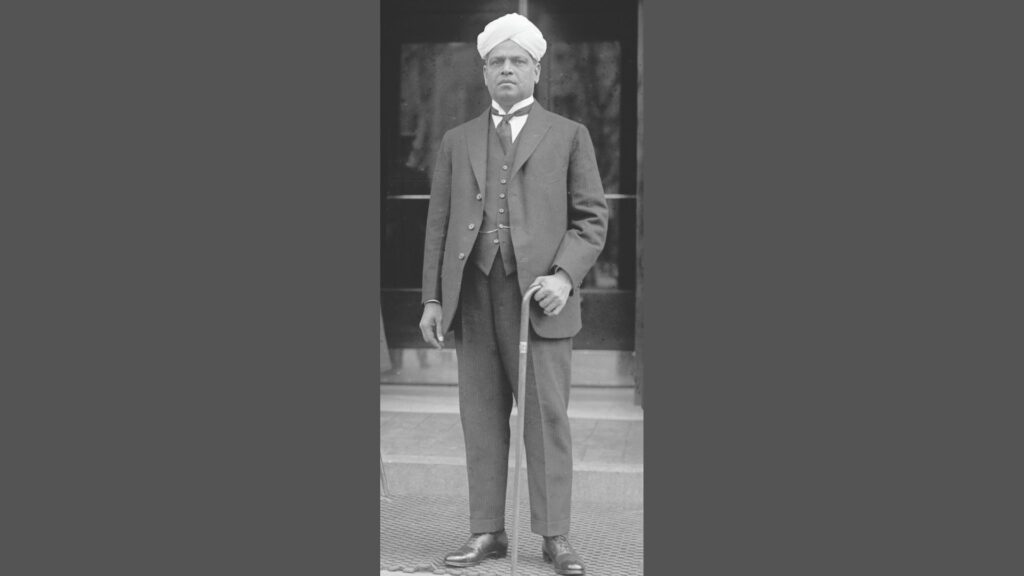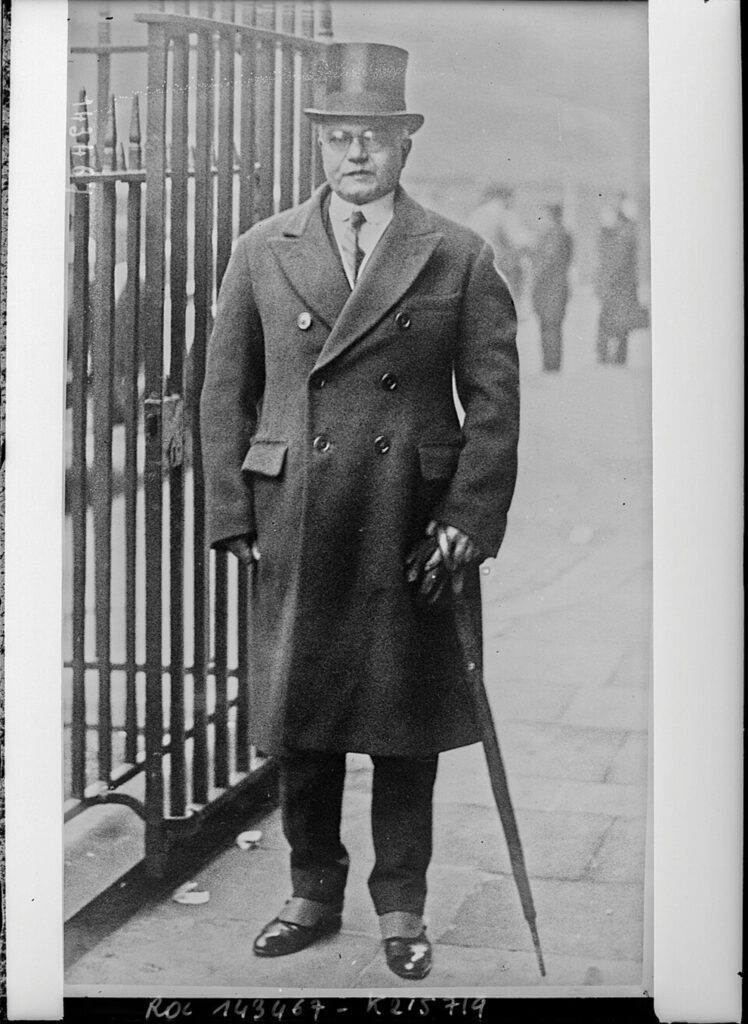
Atul Chandra Chatterjee was the third High Commissioner for India to the United Kingdom and the second Indian to hold the post. He succeeded Sir Dadiba Merwanji Dalal in 1925 and served until 1931. During his tenure, he helped strengthen India’s diplomatic presence in London and became one of the most prominent Indian representatives on the international stage.
Born on 24 November 1874 in Calcutta into a highly educated bhadralok family, he was the eldest son of Hem Chandra Chatterjee and Nistarini Devi. Following his education at Hare School and Presidency College, Calcutta, he travelled to Britain in 1893 on a Government of India scholarship to attend King’s College, Cambridge. There, he completed the History Tripos and was awarded the Bhavnagar Medal in 1897, a distinction bestowed upon outstanding Indian students.
Returning to India in 1897, he joined the Indian Civil Service and served in various districts of the United Provinces as Assistant Magistrate, Joint Magistrate, and Magistrate and Collector. From 1912 to 1916, he was Registrar of Co-operative Societies. He became Secretary to the Government of the United Provinces in 1917 and Chief Secretary in 1919.
Chatterjee represented India at sessions of the International Labour Conference, including Washington (1919) and Geneva (1921). In 1921, he became Industries Secretary to the Government of India and, two years later, Industries and Labour Member of the Viceroy’s Executive Council.
When Dalal resigned in 1924, Chatterjee was a natural choice as High Commissioner. By then, he had established himself as one of the most distinguished Indian members of the Indian Civil Service, combining administrative experience, cabinet-level responsibility, and significant international exposure. His work on labour and industrial policy, together with his participation in international conferences, had given him a reputation as an able representative of Indian interests abroad.
As High Commissioner in London, Chatterjee sought to give India a more visible and permanent diplomatic presence. His most enduring contribution was his leading role in promoting the construction of India House in Aldwych, which remains the headquarters of the Indian High Commission in the United Kingdom. Conceived during his tenure and inaugurated in 1930, the building symbolised India’s growing status within the Empire and its aspirations for greater self-government.
Appointed a Knight Commander of the Order of the Indian Empire (K.C.I.E.) in 1925, he also represented India at the League of Nations, served as President of the International Labour Conference in 1927, and participated in the London Naval Conference of 1930.
After leaving the High Commission in 1931, Chatterjee served on the Council of India and later advised the Secretary of State for India. He spent much of his later life in Britain and remained engaged in international affairs.
Chatterjee’s personal life was marked by both achievement and tragedy. He was married twice. His first wife, Vina Mookerjee, and their young daughter predeceased him. In April 1924, he married Gladys Mary Broughton, O.B.E., a barrister and the daughter of Captain William Bernard Broughton of the Dorset Regiment. The couple became a prominent presence in London during Chatterjee’s tenure as High Commissioner for India, and Gladys herself was active in public and legal affairs. He died in 1955, leaving behind a legacy as one of the foremost Indian civil servants and diplomats of the late colonial era.