As conflict once again centres Iran in global discourse, it reveals a longer history of cultural exchange. Through Lucknow, this essay examines India’s Persianate inheritance beyond its Shia foundations. It shows how that legacy survives in the city’s literary, linguistic, and culinary worlds.
There is a time in Lucknow when grief walks the streets. It arrives each year with Muharram, the period of mourning for Imam Husain, killed at Karbala. It moves through the old city in processions that carry memory as much as mourning, returning along routes worn into the city by generations.
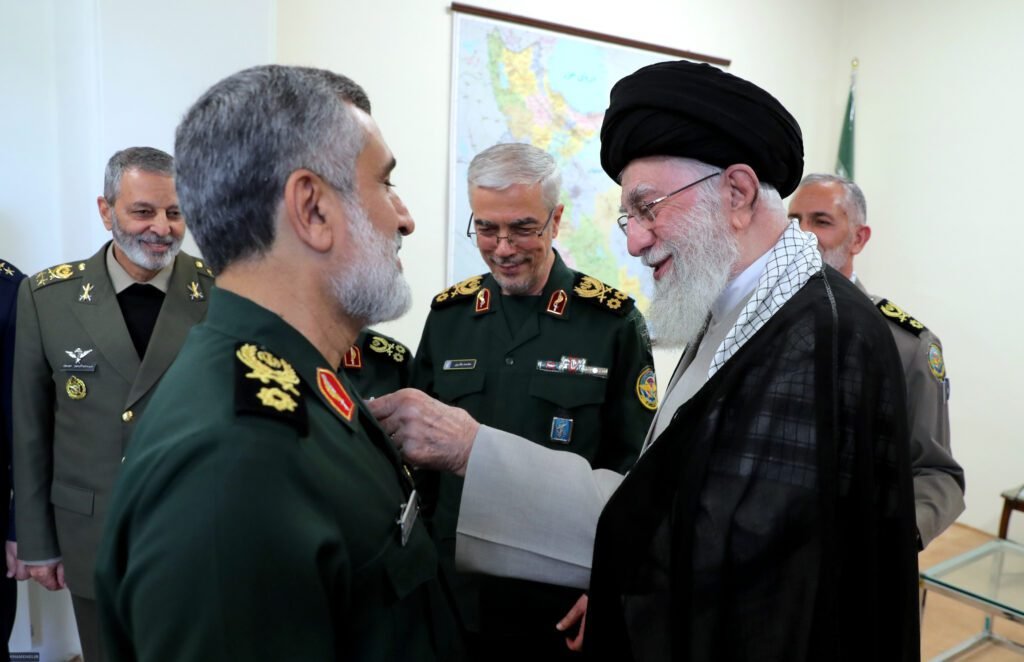
When news of Ayatollah Ali Khamenei’s death reached the old city, the streets began to fill. People moved through narrow lanes, and mourning settled over the city as though it had never quite left.
Lucknow is known for its ganga-jamuni tehzeeb, a culture deeply rooted in adab, lehaaz, and pehle aap, where people take pride in a tongue that is clean and precise. The city is a time capsule, a nostalgia for India’s Persianate connection, and it knows how to grieve through poetry with a fluency it has carried for centuries. The Husainabad Clocktower, built by the British in 1881, rises over this landscape as a later addition. For a time, it kept time; then it stopped. The rhythms that organise the city’s life follow an older inheritance.