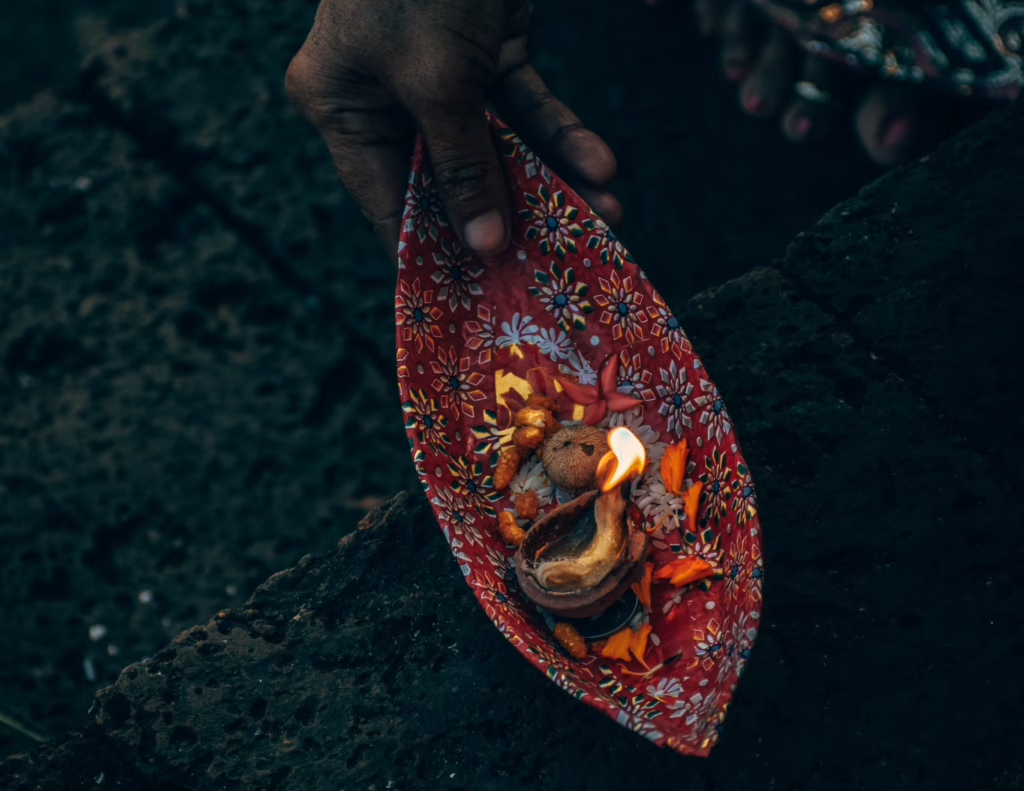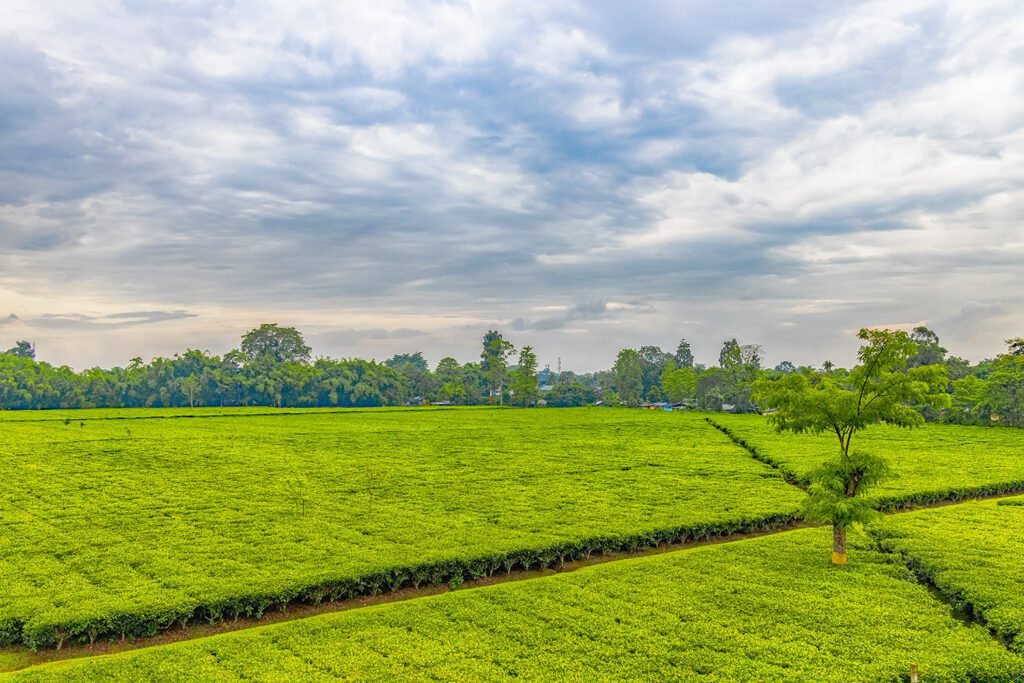
Tea in Assam began as a ritual, not a commodity. Long before Chinese tea reached European tables, local communities cultivated and consumed it. That world was upended with the arrival of the “Planter Raj,” which transformed a cultural practice into an extractive system built on control over land, labour, and lives.
In the days of the white foreigners,
Our Mother Assam of Gold
Became a prisoner in the hands of others.
— Bhuban Chandra Rajkhowa, trans. Dona Aideau
Tea is a product originally from China, where for centuries it held a central position as an agricultural, cultural and social element. Rooted in ancient legends and supported by archaeological findings, it progressively became a symbol of the Chinese world. Its production, standardisation, quality control, and diffusion were based on know-how developed in China. During the multiple dynasties—Tang, Song, Ming, and Qing—tea became a key trading product across Asia, Tibet, Korea, and Japan, supported by local trading routes and the Silk Road.