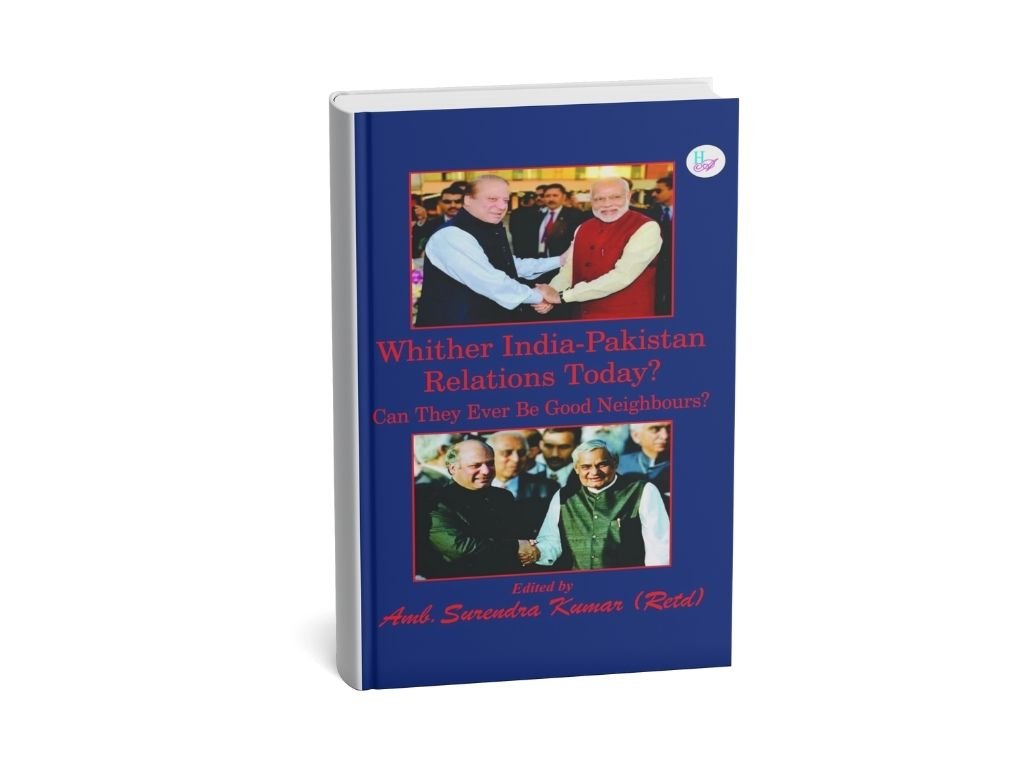
Whither India-Pakistan Relations Today? Can They Ever Be Good Neighbours? is a compelling collection of essays edited by former ambassador Surendra Kumar. Bringing together contributions from 14 distinguished figures—including two former foreign secretaries, two retired generals, a former intelligence chief, journalists, academics, and several former ambassadors—the book examines the developments in India-Pakistan relations as they have unfolded over the past few years. What emerges is a layered exploration of one of South Asia’s most enduring and volatile bilateral relationships, entrenched in cycles of mistrust and conflict, that have led to the present diplomatic impasse.
A recurring theme the authors therefore address is an erosion of dialogue as a diplomatic instrument. Formal talks, back-channel negotiations, and especially Track II engagements have stalled since 2019. The Balakot strikes marked a decisive turning point, reinforcing India’s stance that “terror and talks cannot go together”. This shift followed years of India grappling with Pakistan’s sub-conventional proxy war, which has kept the two sides locked in a relentless engagement-escalation-engagement dynamic, even as the latter remained fixated on Kashmir as its raison d’etre.
This diplomatic breakdown, the authors note, is unfolding amid Pakistan’s ongoing polycrisis: a widening civil-military fracture, a severe economic downturn marked by rising inflation and joblessness that has prompted repeated IMF bailouts and assistance from Saudi Arabia and China, and a security crisis along its northwest border with rising attacks from the Tehrik-i-Taliban Pakistan (TTP). India’s response has been to de-hyphenate Pakistan from the broader contours of its foreign policy, prioritising economic development and global partnerships instead (Quad, I2U2).
Ambassador Shyam Saran’s contribution is particularly valuable, situating the relationship within the wider geopolitical landscape. Pakistan’s ties with Washington have long been a fluctuating asset, and even its “all-weather” partnership with China is largely shaped by Beijing’s strategic priorities—the BRI and an expanding influence in the Indian Ocean. Meanwhile, with SAARC effectively defunct, New Delhi has redirected attention toward BIMSTEC. Yet, as the contributors argue, BIMSTEC cannot fully substitute for South Asian regionalism, and India’s “Neighbourhood First” policy ultimately requires a functional Pakistan.
But is rapprochement possible? History suggests yes—the Franco-German rapprochement after 1945 shows that a peaceful, constructive relationship with Pakistan remains possible—especially through revived trade, cultural and sporting exchanges, and stronger people-to-people ties. This vision is already being advanced by initiatives, including the Pakistan-India Forum for Peace and Democracy (est. 1995) and the South Asia Symphony Orchestra (est. 2018 by former foreign secretary Nirupama Rao).
However, a breakthrough is yet to materialise, and as Kuldeep Nayar once observed, India and Pakistan remain “distant neighbours”. Still, for anyone invested in the trajectory of India-Pakistan relations, the book is an absorbing read: sobering in its diagnosis, unflinching in its realism, and yet quietly optimistic about the possibility that these two distant neighbours might one day evolve into a steadier, more open, and more hopeful relationship.