“There are forces and indeed spiritual, life-giving, creative forces, nay life itself, and there are moral energies, whose development we see. They cannot be defined or put in abstract terms, but one can behold them and observe them…. In their interaction and succession, in their life, in their decline or rejuvenation, which then encompasses an even greater fullness, higher importance, and wider extent, lies the secret of world history.” So says Leopold von Ranke, the nineteenth-century German historian, in his seminal essay The Great Powers in 1883.
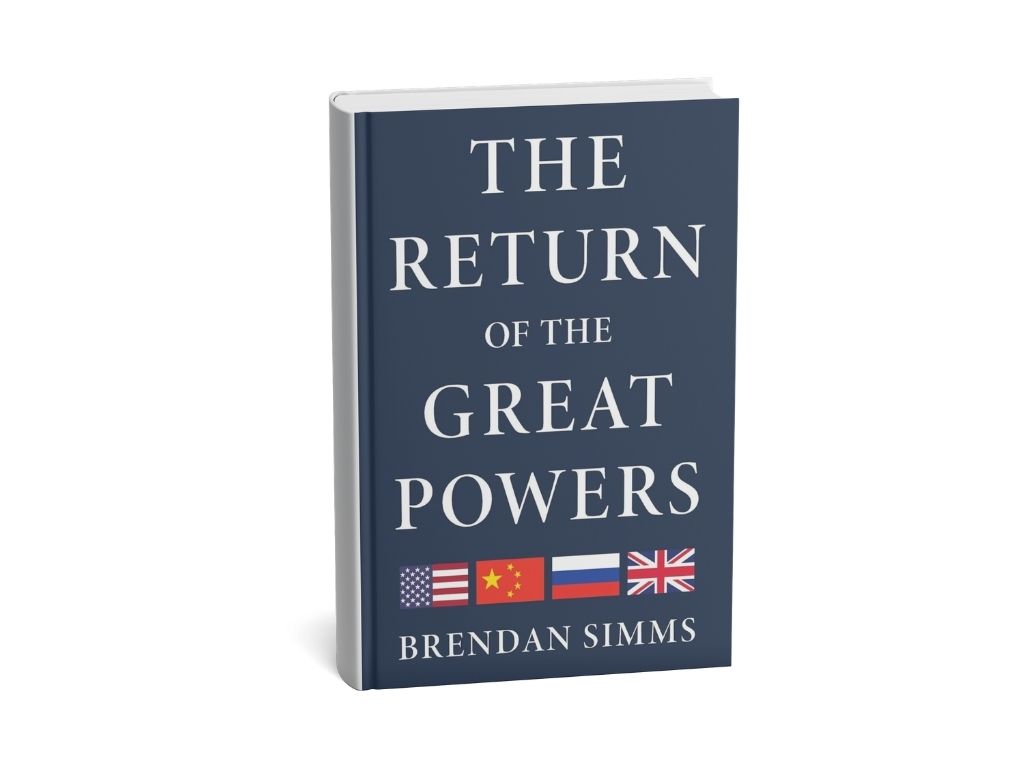
It is in keeping with this noble tradition of deciphering which states play a dominant role in the international arena that Cambridge historian Brendan Simms builds the marrow of The Return of the Great Powers. Early in his book, Simms identifies four axes that qualify the great powers: resources, reach, reputation, and resilience. Every chapter of the book examines the past and present of a major power that has shaped our world. Simms examines the distinct personalities of Russia, France, Japan, India, Germany, China, the UK, and the US on the world stage. Each major power is subjected to a rigorous test of the four Rs. Only four pass the finish line.
The speciality of the book that stayed with me is that it allows its central characters to speak for themselves. For example, in India’s case, Delhi’s articulation of becoming a “vishwaguru” or “world teacher” is consciously identified and analysed. At the same time, the historian’s craft is put to fine use while exploring the latent potential of the major powers going forward. Arguments strictly follow evidence. Scarcely is a verdict based on half-baked critiques that usually find their way into books on international relations these days. Whether you end up nodding along with the final analysis or not, if you yearn for perceptive arguments, this is your book.
Another reason why The Return of the Great Powers is worth your time is its compression of centuries of history into savoury crumpets. History does not burden this book. It burnishes the final analysis. It is no secret that the most enjoyed moments of our lives make up the living contents of our personal histories. So in the lives of nations. Having produced a prodigious output of fine works of micro and macro history, Simms embodies the old classical English tradition of studying historical international relations. One hopes that this tradition will reignite in universities that went haywire by shoving international relations under the garble of “political science.”
Coming back to the meat of the book, Simms admits that although the balance between the great powers has shifted considerably, the four great powers that he identifies would be “recognisable not merely to our grandparents but our great-grandparents. In all likelihood, it will remain so to our children and grandchildren.” Get a copy to find out. You are in for smooth sailing.