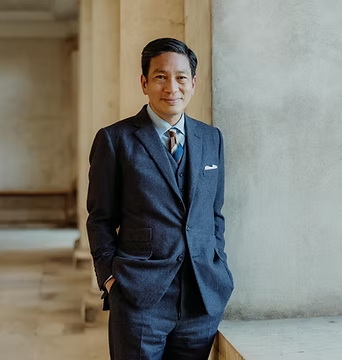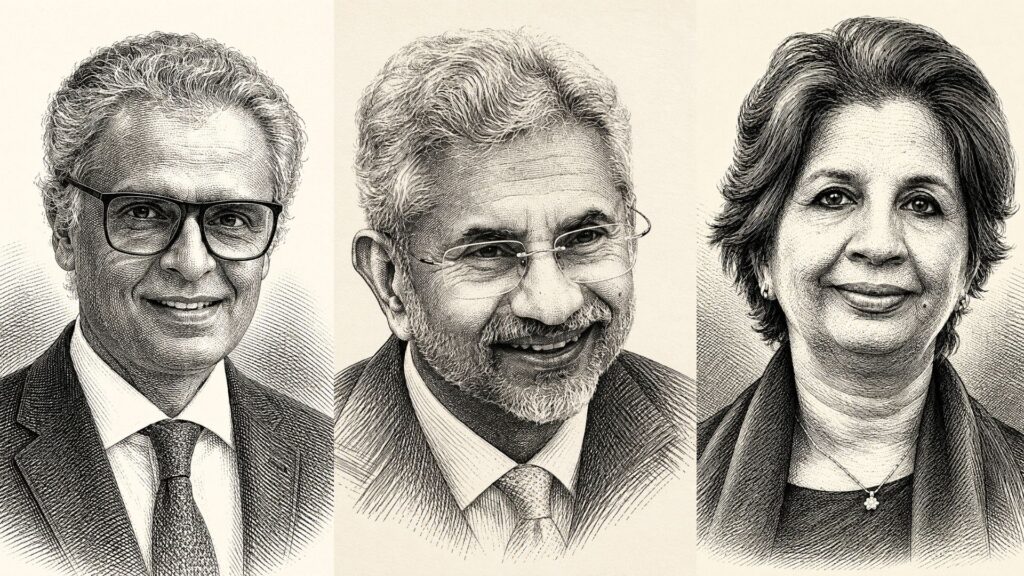
S. Jaishankar
The Foreign Minister Who Made the Personal Account Part of Statecraft
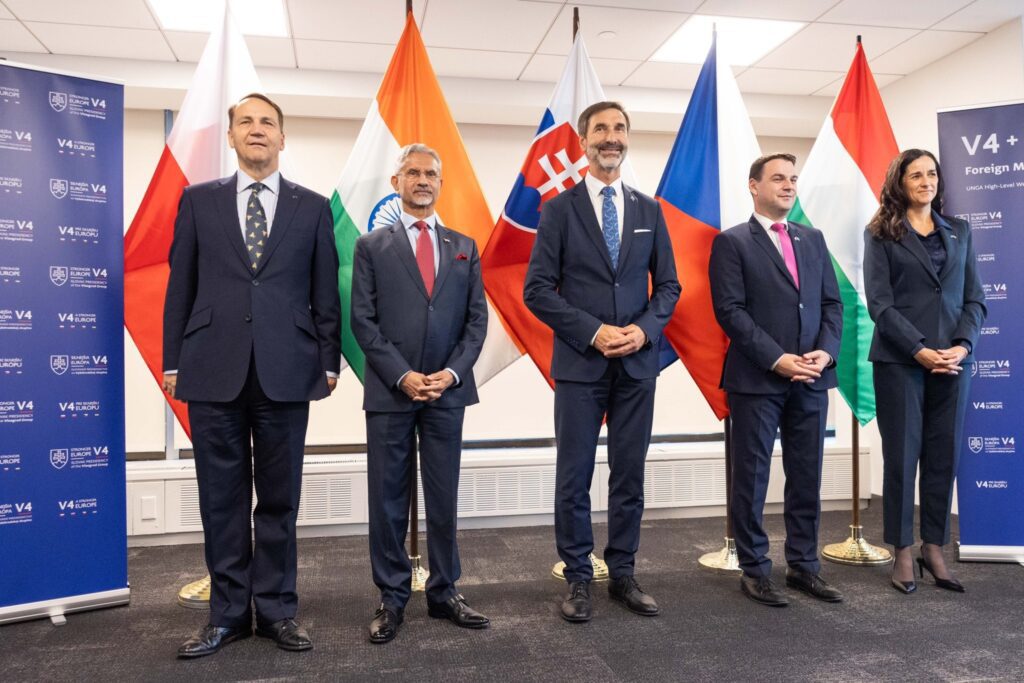
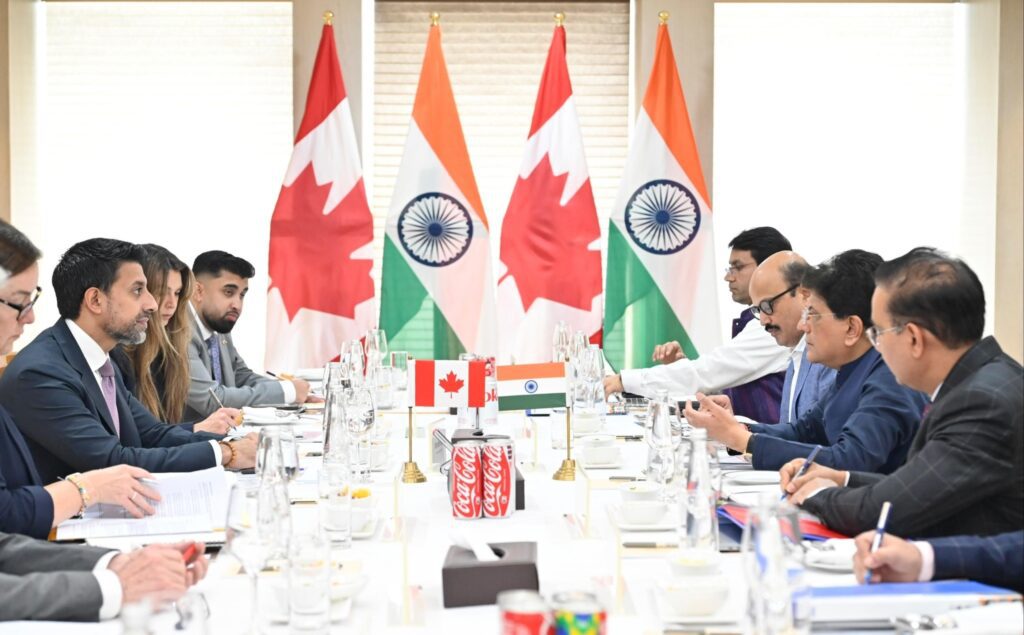
With more than four million followers on X, S. Jaishankar has become one of the most visible foreign ministers on social media. But the significance of his social media presence lies not simply in the size of his audience. It lies in something more consequential: he has made the foreign minister’s personal voice an important part of how India communicates its foreign policy.
A career diplomat who served as India’s ambassador to China and the United States and as Foreign Secretary before becoming External Affairs Minister in 2019, Jaishankar entered a diplomatic system that had already begun embracing social media. The MEA’s official @IndianDiplomacy account had made its institutional foray into the platform in 2010, and Indian missions were increasingly using social media to communicate with the public. His presence, however, has taken that personalisation much further.
“I am paid to fix foreign policy. I am not paid to fix social media.”
His posts move easily between official engagements, photographs, brief observations, congratulations, historical references and pointed responses to criticism. The effect is to bring the foreign minister out from behind the institutional language of diplomacy and place him directly in the public conversation.
That is particularly visible when foreign policy becomes contentious. Rather than relying exclusively on formal statements or the ministry’s spokesperson, Jaishankar frequently responds in his own voice. His social-media posts can consequently perform several functions at once: explaining policy to Indians, signalling India’s position to foreign audiences, rebutting criticism, and projecting a particular image of the country.
The language is often strikingly different from the cautious formulations traditionally associated with diplomatic communication. Jaishankar has acknowledged this transformation himself. At the India Today Conclave in 2024, he said, “I am paid to fix foreign policy. I am not paid to fix social media.” But he also acknowledged that the MEA had adapted to the medium, saying that social media required “short, sharp and impactful expressions”.
That apparent contradiction is precisely what makes Jaishankar’s social-media presence significant. He does not treat social media as a substitute for diplomacy. He treats it as another arena in which foreign policy must be communicated.
The result is a new kind of visibility for the foreign minister: not merely the official who conducts foreign policy, but the public figure who explains it, defends it and, at times, embodies it in real time.
Nirupama Rao
The Foreign Secretary Who Put Diplomacy in Real Time
Long before social media became an indispensable part of diplomatic communication, Nirupama Rao was experimenting with it from inside India’s foreign-policy establishment. She joined Twitter in February 2011 while serving as Foreign Secretary, making her one of the earliest senior Indian government officials to embrace the platform. Today, her account has around 1.2 million followers.
Her introduction to Twitter coincided with a crisis that demonstrated its practical value. During the evacuation of Indians from Libya in 2011, Rao used the platform to provide updates and respond directly to people seeking information about relatives and friends stranded in the conflict zone. The Ministry of External Affairs was simultaneously using Twitter to release real-time information, but Rao’s personal account gave the operation a recognisable human face.
“We can operate on a real-time basis to ensure that our information and responses are prompt.”
The experiment was significant because it challenged one of diplomacy’s oldest habits: communication through carefully controlled channels. Rao understood that during a crisis, speed and accessibility could themselves become diplomatic assets. In a 2011 interview with Forbes India, she acknowledged the tension between diplomacy’s need for careful, authoritative communication and social media’s demand for immediacy, arguing that the Libya evacuation had shown that the government could respond in real time while remaining credible.
After leaving the Foreign Secretary’s office, Rao continued using Twitter under her own name rather than abandoning the platform. That transition is significant. Her digital presence survived the institutional position that first gave it authority.
Rao therefore represents an important stage in India’s evolution of diplomatic communication on social media: the emergence of a senior diplomat who communicated directly with the public, discovered the possibilities of the medium, and carried that public voice beyond government office.
Syed Akbaruddin
The Diplomat Who Explained Why Twitter Changed Diplomacy
If Nirupama Rao demonstrated what social media could do for diplomacy, Syed Akbaruddin was among the diplomats who most clearly articulated what its rise meant for the profession itself.
A former spokesperson of the Ministry of External Affairs and India’s Permanent Representative to the United Nations, Akbaruddin became one of the most prominent Indian diplomatic voices on Twitter. His significance, however, is not primarily the size of his audience. It is his unusually explicit understanding of social media as a new diplomatic arena.
Writing in 2021, Akbaruddin argued that practices deeply embedded in traditional diplomacy, including “quiet” diplomacy, “low-key” efforts, considered responses and discreet enquiries, had to be recalibrated for social media. He noted that the platform operated by different rules: style could trump substance, boundaries could become blurred, and diplomats no longer had the protective distance of formal diplomatic channels.
“Public diplomacy on social media is a premium skill.”
His formulation was striking because it went beyond the familiar claim that diplomats should “use social media”. The issue, he argued, was that the medium was changing the environment in which diplomacy itself was conducted.
As MEA spokesperson between 2012 and 2015 and later as India’s UN envoy, Akbaruddin worked at the intersection of formal diplomacy and public communication. At the United Nations, where diplomatic positions are negotiated formally but also contested in the wider public arena, Twitter gave diplomats another channel through which India’s position could reach audiences beyond the conference room.
He also saw the transformation at a much larger scale. In 2021, Akbaruddin noted that Indian diplomatic accounts in more than 130 countries had accumulated around 10 million followers. Social media, he argued, had made foreign policy less “foreign” to Indians while giving Indian diplomats a direct route to audiences abroad.
That observation points to the deeper change. Diplomats were no longer communicating only through governments, diplomatic counterparts, and journalists. They were increasingly speaking to publics directly, while those publics could respond, challenge and amplify their messages.
Akbaruddin’s contribution to Indian diplomacy may therefore be as much conceptual as operational. He helped recognise that in the digital age, communication is no longer merely an accompaniment to diplomacy. It is increasingly part of diplomacy itself.
His own phrase captures the shift: “Public diplomacy on social media is a premium skill.” In the age of the timeline, being a diplomat increasingly requires not only knowing what to say, but knowing how, when, and where a diplomatic message will travel.