Ethiopia Establishes Interim Administration in Tigray
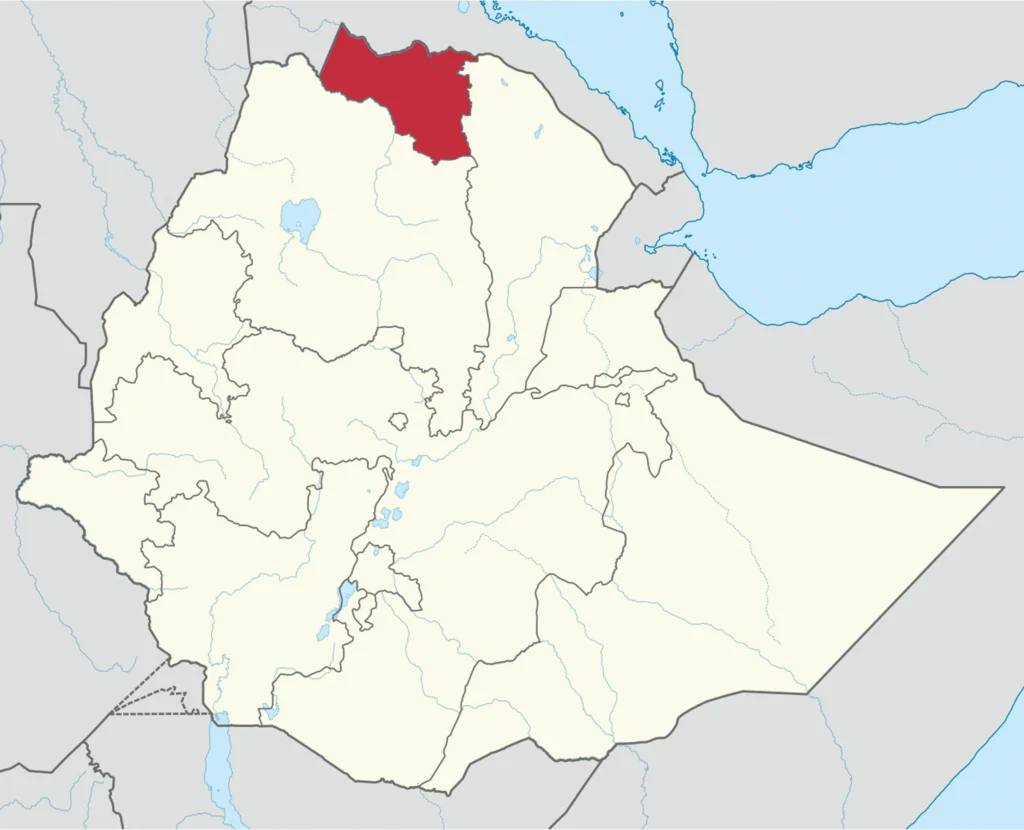
Prime Minister Abiy Ahmed announced a six-month caretaker administration for Tigray following renewed fighting between federal forces and the Tigray People’s Liberation Front (TPLF). The announcement came after federal forces pushed back a TPLF-led offensive that began in September. The escalation has further strained relations with Eritrea, which announced on 1 October that it was severing diplomatic ties with Ethiopia. Addis Ababa has accused Eritrea of supporting the TPLF, an allegation Asmara denies. Ethiopia’s pursuit of access to the Red Sea, particularly through Eritrea’s Assab port, adds another dimension to tensions in the Horn of Africa.
Sudan’s Civil War Intensifies as Drone Attacks Kill Civilians

The United Nations condemned escalating drone attacks across Sudan, reporting that hundreds of civilians, including women and children, had been killed. The attacks have increasingly threatened civilian populations and critical infrastructure, including health facilities, as fighting between the Sudanese Armed Forces and the Rapid Support Forces continues. A UN statement on 31 October warned of the catastrophic toll of the attacks and called for an immediate cessation of hostilities. Meanwhile, the UN reported that approximately 20 million people faced acute hunger, with famine risks increasing in parts of Darfur and Greater Kordofan. The conflict continues to threaten regional stability and humanitarian access.
ECOWAS and Sahel Alliance Resume Formal Dialogue
The Economic Community of West African States (ECOWAS) and the Confederation of Sahel States (AES), comprising Mali, Burkina Faso, and Niger, held their first ministerial-level dialogue in Dakar since the three countries withdrew from ECOWAS in January 2025. The meeting resulted in an agreement to establish joint working groups to negotiate a framework for future cooperation. Discussions are intended to address the consequences of the political separation while preserving economic and social ties between the two groupings. The renewed engagement offers an opportunity to address disagreements over regional security, trade, freedom of movement, and the future of West African integration.
Iranian Media Report Damage to Seven Tankers in the Strait of Hormuz
Iranian state television reported that seven oil tankers were damaged overnight in the Strait of Hormuz. Citing the Revolutionary Guard’s navy, it said four vessels caught fire while transferring oil after being targeted, while three were damaged and immobilised after striking naval mines. The report did not identify the vessels’ flags or provide casualty figures. The Revolutionary Guard also threatened US military bases in the region if Washington attempted to facilitate tanker movements through alternative passages in the strait. The reported incident highlights the growing risks to commercial shipping amid the continuing conflict involving Iran, the United States, and Israel.

Indonesia Faces Criticism Over Participation in Gaza Peace Board

UN Special Rapporteur Francesca Albanese urged Indonesia to reconsider its participation in US President Donald Trump’s Board of Peace for Gaza, arguing that the mechanism lacked meaningful Palestinian representation. Indonesia’s Foreign Ministry said discussions remained on hold, while President Prabowo Subianto had indicated that Jakarta could withdraw if participation did not benefit Palestinians. The issue places Indonesia’s longstanding support for Palestinian self-determination alongside its willingness to engage with a US-led initiative. Its decision will be watched across the Global South, including by India, which must navigate competing diplomatic positions on Palestinian statehood, regional stability, and relations with Washington and West Asian partners.
Philippines Explores Cooperation with Taiwan on Undersea Cables
The Philippines is exploring deeper cooperation with Taiwan to protect undersea cables and address grey-zone activities around the Bashi Channel, a Philippine diplomat said. Possible areas include knowledge-sharing and capacity-building, although Manila has not announced a formal security agreement. The discussions reflect growing concern over the vulnerability of digital infrastructure amid tensions in the South China Sea and around Taiwan. The Philippines maintains a one-China policy, recognising Beijing rather than Taipei, making closer practical cooperation with Taiwan diplomatically sensitive. The initiative illustrates how critical infrastructure protection is becoming an increasingly important dimension of regional security and Indo-Pacific relations.

US Holds Further Talks with Myanmar
The United States and Myanmar’s military-backed government held another round of talks in Tokyo, the second such meeting within a month, Reuters reported. Earlier discussions in Naypyitaw focused on securing the release of an American businessman and dismantling scam centres targeting Americans. The latest meeting’s agenda was not disclosed. Washington’s broader engagement could also involve Myanmar’s rare-earth deposits, although their discussion in Tokyo was not confirmed. The contacts indicate a shift towards pragmatic engagement with authorities Washington had largely isolated since the 2021 coup. They also highlight how transnational crime and critical mineral supply chains are creating new diplomatic openings despite continuing concerns over Myanmar’s political legitimacy and human rights record.
Lula Wins Fourth Term in Brazil’s Presidential Election
President Luiz Inácio Lula da Silva defeated Senator Flávio Bolsonaro in Brazil’s presidential runoff, securing an unprecedented fourth term with 51.79% of valid votes against his opponent’s 48.21%. Lula received approximately 64.26 million votes, winning by a margin of more than 4.4 million. The result extends his leadership amid domestic political divisions and continuing debate over Brazil’s relations with Washington and Beijing. His government’s approach to critical minerals, trade, climate diplomacy, and strategic autonomy will have implications for international supply chains and Global South cooperation. The narrow result also leaves Lula with the challenge of maintaining a governing coalition in a politically divided country.
Haiti Postpones Elections Until July 2027
Haiti’s Provisional Electoral Council postponed presidential and parliamentary elections, originally scheduled for 13 December 2026, until July 2027. The revised calendar schedules the first round for 18 July, with a second round and local elections planned for 4 October. The decision comes amid continuing gang violence and the inability of authorities to establish security across significant parts of the country. On the same day, El Salvador announced plans to send more than 2,000 soldiers to Haiti to support anti-gang operations and help recover four missing Salvadoran aviation technicians. Haiti has not held presidential elections since 2016, and the postponement further complicates its return to constitutional government.
Chile and Bolivia Seek to Restore Diplomatic Relations
Chilean President José Antonio Kast visited Bolivia and met President Rodrigo Paz Pereira in La Paz, marking the first official visit by a Chilean president to Bolivia in 71 years. The two countries, which have lacked diplomatic relations at the ambassadorial level since 1978, agreed to deepen political dialogue and cooperation in trade, mining, energy, and infrastructure. Agreements included plans for a bioceanic fibre-optic corridor linking digital networks across the Pacific and Atlantic, energy integration, and cooperation on the Sica Sica–Arica oil pipeline. Bolivia’s longstanding demand for sovereign access to the Pacific remains unresolved. The rapprochement signals a potential shift in bilateral relations despite continuing territorial disagreements.
Guinea-Bissau Postpones Elections
Guinea-Bissau’s Prime Minister Ilídio Vieira Té announced that presidential and legislative elections scheduled for 6 December 2026 would have to be delayed, without setting a new date. The announcement follows the military takeover in November 2025, which interrupted the previous presidential election before its results could be declared. It also comes after an August constitutional referendum approved changes expanding presidential powers and reducing the number of parliamentary seats from 102 to 65. The prime minister cited the failure of political parties to hold their internal congresses and missed deadlines for candidate registration as reasons for the delay. The absence of a revised election timetable leaves the country’s return to civilian rule uncertain.
Joseph Kabila Forms New Political-Military Coalition in the DRC
Former Democratic Republic of Congo President Joseph Kabila launched the Front for the Refoundation of the Nation (FRN), a new political-military coalition announced as a replacement for the AFC-M23 alliance fighting government forces in eastern Congo. Kabila will lead the group, with former rebel leaders including Corneille Nangaa, Bertrand Bisimwa, Freddy Kaniki, and Sultani Makenga serving as deputies. The development formalises Kabila’s closer association with the insurgency, which he had previously denied supporting. The conflict has a wider regional dimension, with the UN and Western governments accusing Rwanda of backing M23, an allegation Kigali denies. The new coalition could further complicate diplomatic efforts to end the fighting in eastern Congo.