The idea of reducing dependence on the US dollar is older than the current debate over a “BRICS currency”. The grouping’s financial discussions have evolved gradually, from using national currencies in trade, to creating BRICS-led institutions that provide additional channels within the international financial system, to exploring payment systems that could allow members to settle more transactions without routing them through the dollar.
The first BRICS summit-level discussion of local-currency settlement dates back to 2010, when the four original members—Brazil, Russia, India and China—agreed to study the feasibility of monetary cooperation, including arrangements for trade settlement in local currencies. The idea gained greater institutional weight after the creation of the New Development Bank and the Contingent Reserve Arrangement in 2014, and the 2015 Ufa Declaration explicitly recognised the potential for expanding the use of national currencies in transactions among BRICS countries.
The discussion acquired a sharper geopolitical edge after Russia’s invasion of Ukraine in 2022 and the subsequent Western sanctions that restricted Russia’s access to parts of the established financial system. Moscow had a particularly strong incentive to develop alternatives to dollar- and euro-based channels. But the interests of other BRICS members were different: India, China, Brazil and South Africa had their own reasons for wanting greater use of national currencies without necessarily seeking to dismantle the dollar-based system.
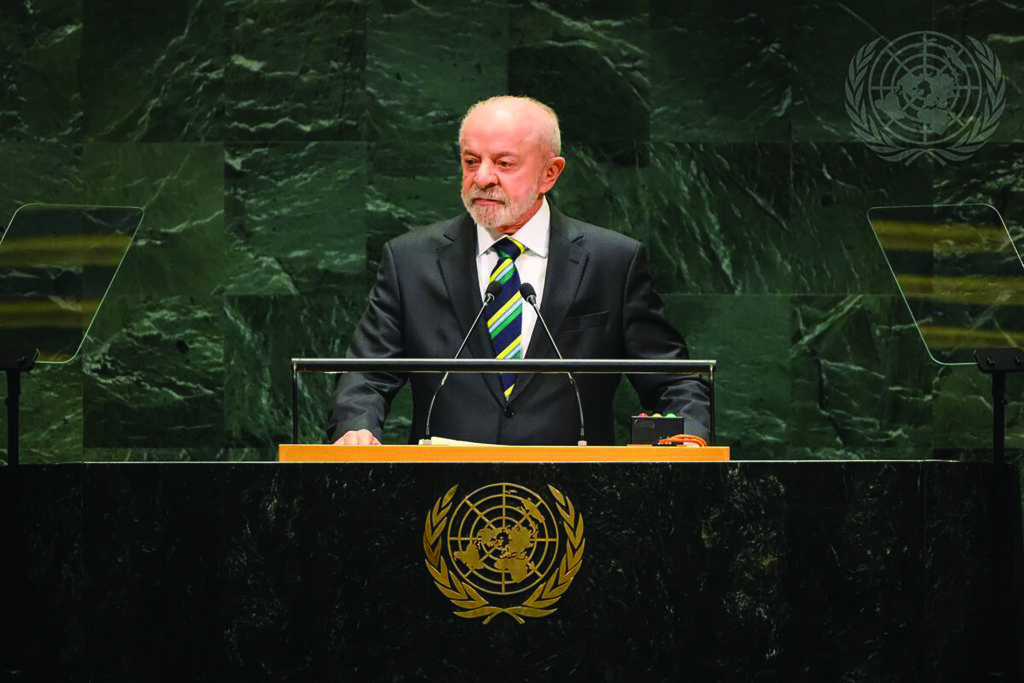
The common-currency idea entered the political spotlight at the 2023 BRICS summit in Johannesburg, when Brazilian President Luiz Inácio Lula da Silva publicly advocated exploring a common currency for trade and investment, arguing that it could reduce members’ vulnerability to dollar exchange-rate fluctuations. It was the most prominent political proposal for a BRICS currency, but it was not a collective BRICS decision.
The BRICS financial agenda continued to move towards local-currency settlement and payment infrastructure. At the 2024 Kazan summit, the official emphasis was on the BRICS Cross-Border Payments Initiative, local-currency settlements and the feasibility of connecting financial-market infrastructure. The 2025 Rio Declaration continued work on the cross-border payments initiative and welcomed a technical report on possible interoperability of BRICS payment systems.
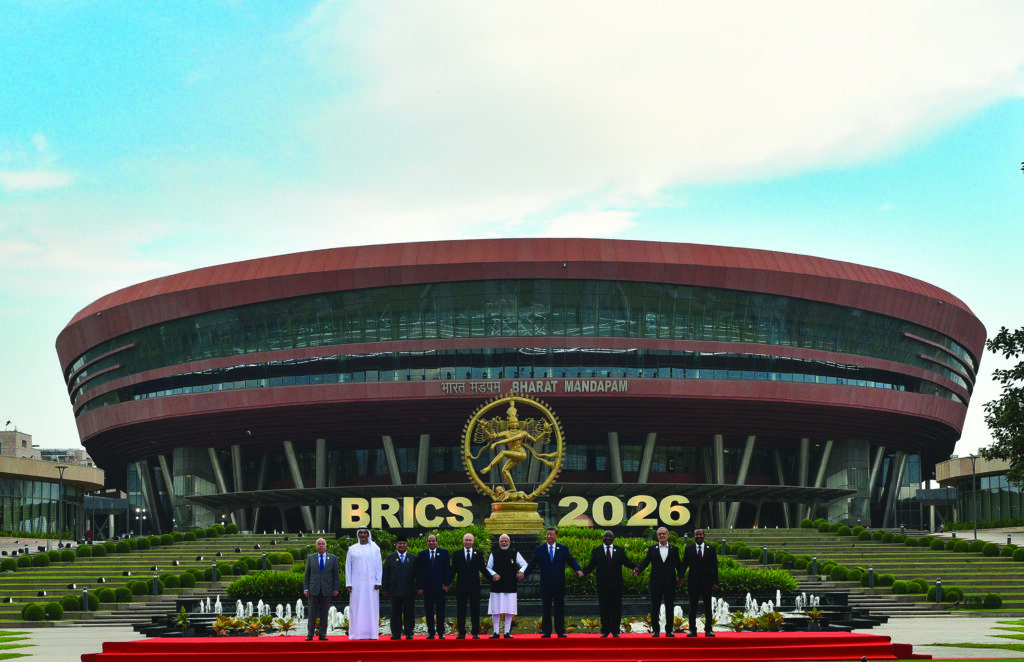
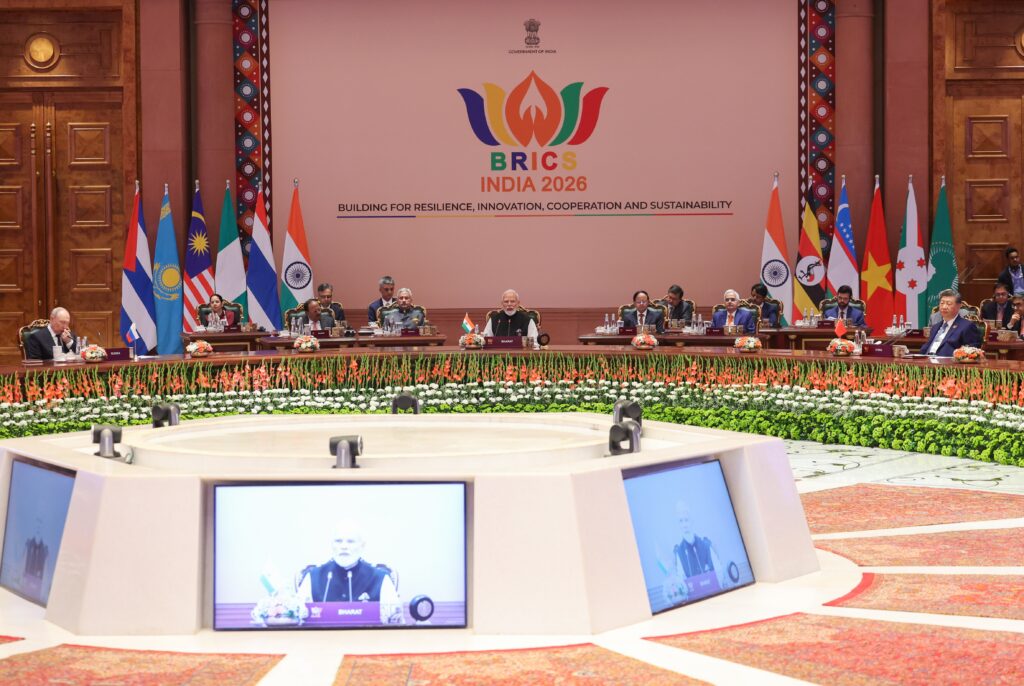
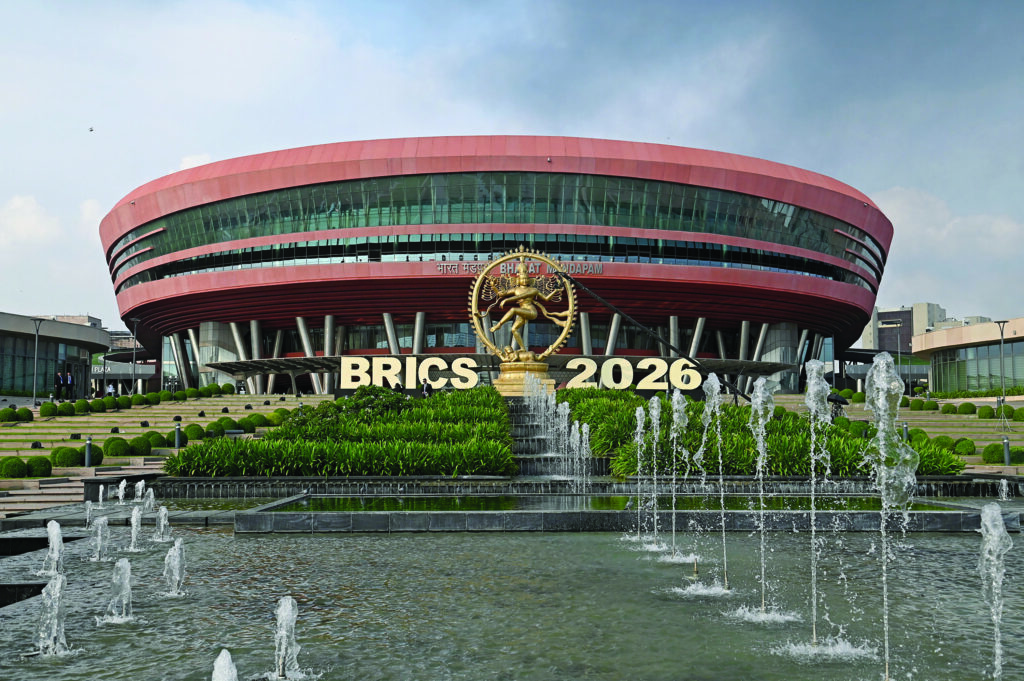
By the time India hosted the New Delhi summit in September 2026, the distinction was explicit. India’s External Affairs Ministry said there was “no proposal in the BRICS for BRICS currency as of now.” At the same time, the New Delhi Declaration reaffirmed work on payment interoperability and local-currency trade settlement.
De-dollarisation Without a Common Currency
At its simplest, de-dollarisation means reducing the need to use the US dollar in particular transactions or financial relationships. It does not necessarily mean eliminating the dollar from international trade, nor does it mean that BRICS has agreed on a replacement.
For some members, the motivation for de-dollarisation is inextricably linked to their vulnerability to the US dollar-dominated international financial system. Russia’s experience after 2022 demonstrated how access to established financial infrastructure can become constrained by geopolitical conflict and sanctions. For others, the motivation is more practical: lowering transaction costs, reducing foreign-exchange risks and making cross-border trade easier. India’s official position in 2026 has emphasised precisely this practical dimension. The Ministry of External Affairs described local-currency settlement as a practical mechanism for reducing transaction costs and increasing intra-BRICS trade, while stressing that it would complement, rather than replace, the existing global payment and settlement system.
So why not create one BRICS currency?
A functioning common currency requires a high degree of monetary coordination. Members would have to address questions of exchange rates, inflation, monetary policy, capital movements, banking regulation, liquidity and ultimately the institutional authority responsible for managing the currency.
The economic differences inside BRICS make this particularly difficult. China is a huge manufacturing and exporting economy with extensive financial controls; India has a different monetary and trade structure; Russia’s economy has been reshaped by sanctions; Brazil and South Africa have their own monetary and fiscal priorities; and the expanded BRICS now contains an even wider range of economic systems. A common currency would require far deeper integration than the grouping currently possesses.
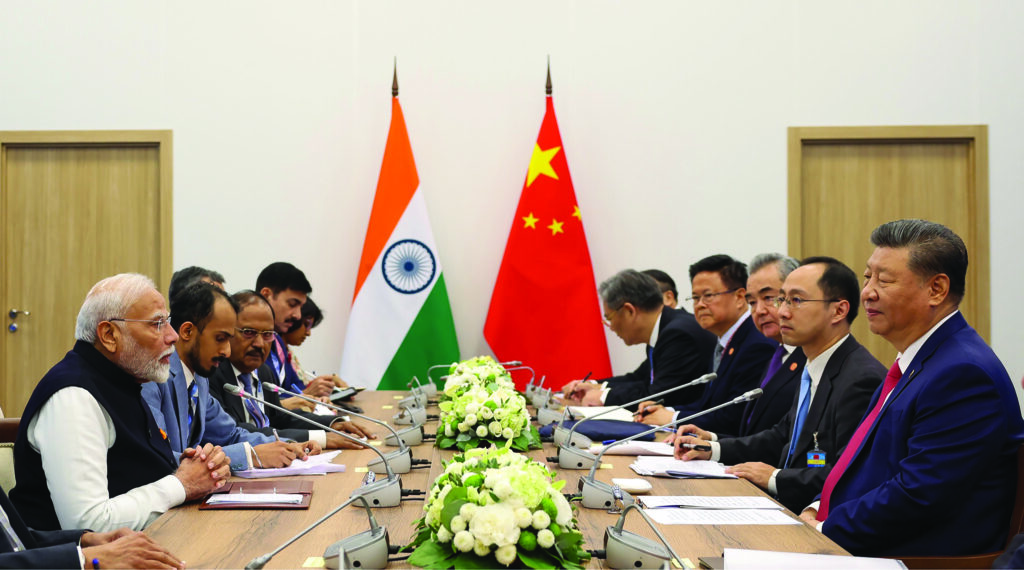
A common currency might reduce dependence on the dollar, but creating one would also require members to surrender some monetary autonomy. For countries such as India, that is a fundamentally different proposition from simply allowing the rupee to be used more widely in bilateral trade.
The practical approach has consequently been to expand the use of existing currencies rather than create a new one. The New Delhi Declaration reflects that direction: it calls for continued work on cross-border payment interoperability and trade settlement and investment using BRICS local currencies, while explicitly recognising national priorities and the absence of a one-size-fits-all approach.
Challenges of the Local-Currency Push
Though using national currencies sounds straightforward, in practice, it creates its own problems. The first is the question of trade imbalances.
If India buys substantially more from a partner than it sells to that country, the partner can accumulate rupees. Those rupees are useful only if they can subsequently be spent on Indian goods and services, invested in India, or otherwise converted or recycled. The India–Russia experience illustrated this problem: Russian entities accumulated rupee balances from bilateral trade that could not easily be recycled because India’s exports to Russia were not large enough to absorb them.
A local-currency system therefore cannot solve a trade imbalance by itself. It changes the currency in which the imbalance is recorded.
The second problem is liquidity.
The dollar has exceptionally deep foreign-exchange markets. Major currencies can be converted into dollars quickly and at relatively low transaction costs. Direct markets between two emerging-market currencies are often thinner. This means that even when two countries want to trade in their own currencies, banks may still find the dollar useful as an intermediary.
The third problem is convertibility and financial openness. A currency becomes internationally useful not merely because governments declare that they want to use it, but because banks, companies and investors are willing and able to hold it, trade it and move it across borders.
The fourth is trust and political coordination. BRICS has expanded from five members to eleven, with major differences in political systems, foreign-policy priorities and relations with one another. Even a technically sound payment system requires common standards, regulatory coordination, dispute-resolution mechanisms and confidence between participating institutions.
There is also a less obvious risk for India. If local-currency settlement grows disproportionately around China’s renminbi, reducing dependence on the dollar could create another form of dependence. China already has a considerably more developed international payments and currency infrastructure than most other BRICS members. That does not make the renminbi a replacement for the dollar, but it makes an important question unavoidable: which currencies will gain from de-dollarisation?
The result is a paradox: BRICS can diversify away from the dollar without necessarily producing a genuinely balanced multipolar monetary system.
The Idea of BRICS Pay
The idea behind BRICS Pay predates the current push for cross-border payment interoperability. In 2018, the BRICS Business Council began exploring a New International Payment System (NIPS), aimed at facilitating cross-border payments and linking the national payment systems of BRICS countries. The initiative was initially driven through the business track rather than established as a single BRICS-wide payment system.
The idea gradually moved into the formal BRICS financial track. In 2019, the BRICS leaders acknowledged the importance of a survey of international payment systems. In 2020, they established the BRICS Payment Task Force (BPTF), giving the grouping a mechanism through which central banks and financial authorities could examine cooperation between national payment systems. Subsequent BRICS declarations continued to support the task force and the exchange of experience on national payment infrastructure.
The agenda became more explicit at the 2023 Johannesburg summit. The Johannesburg Declaration welcomed the sharing of experience on payment infrastructure, including the interlinking of cross-border payment systems, while encouraging the use of local currencies and stronger correspondent-banking networks. Finance ministers and central-bank governors were asked to examine local currencies, payment instruments and platforms. This marked an important shift: the question was no longer simply whether BRICS members could use their own currencies, but whether the payment infrastructure existed to make such transactions practical.
The 2024 Kazan summit took the process a step further. It endorsed the BRICS Cross-Border Payments Initiative (BCBPI), described as voluntary and non-binding, and backed work on faster, cheaper, more efficient, transparent and safe cross-border payments. The declaration encouraged settlements in local currencies and stronger correspondent-banking networks within BRICS.
Kazan also introduced a related idea: BRICS Clear, a possible independent cross-border settlement and depositary infrastructure intended to complement existing financial-market infrastructure. This was not a replacement for existing global systems; it was an exploration of whether BRICS could build additional financial-market infrastructure of its own.
The 2025 Rio de Janeiro summit shifted the emphasis further towards interoperability. The BRICS Payment Task Force reported progress in identifying possible pathways towards greater interoperability between members’ payment systems.
By 2026, the discussion had moved into more specific technical territory. India’s year as BRICS chair placed payment interoperability at the centre of the grouping’s financial agenda. The New Delhi Declaration acknowledged the Payment Task Force’s work on the cross-border interoperability of payment and messaging channels and discussions on trade settlement and investment using BRICS local currencies. But the wording was deliberately cautious: it emphasised national priorities and recognised that there was no one-size-fits-all approach. It did not announce a single BRICS payment network.
The latest development points towards a more incremental model. On October 2, 2026, the BRICS Payment Task Force was reported to be advancing work on a proposed link between India’s UPI and Russia’s Faster Payments System (FPS). The initial pilot is expected to focus on consumer-to-business payments: Indian travellers could use UPI in Russia, while Russian travellers could use FPS in India. A business-to-business layer for exporters is also under development, while discussions on the digital rupee and digital rouble as possible CBDC components continue.
This is significant because it shows what BRICS Pay is becoming in practice. Rather than creating one new payment network that all members must adopt, the emerging model is to connect systems that already exist. The challenge is to establish the technical, regulatory and settlement arrangements that allow them to work across borders.
What Lies Ahead for BRICS Money
The New Delhi Declaration provides the clearest indication of that direction. It does not announce a common currency or a bloc-wide payment network. Instead, it calls for continued technical engagement on cross-border payment interoperability, local-currency settlement and settlement and depositary infrastructure.
That leaves BRICS with several possible layers of cooperation: more bilateral local-currency settlements, links between fast-payment systems, currency-swap arrangements, greater use of national currencies in development finance, and eventually interoperability between central-bank digital currencies.None of these requires a common currency.
The bigger question is whether these individual pieces can eventually form a sufficiently efficient network to change the behaviour of banks and businesses. Political declarations can encourage local-currency settlement; only actual commercial use can make it durable.
For India, this distinction is particularly important. New Delhi has supported payment diversification and local-currency trade while resisting the idea of a common BRICS currency. Its approach is essentially to widen the menu: use the dollar where it remains efficient, use national currencies where bilateral arrangements make sense, and develop payment infrastructure that gives businesses and consumers more choices.
That is a considerably more modest ambition than replacing the dollar, and also a more plausible one.
The BRICS currency story, then, is no longer really about whether eleven countries will print a new banknote. The more consequential question is whether they can build the financial infrastructure that makes the dollar less necessary in selected parts of their trade.
The answer is still uncertain. But the direction is increasingly clear: BRICS is moving from the politics of a common currency to the engineering of alternative ways to move money.