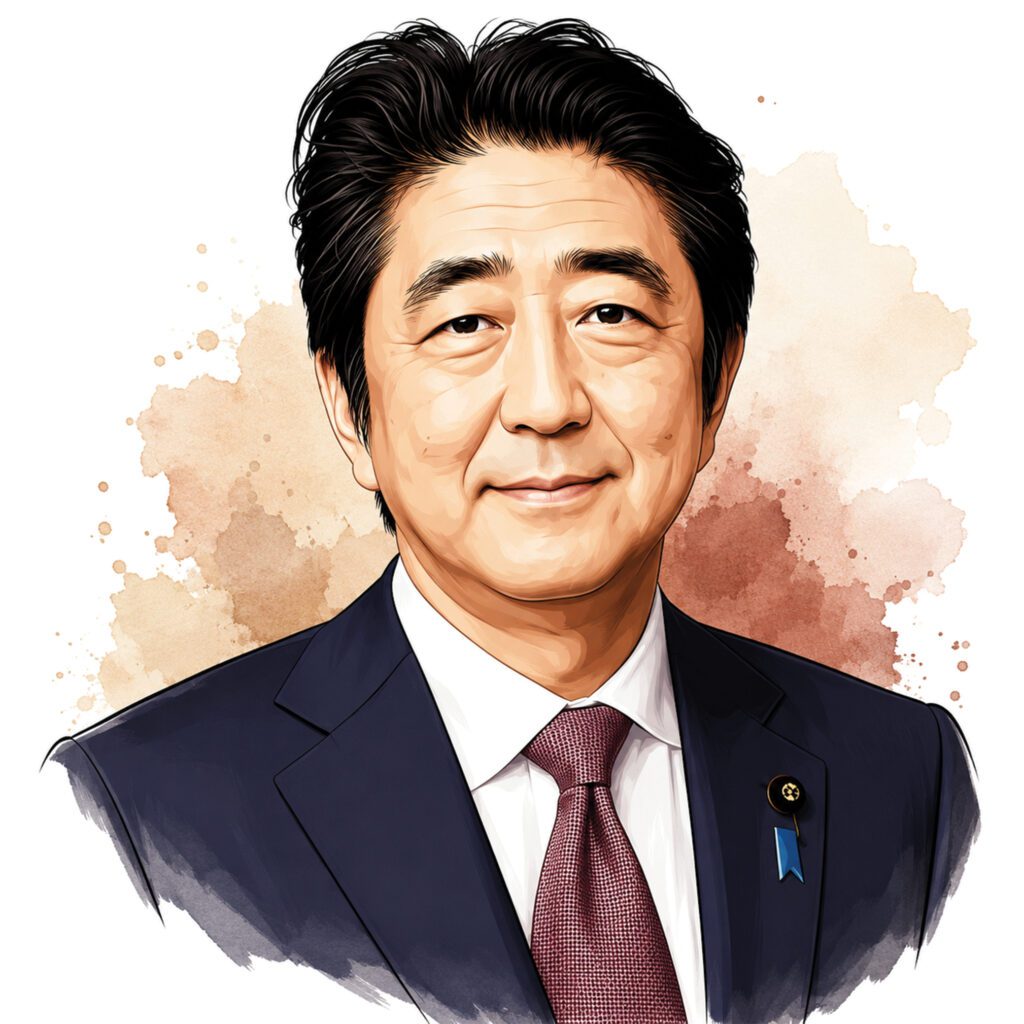
As the Indo-Pacific once again dominates strategic debate following the Trump administration’s decision to drop “Indo” from the U.S. Indo-Pacific Command and restore its previous name—the U.S. Pacific Command—it is worth revisiting how the concept entered the global political imagination. Was the Indo-Pacific merely an American strategic construct, or had it already evolved into the defining geopolitical framework of the twenty-first century? The answer lies not in defence doctrines or policy papers, but in a series of landmark speeches that steadily transformed the Indo-Pacific from an emerging geographical expression into a powerful strategic idea. From Shinzo Abe’s poetic vision of the “confluence of the two seas” in the Indian Parliament to Narendra Modi’s expansive Indo-Pacific stretching “from the shores of Africa to that of the Americas,” political leaders across the world gave shape, substance, and legitimacy to a concept that today underpins the foreign and security policies of countries across Asia, Europe, and beyond.
The Pacific and the Indian Oceans are now bringing about a dynamic coupling as seas of freedom and of prosperity.
Shinzo Abe—Confluence of the Two Seas (Indian Parliament, 2007)
Shinzo Abe’s address to the Indian Parliament is widely regarded as the speech that brought the Indo-Pacific into contemporary strategic discourse. Drawing inspiration from Dara Shikoh’s Majma-ul-Bahrain (The Confluence of the Two Seas), Abe argued that the Indian and Pacific Oceans were becoming a single strategic theatre. He envisioned a “broader Asia” anchored by Japan and India, united by shared democratic values, maritime security, and economic prosperity. The speech provided the intellectual foundation for Japan’s later Free and Open Indo-Pacific (FOIP) vision and helped reshape regional strategic thinking.
We are expanding our work with the Indian Navy in the Pacific, because we understand how important the Indo-Pacific basin is to global trade and commerce.
Hillary Clinton—America’s Engagement in the Asia-Pacific (Honolulu, 2010)
Hillary Clinton’s address marked one of the earliest and most consequential uses of the term “Indo-Pacific” by a senior American leader. By highlighting the growing strategic importance of the “Indo-Pacific basin” and India’s expanding maritime role, the speech signalled Washington’s evolving regional outlook. It helped bring the Indo-Pacific into mainstream strategic discourse, paving the way for its wider adoption by governments, scholars, and policymakers over the following decade.
We are living through an historic shift of strategic and economic gravity to the Indo-Pacific region. India’s emergence as a major power is a significant part of this story.
Julie Bishop—The Indo-Pacific Oration (New Delhi, 2015)
By 2015, the Indo-Pacific had moved beyond an emerging strategic concept to become an accepted geopolitical framework. Speaking in New Delhi, Australian Foreign Minister Julie Bishop argued that the world’s strategic and economic centre of gravity was shifting towards the Indo-Pacific, with India’s rise at the heart of this transformation.
What will give stability and prosperity to the world is none other than the enormous liveliness brought forth through the union of two free and open oceans and two continents.
Shinzo Abe—TICAD VI, Nairobi (2016)
Nearly a decade after first envisioning the Indo-Pacific, Shinzo Abe transformed the concept into a comprehensive strategic vision at the Sixth Tokyo International Conference on African Development (TICAD VI). By linking the Pacific and Indian Oceans with the continents of Asia and Africa, Abe formally unveiled Japan’s Free and Open Indo-Pacific (FOIP) vision, built on the principles of freedom, the rule of law, and open markets.
The world’s center of gravity is shifting to the heart of the Indo-Pacific. The U.S. and India, with our shared goals of peace, security, freedom of navigation, and a free and open architecture, must serve as the Eastern and Western beacons of the Indo-Pacific
Rex Tillerson— Defining Our Relationship with India for the Next Century, Washington (2017)
Rex Tillerson’s address marked the United States’ formal embrace of the Indo-Pacific as its principal strategic framework. Building on Japan’s Free and Open Indo-Pacific vision, he presented the United States and India as the “Eastern and Western beacons” of a regional order founded on freedom, the rule of law, and sovereign equality. The speech also called for stronger cooperation among the region’s leading democracies, laying the intellectual foundation for the Trump administration’s Indo-Pacific strategy.
The Indo-Pacific is a natural region… India does not see the Indo-Pacific Region as a strategy or as a club of limited members. Nor as a grouping that seeks to dominate. And by no means do we consider it as directed against any country.
Narendra Modi—Shangri-La Dialogue, Singapore (2018)
Narendra Modi’s keynote address at the Shangri-La Dialogue marked India’s definitive articulation of the Indo-Pacific. While endorsing a free, open, rules-based maritime order, Modi distinguished India’s vision by stressing inclusiveness, ASEAN centrality, strategic autonomy, and dialogue over rivalry. Rejecting the Indo-Pacific as an exclusive bloc or containment strategy, he described it as a natural region stretching from Africa to the Americas, anchored in international law and cooperative security.
France is an Indo-Pacific power… This region is crucial for the stability of the world.
Emmanuel Macron—Garden Island Naval Base, Sydney (2018)
Emmanuel Macron’s address marked Europe’s formal entry into the Indo-Pacific discourse. Declaring France an Indo-Pacific power, he unveiled the broad contours of France’s Indo-Pacific strategy, arguing for an inclusive, multipolar regional order built on multilateralism, strategic autonomy, and the rule of law. The speech established France as the first European country to articulate a comprehensive Indo-Pacific vision and laid the groundwork for the European Union’s subsequent engagement with the region.
From Abe’s poetic vision in the Indian Parliament to Macron’s declaration that France is an Indo-Pacific power, these speeches chart the remarkable evolution of an idea that reshaped global geopolitics. Together, they transformed the Indo-Pacific from a geographical expression into the world’s foremost strategic framework—one that continues to shape regional order, great-power competition, and the future of international politics.