Which side are you on? Thomas Mann, the Nobel Prize-winning German author, went into exile after the Nazis came to power and, during the Second World War, delivered a series of anti-Nazi radio broadcasts to German listeners through the BBC. After the war, his relationship with Germany remained complicated: he had become an American citizen and was reluctant to return to a country still confronting the consequences of Nazism. In 1949, however, he travelled to Germany for the Goethe celebrations, accepting the Goethe Prize in Frankfurt before travelling on to Weimar in the Soviet occupation zone. His decision to visit both sides of a country increasingly divided by the emerging Cold War reflected his insistence that his journey was for Germany as a whole.
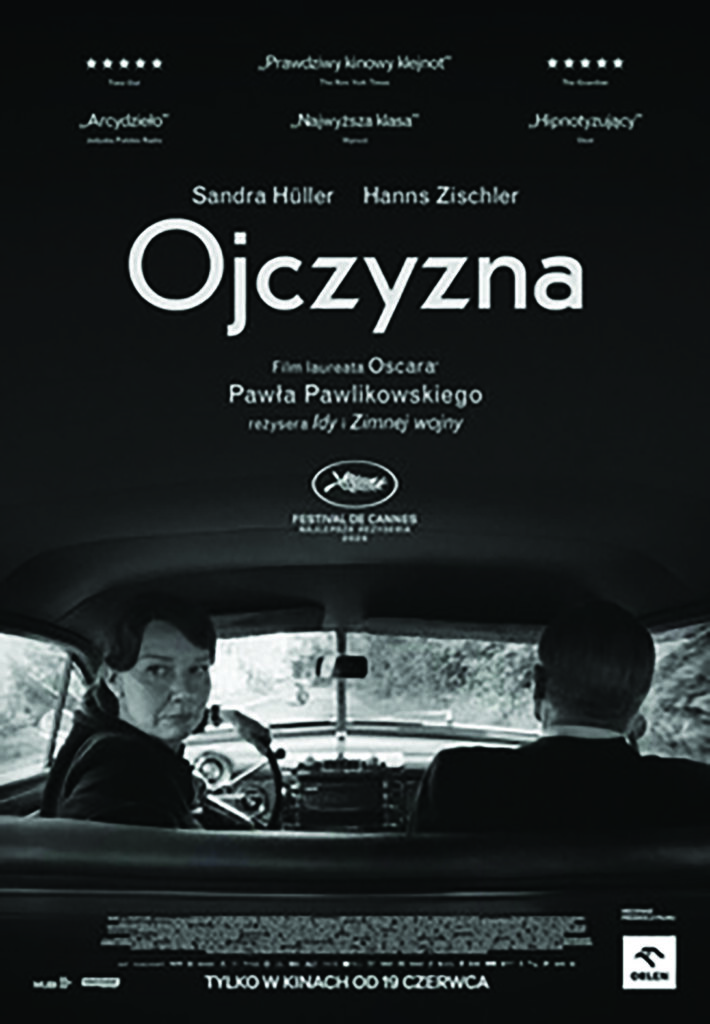
Directed by Paweł Pawlikowski, Fatherland follows Mann (Hanns Zischler) and his daughter Erika (Sandra Hüller) during that 1949 journey across a country in ruins and divided between Western and Soviet zones. Returning after 16 years in exile, Mann travels from Frankfurt to Soviet-controlled Weimar, confronting not only the physical devastation of Germany but also the political and moral fractures left by the war. Erika accompanies him as driver, gatekeeper and interlocutor, and the journey gradually becomes as much a reckoning between father and daughter as a confrontation with the country he had left behind.
Fatherland premiered in Competition at the 2026 Cannes Film Festival, where Pawlikowski shared the Best Director award. Its power lies in the way it connects a deeply personal journey with the larger questions of exile, belonging, political responsibility and what it means to return home after a country has been transformed by catastrophe. Pawlikowski does not turn Mann’s journey into a simple historical lesson; instead, he uses it to examine the uncomfortable distance between the country one leaves and the country one eventually returns to. Fatherland is therefore worth watching not only as a portrait of a major German writer, but as a meditation on exile, memory and the difficulty of coming home.