
The Indo-Pacific Will Endure
Every few years, someone declares the Indo-Pacific dead. First, critics dismissed it as an American geopolitical construct. Now, they are proclaiming its obituary by pointing to the Trump Administration’s decision to drop the “Indo” from the US Indo-Pacific Command.
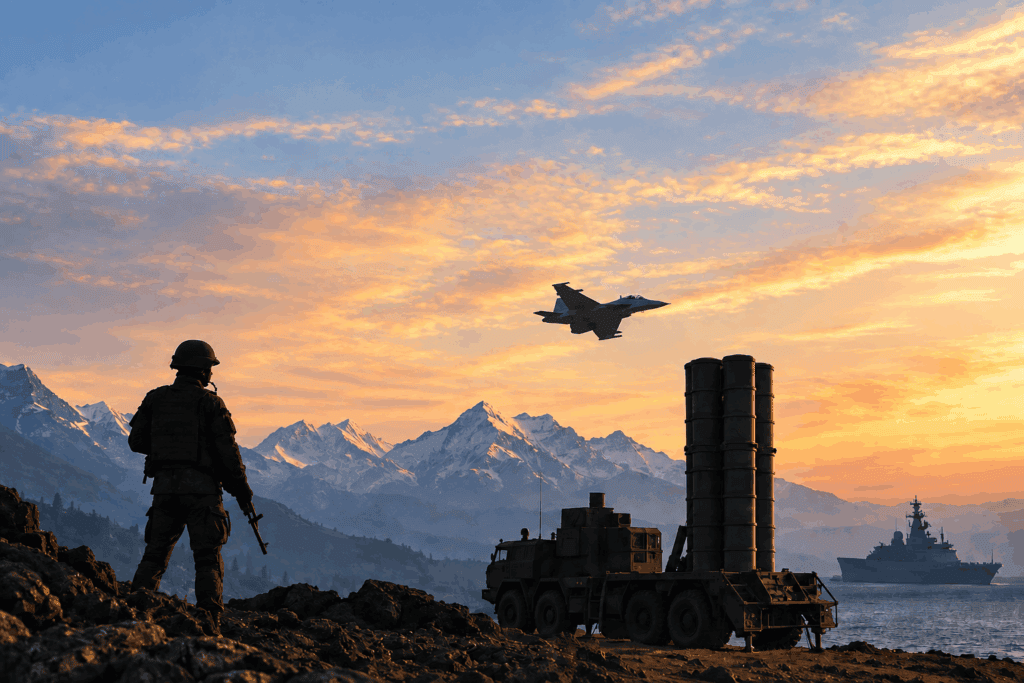
The durability of the Indo-Pacific does not, however, lie in the Pentagon’s nomenclature for the region at any moment, but in the structure of Asian geopolitics. Over the last two decades, the Indian Ocean and the Pacific have become an interconnected strategic space shaped by the rise of China, the emergence of India, and the growing global competition to shape Asia’s maritime order.
For much of the post-war era, the two oceans were treated as separate theatres. That mental map no longer works. The sea lanes linking the Gulf, the east coast of Africa, the Indian subcontinent, and East Asia now carry the bulk of the world’s trade, energy flows, supply chains and digital connectivity. Geography and commerce have fused the two oceans into a single strategic system.
The durability of the Indo-Pacific does not lie in the Pentagon’s nomenclature
Although Washington’s embrace of the Indo-Pacific after 2017 gave the concept global visibility, its origins and logic go deeper. It was Japan that first invoked the idea through Shinzo Abe’s visualisation of the “confluence of the two seas” in 2007. More fundamentally, Beijing’s growing economic salience, its expanding naval footprint, and deepening strategic influence in Asia’s waters now extend across both oceans. China’s industrial economy depends on resources and energy that flow through the Indian Ocean; the PLA Navy has maintained a continuous presence west of Malacca since the late 2000s and established its first overseas military base in Djibouti in the Horn of Africa. Whether Beijing likes the term or not, China has itself become the principal force integrating the two oceans through land and maritime corridors.
History offers an instructive reminder. Imperial Japan’s rise in the Pacific in the first half of the twentieth century inevitably carried it into the Indian Ocean. It needed a massive coalition–including Britain, China, India, and the United States to roll back Japan’s expansion into the Indian Ocean. Today’s geopolitics is different in many respects, but the strategic linkage between the two oceans has returned because the distribution of power in Asia has changed once again.
For India, the Indo-Pacific is no borrowed vocabulary. Independent India initially withdrew from east of Malacca after the end of the Raj. Over the last two decades, however, New Delhi has rediscovered the logic of sustained engagement across maritime Asia. From the Act East policy to SAGAR, the Indo-Pacific Oceans Initiative and now MAHASAGAR, India has steadily expanded its strategic horizon.
That, in the end, is why the Indo-Pacific will endure. American administrations will come and go. Institutional labels will change. But the strategic integration of the Indian and Pacific Oceans—and the imperative of maintaining a stable balance of power across them—will remain the defining geopolitical reality of twenty-first-century Asia.