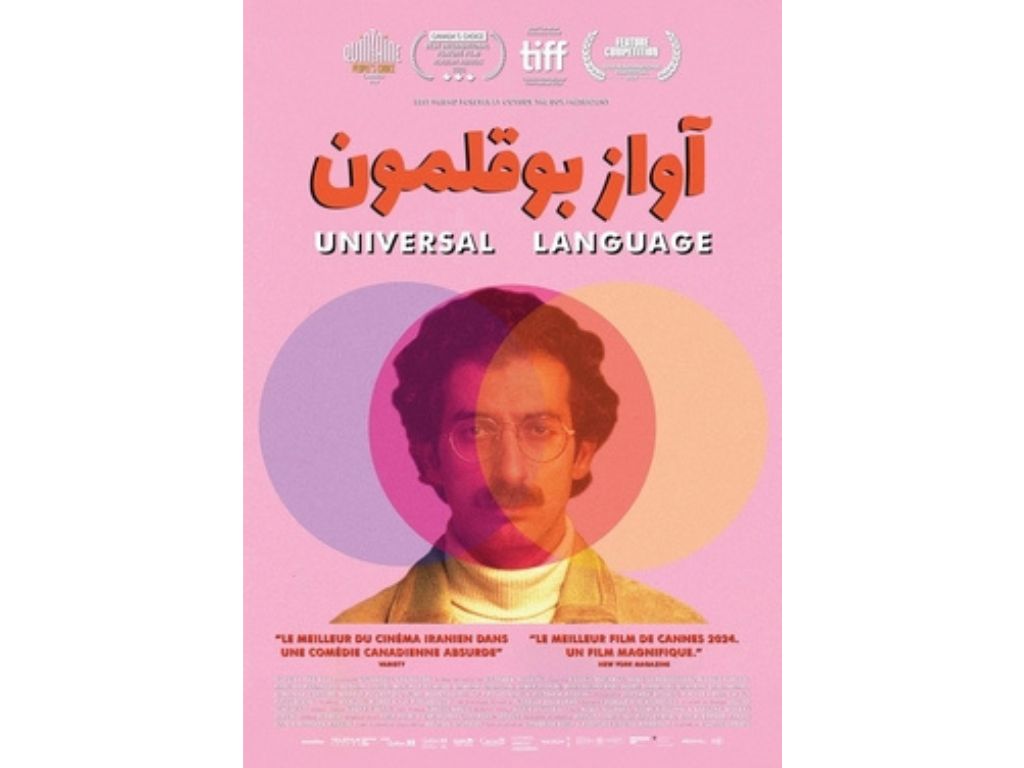
As migration, globalisation, and cultural exchange continue to reshape societies, questions of language and belonging have become increasingly significant. A common assumption is that culture is bound to a particular geography and ethnicity, with identity often understood as rooted in fixed national or cultural boundaries. But multicultural societies have always challenged this assumption, and often these concepts are portrayed in cinema through realism and political drama, while Universal Language by Matthew Rankin explores it through satirical comedy and quiet absurdity. The film is set in a fictionalised version of Winnipeg, Canada, where Persian language and culture are woven seamlessly into the fabric of everyday Canadian life. The film prompts reflection on multiculturalism, memory, and human interconnectedness.
Rankin constructs Universal Language as a quiet mosaic of intersecting lives, allowing meaning to emerge gradually through observation rather than dramatic revelation. The film unfolds three seemingly independent narratives which gradually intersect with each other and reveal a shared human experience. Drawing heavily from the traditions of Iranian cinema, particularly the works of Abbas Kiarostami, Rankin employs static compositions, extended single takes, and restrained editing that allows viewers to linger on ordinary moments rather than dramatic events. Isabelle Stachtchenko’s cinematography transforms Winnipeg into an uncanny landscape of muted beige buildings, empty streets, and carefully framed interiors which evoke the aesthetics of Iranian cinema, and where architecture assumes as much narrative importance as that of the characters themselves. One of the film’s most noteworthy qualities is its humour, which emerges not through punchlines but through deadpan performances, understated absurdity, and the elevation of the mundane—a historical tour of entirely ordinary places. As its seemingly independent narratives gradually intersect, Rankin suggests that identity, memory, and belonging are shaped less by national borders or language than by shared spaces, fleeting encounters, and the invisible threads that connect ordinary lives.
Universal Language is a must-watch not only for admirers of world cinema but also for viewers with an interest in migration, multiculturalism, and the politics of identity. The film follows a slow-paced and understated storytelling which may not appeal to audiences expecting conventional narratives, yet these qualities provide the film with its philosophical richness. The film’s artistic achievement has been widely recognised, winning the inaugural Directors’ Fortnight Audience Award at Cannes and becoming Canada’s official Oscar submission. More than an eccentric comedy or surreal fable, Universal Language is a thoughtful reflection on how cultures, histories, and lives become inseparably intertwined in an increasingly interconnected world, making it essential viewing for audiences interested in cinema that bridges cultures while challenging conventional notions of identity and belonging.