Why did the Indian prime minister return to a country of just 130,000 people after an 11-year absence? The 19 outcomes announced in Victoria are small in scale. The visit is about geography, China, and turning a neglected relationship into one anchored in permanent institutions.
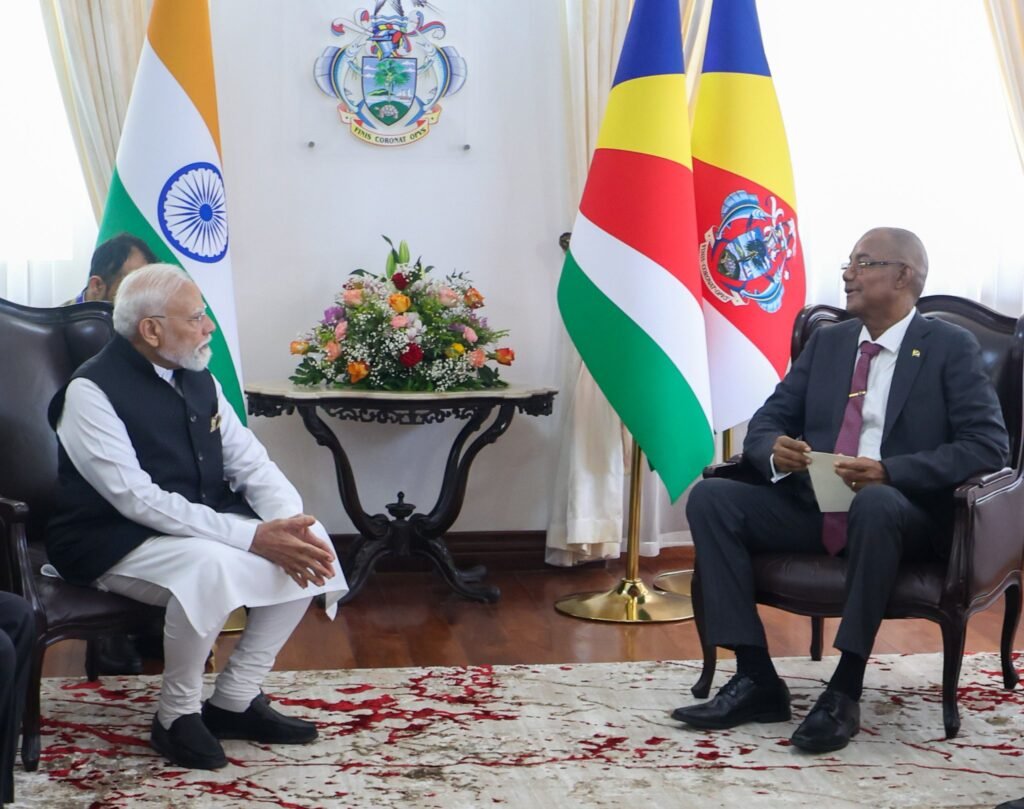
On 28 June 2026, Indian Prime Minister Narendra Modi and Seychelles President Patrick Herminie, held talks at State House in Victoria. They announced 19 outcomes covering defence, digital payments, health, agriculture, space and an extradition treaty. He then became the first Indian prime minister to address the Seychelles National Assembly. Most reporting presented the trip as a milestone in a deepening partnership. The individual deliverables are small: one patrol vessel, six ambulances, 500 tonnes of rice and 8,500 tonnes of cement. What matters is not their size. It is where Seychelles sits, and who else is competing for it.
That competition explains why India ended an 11-year gap in prime-ministerial visits. Prime Minister Modi had not been to Seychelles since 2015, and his was only the second trip by an Indian prime minister since 1981. For a country India now calls central to its maritime strategy, that absence needs explaining.
A Relationship India Let Slide
India let its engagement with Seychelles lose momentum for most of the past decade, and a change of government in Victoria is what revived it. Prime Minister Modi’s 2015 trip had itself ended a 34-year gap since Indira Gandhi. After it, cooperation continued at a low level, through defence training, a coastal radar system and the gift of a Dornier aircraft, but no prime-ministerial follow-up. The reset came from Seychelles, not India. Patrick Herminie won the presidency in October 2025, then travelled to Delhi in February 2026, where the two governments adopted a joint vision document and India announced a $175 million Special Economic Package. This June visit is the follow-through.
The timing also owed something to the war in West Asia. Disruption to Gulf shipping hurt Seychelles, which imports most of what it consumes, and India sent food and construction material soon after President Herminie’s February trip. The episode let India cast itself as Seychelles’ first responder when supplies run short.
Geography Does the Work
Seychelles matters to India because of where it is, not what it produces. The country has around 130,000 people and bilateral trade with India worth $84.88 million in 2023-24. Its importance lies in its location. The 115-island archipelago sits in the western Indian Ocean, along the sea lanes that link the Gulf, eastern Africa and South and Southeast Asia. It oversees a maritime zone of nearly 1.4 million square kilometres. In his Assembly speech the prime minister called it not a small island state but a “Large Ocean Country”.
India cannot monitor that ocean from its own coast, which is why it has spent years building eyes on the islands. It installed a coastal radar system across Seychelles’ outer islands, supplied two Dornier aircraft and stationed Indian personnel there. The work is aimed at three specific problems the two leaders named together: piracy, drug trafficking and illegal fishing.
China Is the Real Driver
The unstated reason for the visit is China. Weeks before Prime Minister Modi arrived, Seychelles marked 50 years of its own diplomatic relations with Beijing. China has spent the past two decades expanding its presence through infrastructure loans, port projects and defence deals across the Indian Ocean’s small states. President Herminie does not pick sides. He visited Moscow in April 2026, which annoyed the European Union, and is expected in Beijing next year. India is not trying to make Seychelles choose. It is trying to be the partner Seychelles relies on first.
India sells a different model from China’s, and it says so plainly. India’s foreign secretary, Vikram Misri, told reporters during the visit that the ties are “not transactional”. The contrast India draws is between Chinese lending and its own mix of grants, training and capacity-building. The warning it has in mind is the Maldives, where an “India Out” campaign forced a recalibration of relations after a change of government. The lesson India took is that a presence is fragile unless it is built into institutions.
What India Actually Signed
The agreements are small individually but broad collectively, spanning payments, health, defence, agriculture and trade. That breadth is the point. India is spreading cooperation across many sectors rather than betting on one large project.
- Financial backing: the centrepiece is an umbrella line of credit with the Export-Import Bank of India worth 1,250 crore rupees, which puts February’s package to work. The $175 million Special Economic Package combines a $125 million rupee-denominated line of credit with a $50 million grant, funding 1,000 social-housing units and 250 electric buses.
- Digital payments: India will deploy its UPI system through the Central Bank of Seychelles.
- Health and agriculture: India will export generic medicines under the Janaushadhi scheme and begin work on a new national hospital. Further agreements cover agriculture, outer space, extradition and the certification of Seychelles-flagged seafarers.
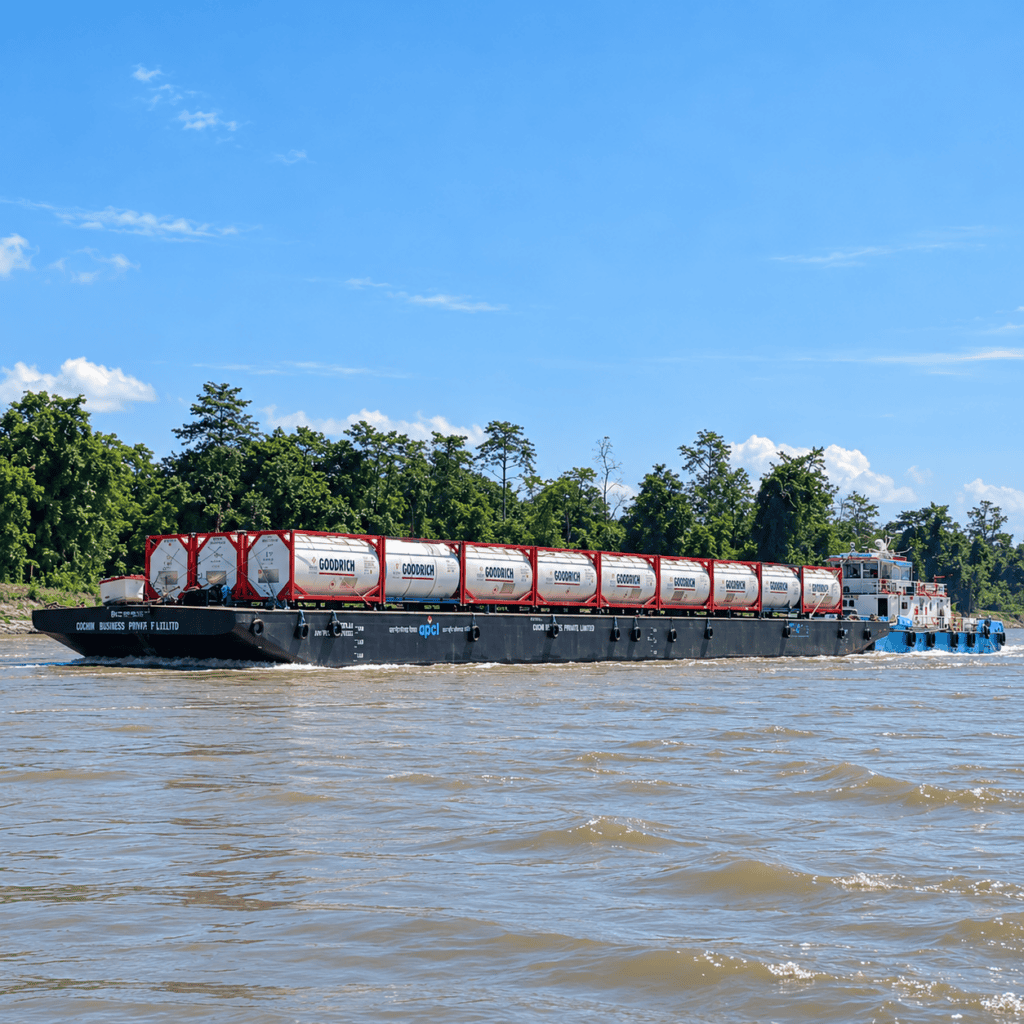
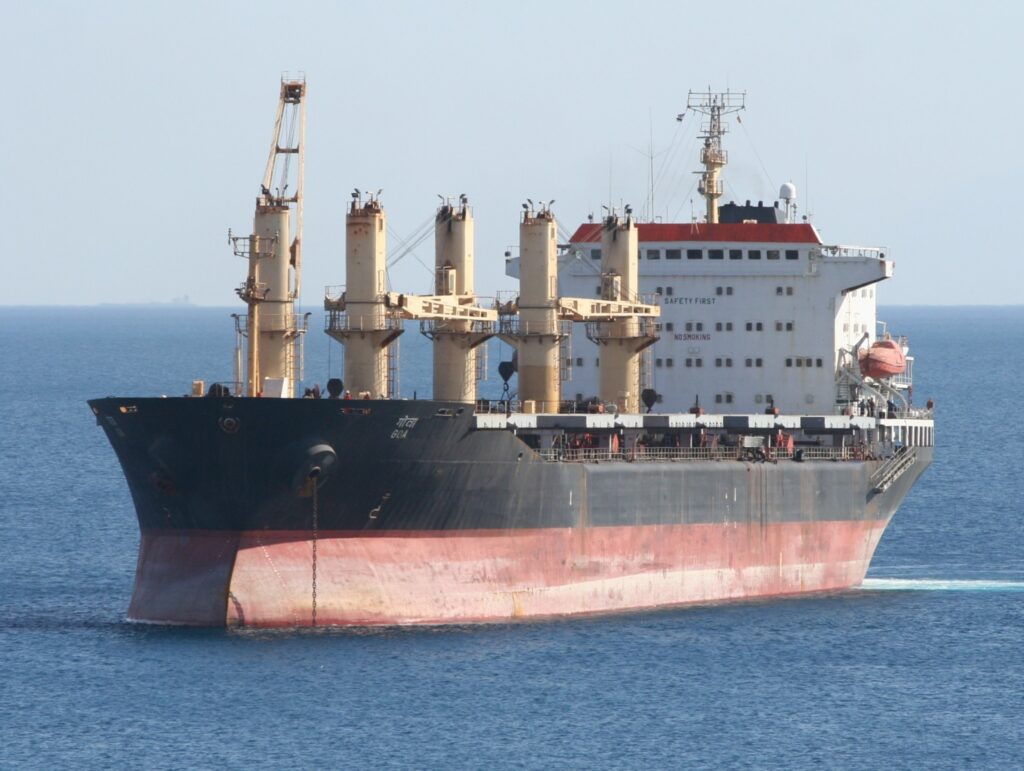
- Maritime and defence: India handed over the patrol vessel PS Lespwar, which Prime Minister Modi called “another important milestone”, refitted the coast guard ship PS Zoroaster and upgraded a Dornier with a new cockpit. In March it ran the 11th edition of Exercise Lamitye, raised for the first time to a tri-service level. Seychelles also joined the Coalition for Disaster Resilient Infrastructure, a body India launched. Under the February vision the two sides agreed to set up a Seychelles hydrographic unit, whose surveys aid both civilian navigation and maritime security, and the prime minister proposed direct shipping links and trade in local currencies to lift thin trade.
MAHASAGAR’s First Real Test
This visit is the first substantial outing for India’s new maritime doctrine. Prime Minister Modi announced the original version, SAGAR, in Mauritius in 2015, days after his first Seychelles trip. In 2025 he widened it into MAHASAGAR, which adds climate, the blue economy and digital infrastructure to maritime security. Seychelles is a named partner in that framework, so the deliverables in Victoria serve as its proof of concept.
The visit also leaned on older ties. President Herminie gave Prime Minister Modi the “Guardian of the Blue Horizon”, an environmental honour conferred for the first time. Prime Minister Modi reminded the Assembly that about 12 per cent of Seychelles’ population is of Indian origin, and that one in fifty Seychellois has trained in India. The connection is old. He told the Assembly that five Indians arrived aboard the ship Thelemaque in 1770, before Seychelles existed as a modern state, which is the foundation India uses to argue its presence is rooted rather than recent.
The visit’s worth will be decided by delivery, not by the number of agreements. Indian lines of credit have often been slow to disburse, and Seychelles can absorb only so much at once. The real question is whether, three years from now, the hospital is being built, the buses are running, UPI works and the patrol boats are at sea. Seychelles will keep its doors open to Beijing and Moscow whatever India does. President Herminie has already asked India to consider an advanced light helicopter and centres for cybersecurity and artificial intelligence. Whether India meets those requests, and delivers on the 19 outcomes announced this week, will decide if it becomes the partner Victoria calls first.
Note: This explainer has been researched, edited, and fact-checked by India’s World staff and prepared with AI assistance.