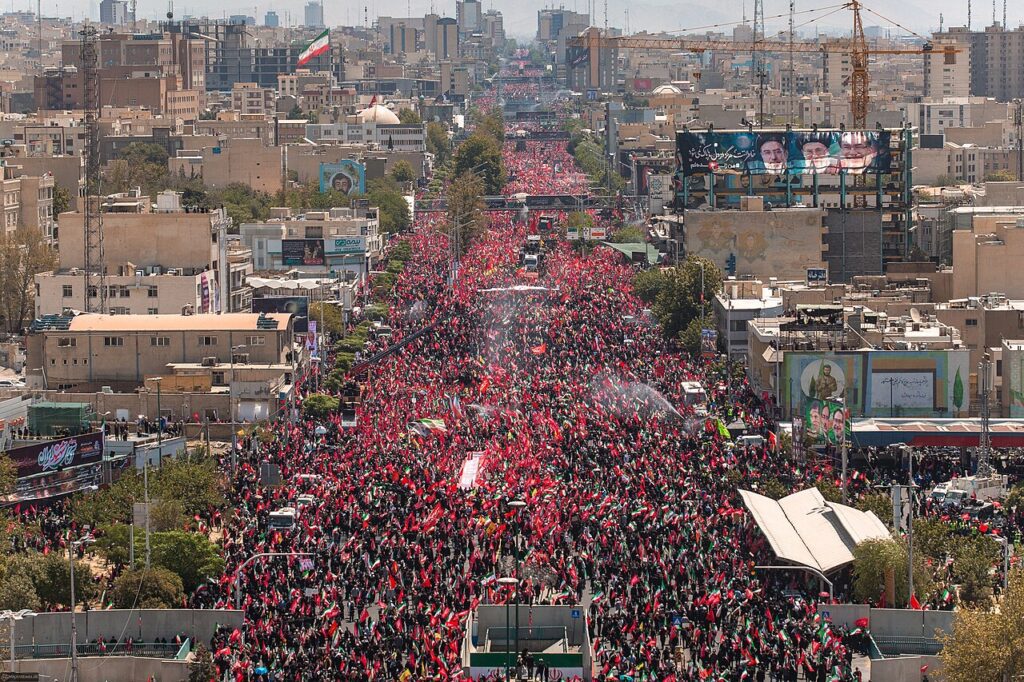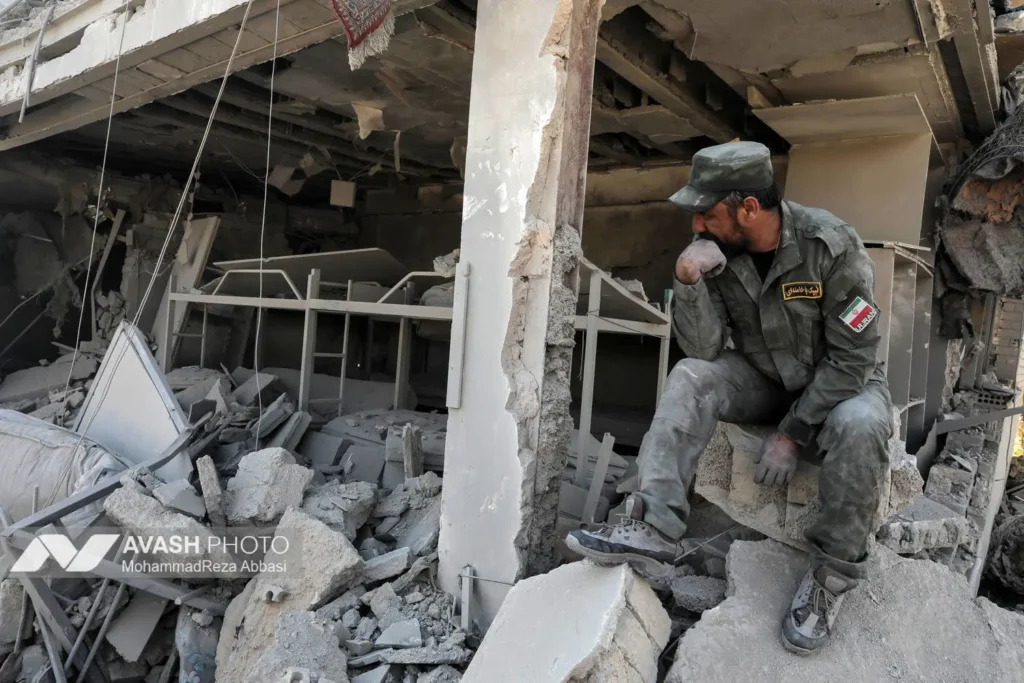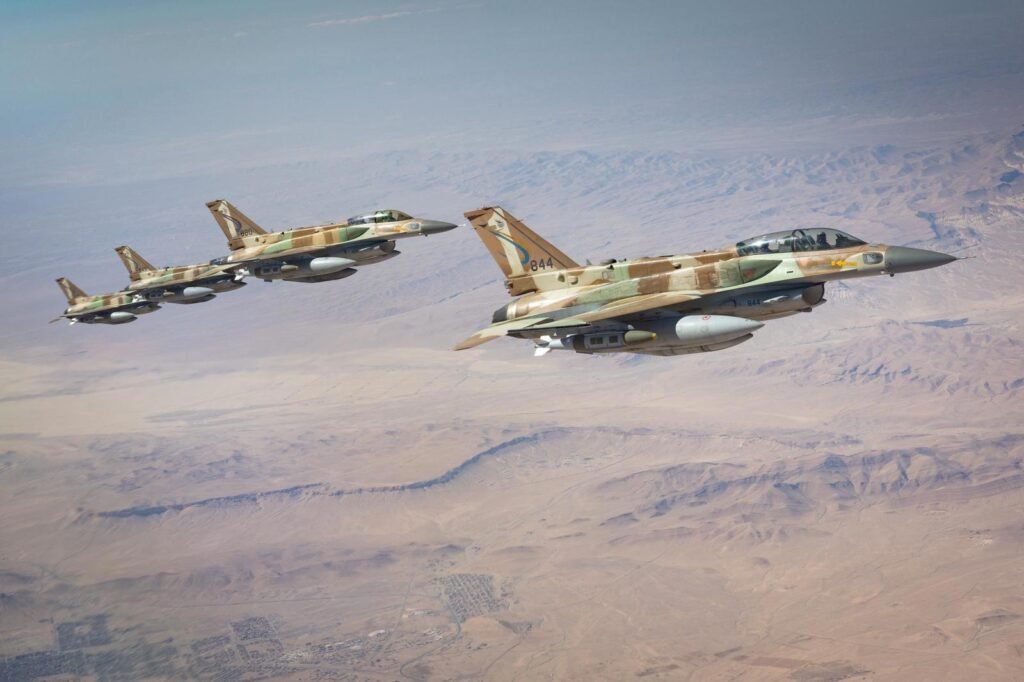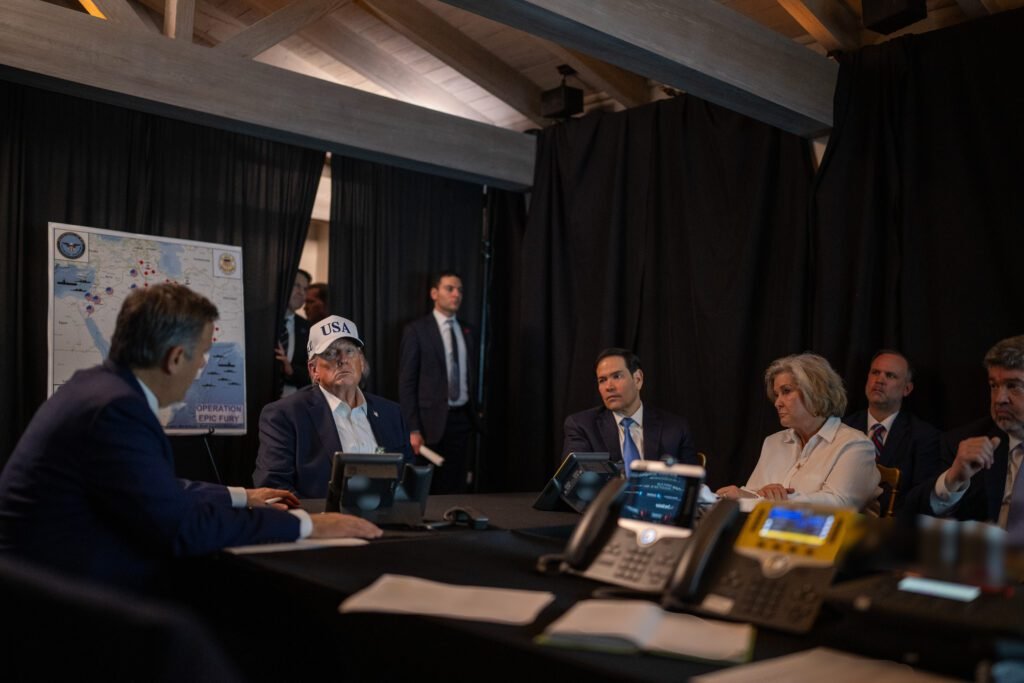
On February 28, 2026, the United States and Israel launched a joint military operation against Iran. The Pentagon designated it “Operation Epic Fury.” Israel called it “Operation Roaring Lion,” a name reportedly chosen personally by Israeli Prime Minister Netanyahu. The strikes targeted Iran’s nuclear infrastructure, missile sites, naval assets, and senior leadership. Supreme Leader Ali Khamenei was killed at his compound in central Tehran, along with more than forty officials, including Defence Minister Nasirzadeh, IRGC Commander Pakpour, and security council head Shamkhani.
President Trump declared it “Justice for the people of Iran” and for “all Great Americans” harmed by “Khamenei and his gang of bloodthirsty THUGS.” In a video address to the Iranian public, he said: “Seize control of your destiny. Take over your government. It will be yours to take.” Israeli Defence Minister Katz stated: “Whoever acted to destroy Israel was destroyed. Justice has been served.” Iran’s President Pezeshkian called it a “great crime” that “would not go unanswered.”
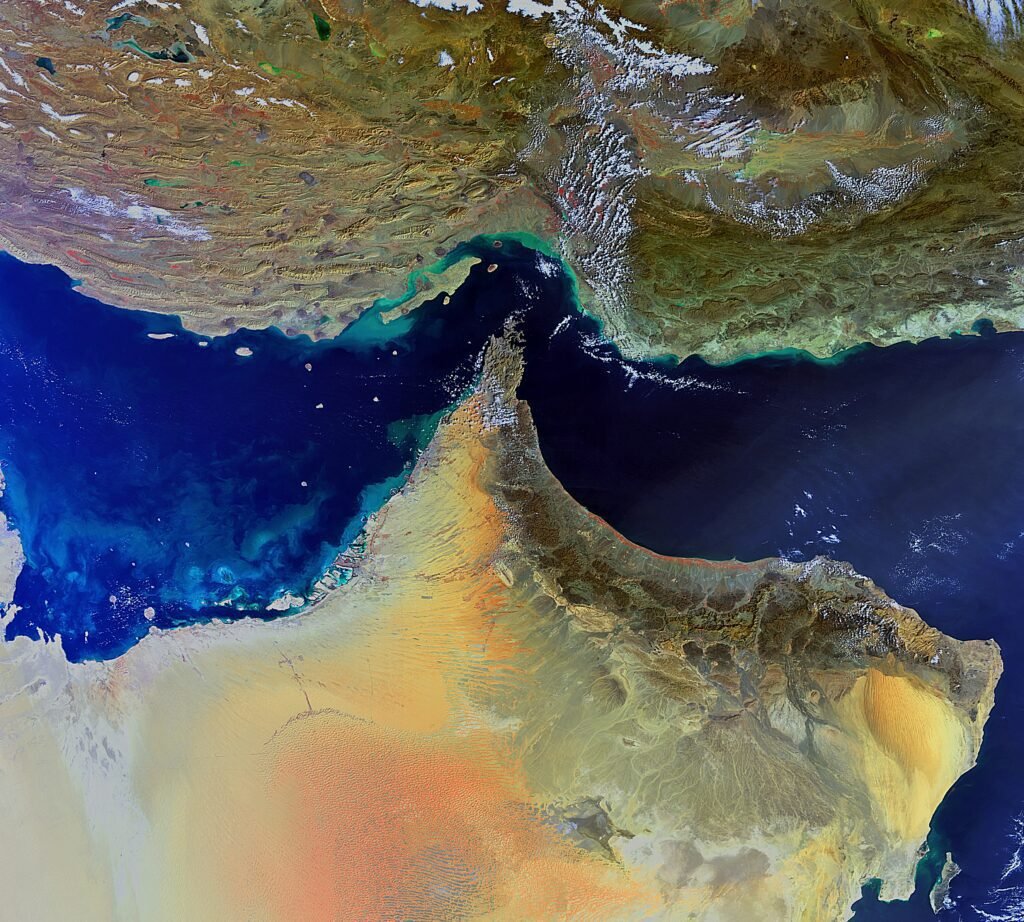
In retaliation, Iran fired hundreds of missiles and drones at Israel, at U.S. forces across the Gulf, and at the territories of Saudi Arabia, Bahrain, Kuwait, Qatar, the UAE, Jordan, and Oman. Tehran also warned that the Strait of Hormuz was effectively closed, sending oil prices up roughly 10% and LNG prices up 20%. On March 8, Iran’s Assembly of Experts appointed Mojtaba Khamenei, the son of the slain Supreme Leader, as his successor. As the war intensified, the reactions from across the world reflected the deep fractures that have come to define the current state of the international order.
At the Security Council
The Security Council convened in emergency session within hours, requested by France, China, Russia, Colombia, and Bahrain, and most of the fifteen members fell short of condemning the United States and Israel for the initial assault. Secretary-General António Guterres warned that “military action carries the risk of igniting a chain of events that nobody can control,” declared the strikes a violation of international law, and separately condemned Iran’s retaliation for violating the sovereignty of its neighbours. Russia’s envoy called the operation “a genuine betrayal of diplomacy,” stressing Iran was struck while nuclear negotiations were still underway. China labelled the strikes “brazen” and a “grave violation of Iran’s sovereignty.” Colombia’s delegate stated that “no State may unilaterally claim the right to attack another in order to implement regime change.”
As the war intensified, the reactions from across the world reflected the deep fractures that have come to define the current state of the international order
On March 11, the formal vote came on two competing drafts, each reflecting a fundamentally different account of who was responsible for the war. Resolution 2817, drafted by Bahrain on behalf of the Gulf states and co-sponsored by 135 member states, passed with thirteen votes and two abstentions from China and Russia, condemning “in the strongest terms” Iran’s retaliatory strikes while making no mention of the U.S.-Israeli operation that triggered the war. Russia’s competing draft, calling on “all parties” to halt military operations, failed. Iran’s ambassador called the resolution “a manifest injustice” and charged that “the very state responsible for this brutal war of aggression sits on the other side of this chamber as president of the Council.” China’s delegation put it in terms that resonated well beyond the chamber: “This is a war that should not have happened, and a war that benefits no one.” That neither China nor Russia chose to use their veto to block a resolution condemning only Iran sent Tehran an unmistakable signal about the limits of great-power solidarity.
Europe Splits
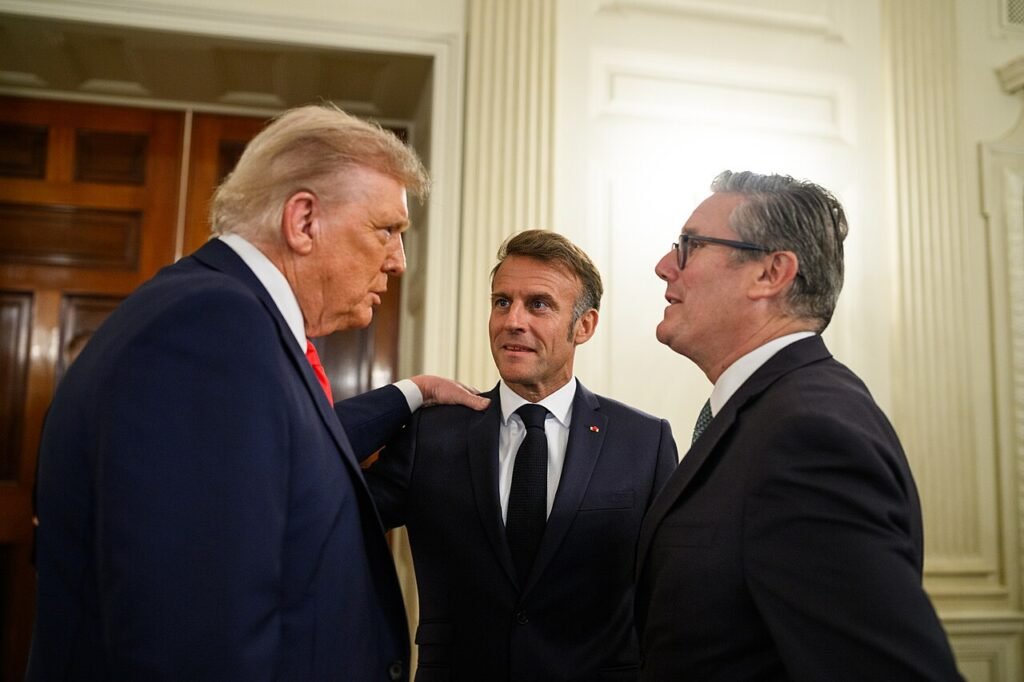
At the level of official alliance positions, the West appeared largely united. NATO Secretary-General Mark Rutte told the BBC that Europe was “absolutely supportive” of U.S. action and characterised Iran’s nuclear capability as “a threat to us in Europe, to Israel, to the region.” EU foreign policy chief Kaja Kallas called Khamenei’s death “a defining moment in Iran’s history” and spoke of “an open path to a different Iran.” Australia, Canada, and Ukraine voiced support. But behind that front, the cracks were running deep. France’s President Macron stated the strikes were being conducted “outside of international law” and by March 3 declared that France “cannot approve of” the operation. Norway’s Foreign Minister rejected the legal basis outright: “Preventive attacks require an immediately imminent threat.” Spain’s Prime Minister Sánchez called the war “a huge mistake” and permanently withdrew his ambassador to Israel. The UK denied participating in the initial strikes but later permitted the U.S. to use British bases to bomb Iranian missile sites, while several European nations refused American requests for naval deployments to the Strait of Hormuz. The transatlantic alliance that had held through Afghanistan, Libya, and Ukraine’s defence could not agree on whether a war started by its most powerful member was even legal.
Russia condemned the strikes with maximum rhetorical force while delivering minimum material consequence
What Russia and China Didn’t Do
Russia condemned the strikes with maximum rhetorical force while delivering minimum material consequence. Putin’s letter to President Pezeshkian expressed condolences over a killing “committed in cynical violation of all norms of human morality and international law,” but conspicuously avoided naming the United States or Israel. Carnegie Endowment analyst Alexander Baunov noted that Putin “formulated it in such a way as to avoid direct accusations against Donald Trump.” Russia’s Foreign Ministry labelled the operation “a deliberate, premeditated and unprovoked act of armed aggression” carried out “under the cover of the renewed negotiation process,” yet when the moment came to veto Resolution 2817, Moscow abstained. China’s Foreign Minister Wang Yi declared that “force provides no solution” and warned that “a strong fist does not mean strong reason,” but Beijing’s outrage was constrained by the reality that the Gulf states Iran attacked were among its most critical energy and trade partners. Like Russia, China abstained rather than vetoed. For Tehran, the gap between what its two most important international partners were willing to say and what they were willing to do could not have been wider.
The Global South Divided
Brazil’s President Lula da Silva emerged as the sharpest critic of the operation from the developing world, drawing a direct parallel to the 2003 invasion of Iraq at the CELAC summit in Bogotá on March 21. “Iran has been invaded under the pretext that Iran was building a nuclear bomb,” he said. “Where are Saddam Hussein’s chemical weapons? Where are they? Who found them?” He concluded that “what we are witnessing is the total and absolute failure of the United Nations.” South Africa’s President Ramaphosa was less confrontational in tone but equally direct: “We want a ceasefire, we want this madness to come to an end.” Argentina’s President Javier Milei, however, occupied the opposite end entirely, declaring himself “the most Zionist president in the world” and stating, “I don’t like Iran. They have bombed us twice. They are our enemies.” His government formally “valued and supported” the U.S.-Israeli operations.
India’s Dilemma
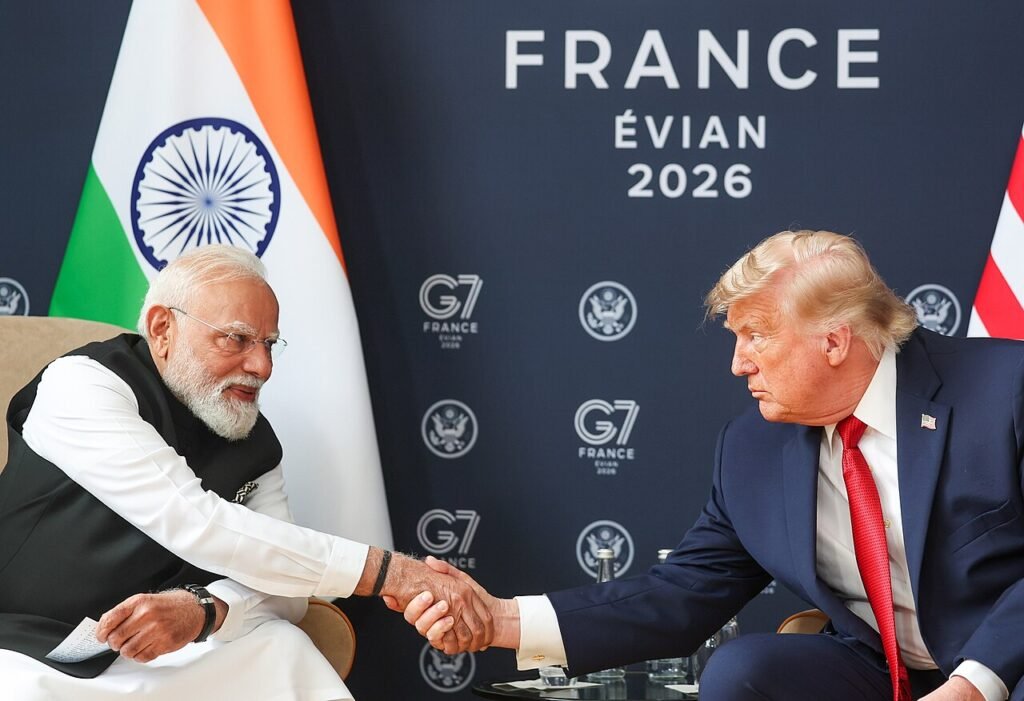
No country’s response captured the constraints of the current moment more precisely than India’s. Prime Minister Modi had addressed the Israeli Knesset just 48 hours before the strikes, telling lawmakers that “India stands with Israel, firmly, with full conviction, in this moment and beyond.” When Iran retaliated by striking the UAE, Modi condemned the attacks and expressed solidarity with Abu Dhabi without naming Tehran, and in a separate call with Pezeshkian, he expressed concern over civilian casualties. India did not condemn Khamenei’s assassination; its Foreign Secretary quietly signed a condolence book at the Iranian embassy without any formal statement being issued. The restraint was driven by exposure that went far beyond diplomatic preference: 90% of India’s LPG imports transit the Strait of Hormuz, roughly ten million Indian nationals live and work in the Gulf, and fuel queues were already forming across the country.
Across the Global South, governments that share conference stages and acronyms found themselves on opposite sides of the most basic question the war posed
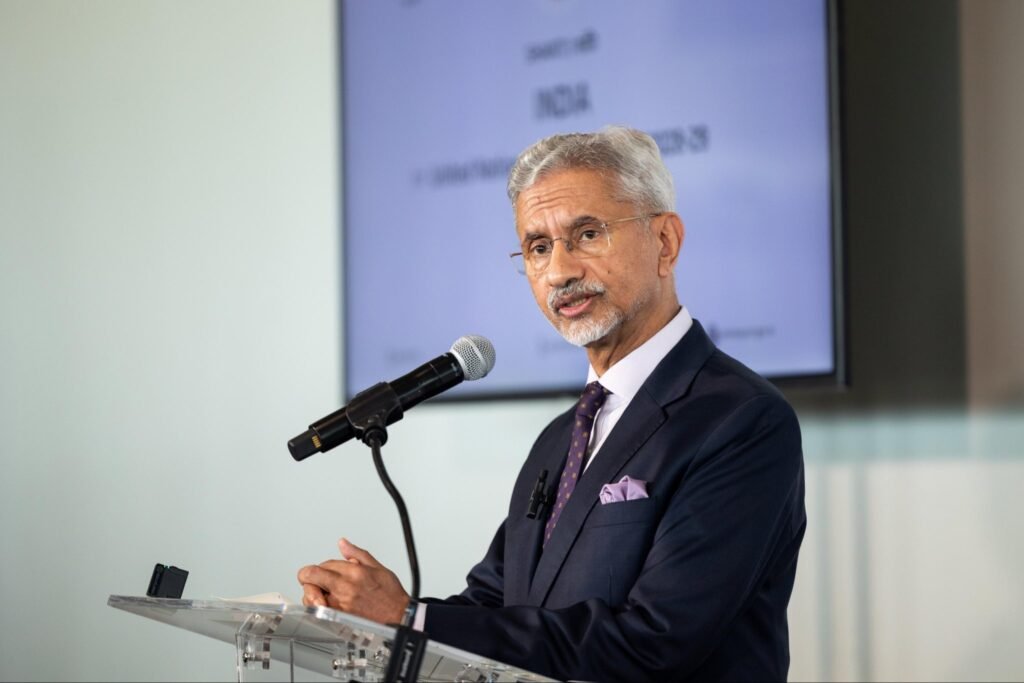
India’s position also paralysed BRICS, which now includes both Iran, admitted in 2024, and the UAE, one of the countries Iran struck. Brazil, Russia, and China condemned the U.S.-Israeli operation. India did not. As of mid-March, no joint BRICS statement had been issued. India holds the rotating presidency in 2026, and under its chairmanship, the bloc remained silent, a notable contrast to the previous year when Brazil held the chair, and BRICS quickly condemned earlier U.S.-Israeli military action. External Affairs Minister S. Jaishankar, speaking at the Raisina Dialogue during the same period, framed the broader question bluntly: “Whose order was it? This was the order by the West, for the West, and from the West.”
No Consensus
As the war enters its fourth week with no ceasefire in sight, the global response to Operation Epic Fury has not settled into any recognisable consensus. The Security Council managed to pass a resolution that condemned only one side of a conflict started by the other. Notably, across the Global South, governments that share conference stages and acronyms found themselves on opposite sides of the most basic question the war posed.