Canada’s economic engagement with India has remained significant despite the deterioration in diplomatic relations in September 2023. Canadian direct investment in India stood at C$11.4 billion in 2025, more than double the C$5.6 billion recorded in 2024, according to figures released by Global Affairs Canada in October 2026. Finance and insurance, utilities, and real estate (rentals and leasing) were the leading sectors attracting Canadian direct investment. Canadian pension funds and asset managers also reported approximately C$108 billion in total exposure to India in 2025, although this broader figure includes portfolio holdings, direct investments, and other investment vehicles and should not be treated as FDI alone.
The figures point to the scale of Canada’s economic interests in India, but they require some qualification. Canada’s reported direct-investment position measures the accumulated value of its investment, rather than the amount of fresh capital entering India in a particular year. India’s Department for Promotion of Industry and Internal Trade (DPIIT), meanwhile, records FDI equity inflows by source country. These two datasets use different methodologies and cannot be directly compared.
India’s own figures offer a more cautious picture. Canadian FDI equity inflows, recorded by DPIIT, amounted to $569.53 million in 2023, $410.51 million in 2024, and $161.44 million in 2025. In the first quarter of 2026, the figure stood at $18.01 million. These numbers suggest that fresh equity inflows have not yet demonstrated a sustained recovery, notwithstanding the improvement in diplomatic relations and the announcement of major investment transactions.
Before the Diplomatic Freeze
Before the diplomatic crisis, Canada had emerged as an important source of institutional capital for India’s infrastructure and services sectors. The relationship was driven not only by conventional corporate investment but also by the growing presence of Canadian pension funds, which increasingly viewed India as a destination for long-term investments.
Between 2019 and 2023, India accounted for 25% of Canadian pension funds’ investment flows into the Asia-Pacific region, compared with 10% during 2003–18, according to the Asia Pacific Foundation of Canada’s Investment Monitor report. India became the second-largest recipient of Canadian pension-fund investment flows in the region, after Australia.
The concentration of these investments in a few sectors is particularly noteworthy. Between 2013 and 2023, real estate accounted for 57% of Canadian pension-fund investment in India, attracting more than C$3.8 billion. Financial services received approximately C$3 billion, while industrial transportation attracted around C$2.6 billion. Together, these three sectors accounted for more than C$9.4 billion in investment flows. Infrastructure and renewable energy were also emerging as attractive destinations, supported by India’s expanding infrastructure requirements and energy-transition plans.
Major Canadian institutional investors operating in India included the Canada Pension Plan Investment Board (CPPIB), Ontario Teachers’ Pension Plan (OTPP), Caisse de dépôt et placement du Québec (now La Caisse), Public Sector Pension Investment Board (PSP Investments), and British Columbia Investment Management Corporation.
Brookfield Asset Management and Fairfax Financial Holdings were among the other prominent Canadian investment groups with significant Indian interests.
The investment relationship extended beyond pension funds. Canadian companies and investors had established interests in financial services, technology, energy, logistics, warehousing, and commercial property. Brookfield, for instance, expanded its Indian presence through investments in real estate, renewable energy, and digital infrastructure.
By the time diplomatic relations began deteriorating in September 2023, India’s importance to Canadian institutional investors was therefore already well established. The relationship was underpinned by long-term commercial interests, rather than short-term diplomatic considerations alone.
Canadian FDI During the Diplomatic Freeze
The diplomatic crisis erupted in September 2023, when Canadian Prime Minister Justin Trudeau told Parliament that Canada was pursuing credible allegations of a potential link between agents of the Indian government and the killing of Canadian citizen Hardeep Singh Nijjar in British Columbia on June 18, 2023. India rejected the allegations, and relations deteriorated sharply. The two countries subsequently expelled diplomats and restricted aspects of their diplomatic engagement.
The deterioration raised questions about the future of Canadian investment in India, particularly given the substantial presence of Canadian pension funds and institutional investors.
However, the available evidence does not indicate an immediate withdrawal of Canadian capital.
A study by the Asia Pacific Foundation of Canada found that Canadian pension-fund investment flows into India increased from C$28 million in the third quarter of 2023 to C$111 million in the fourth quarter. The increase was largely driven by an investment in Indian logistics company Xpressbees by the Ontario Teachers’ Pension Plan Board.
This was an important indication of the long-term investment approach adopted by Canadian pension funds. Their investment decisions were driven by commercial considerations, existing commitments, and expectations of returns over extended periods.
Nevertheless, India’s recorded FDI equity inflows from Canada declined over the subsequent years.
| Year | Canadian FDI equity inflows into India (US$) |
| 2023 | $569.53 million |
| 2024 | $410.51 million |
| 2025 | $161.44 million |
Source: DPIIT, Government of India. Calendar-year figures.
The decline continued through 2024 and 2025. In 2024, Canadian equity inflows amounted to US$410.51 million, while the figure fell to US$161.44 million in 2025. Canada’s share of India’s total FDI equity inflows also remained relatively small.
However, these figures alone cannot establish that diplomatic tensions caused the decline. Global investment conditions, individual corporate decisions, sectoral trends, and the timing of large transactions also influence annual inflows.
On the Canadian side, the reported direct-investment position in India stood at C$5.6 billion in 2024, according to figures cited by Global Affairs Canada in June 2026. This suggests that Canada’s accumulated investment presence remained substantial even as new equity inflows recorded by India weakened.
The distinction is important: a decline in fresh investment does not necessarily mean existing investors are withdrawing their capital.
Canadian FDI After the Diplomatic Reset
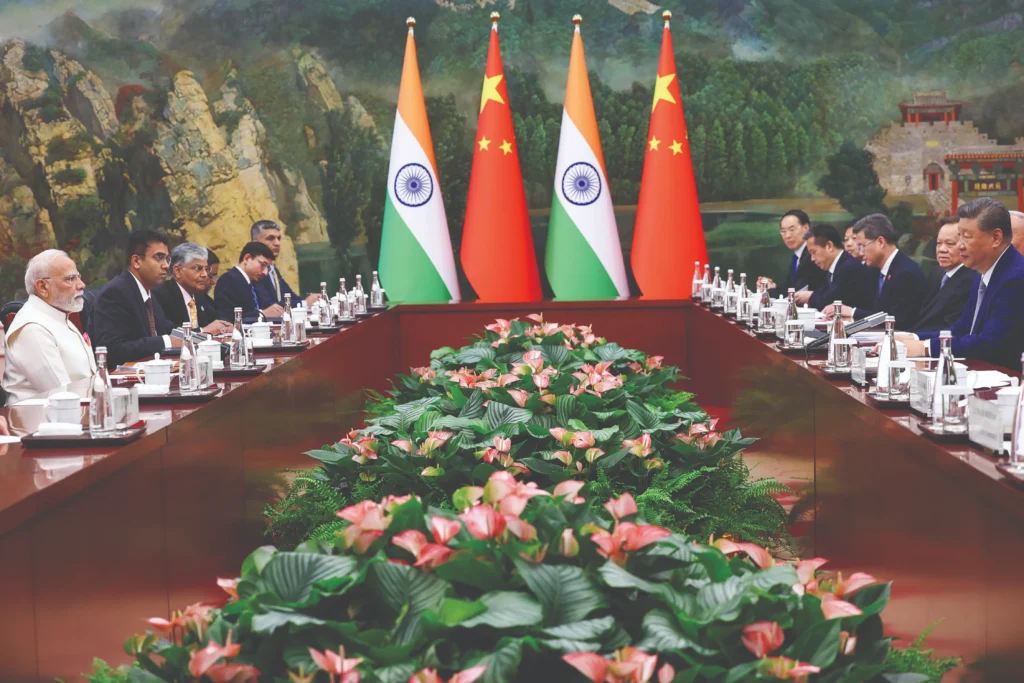
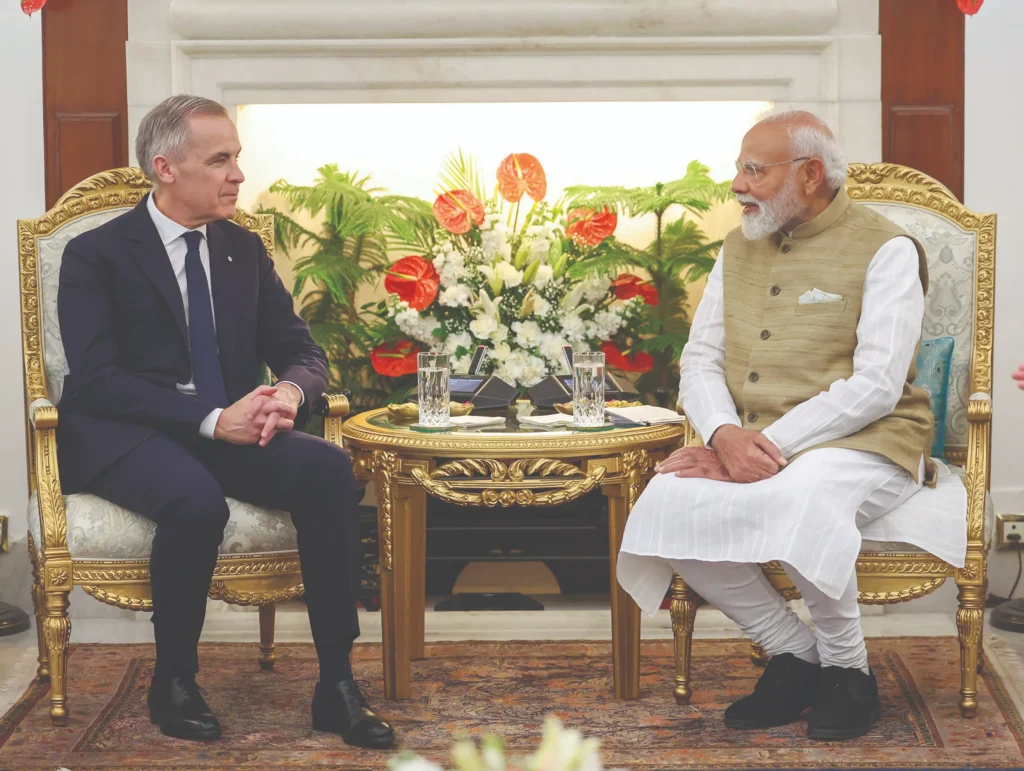
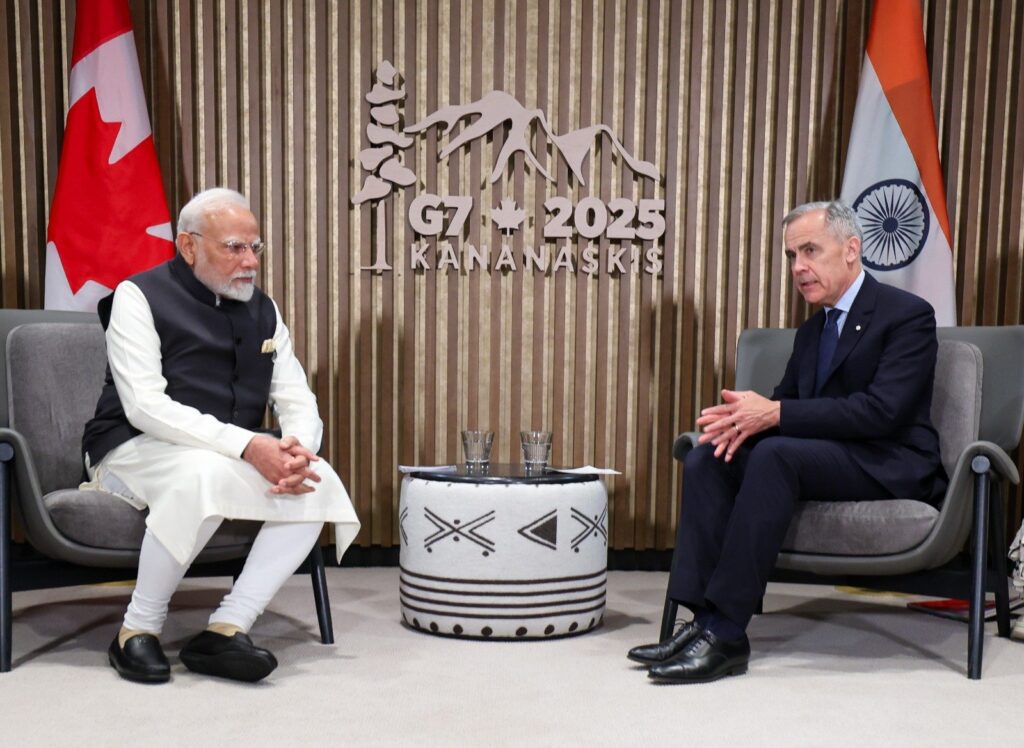
The gradual restoration of diplomatic engagement opened a new phase in India–Canada relations. Prime Ministers Narendra Modi and Mark Carney met on the sidelines of the G7 Summit in Kananaskis in June 2025, agreeing to take steps towards stabilising bilateral relations.
Both countries restored High Commissioner-level representation in August 2025, while discussions on trade and investment resumed. In October 2025, Canadian Foreign Minister Anita Anand visited India and held discussions with External Affairs Minister S. Jaishankar. The two sides agreed on a roadmap to rebuild bilateral engagement.
A further milestone came on November 23, 2025, when Modi and Carney agreed to formally launch negotiations for a Comprehensive Economic Partnership Agreement (CEPA) on the sidelines of the G20 Summit in Johannesburg. During Carney’s visit to India from February 27 to March 2, 2026, the two governments signed the Terms of Reference to guide the negotiations. The agreement is intended to cover goods and services, investment, agriculture, digital trade, and other areas of economic cooperation, with the objective of concluding negotiations by the end of 2026.
The renewed engagement has coincided with several significant Canadian investment developments.
La Caisse – Altius Telecom
In September 2026, Canadian investment group La Caisse announced that it had completed an investment of approximately ₹12,100 crore (C$1.76 billion) for a 24% stake in Altius Telecom Infrastructure Trust, alongside Brookfield. Altius operates more than 258,000 telecom towers and sites across India, supporting the country’s mobile connectivity and 4G and 5G infrastructure.
The investment represents a major Canadian institutional commitment to India’s digital infrastructure sector. It also illustrates the continued attraction of India’s expanding telecommunications market to long-term infrastructure investors.
Fairfax Financial – IDBI Bank
In October 2026, the Government of India approved Fairfax Financial Holdings as the strategic buyer for IDBI Bank. The transaction involves the proposed sale of a combined 60.72% stake held by the Government of India and the Life Insurance Corporation of India, for approximately ₹52,878 crore.
The proposed acquisition is a significant development in Canadian investment interest in India’s financial sector. However, the approval of Fairfax as the strategic buyer should not be confused with the completion of the acquisition. The transaction remains subject to the applicable agreements and regulatory processes.
Renewed Commercial Engagement
The economic reopening has also been reflected in government-to-government and business engagement. In October 2026, Canadian International Trade Minister Maninder Sidhu led a delegation of nearly 300 representatives to Mumbai and Bengaluru. The mission resulted in 34 commercial agreements worth close to C$300 million, covering areas including aerospace, clean technology, energy transition, information and communication technology, life sciences, and agri-food.
The agreements indicate renewed commercial interest, although their announced value should not be classified as realised FDI.
Despite these developments, India’s recorded FDI equity inflows from Canada stood at only $18.01 million in January–March 2026. The latest quarterly figure therefore does not, by itself, demonstrate a broad-based recovery in Canadian equity investment. The larger transactions announced during 2026 will need to be reflected in subsequent official data before a sustained increase can be established.
What the Numbers Reveal
The India–Canada investment relationship presents a contrast between diplomatic instability and continuing commercial interests.
Before the diplomatic crisis, Canadian pension funds had established a substantial presence in India’s real estate, financial services, and infrastructure sectors. During the freeze, institutional investors continued to pursue long-term commercial opportunities, even as India’s recorded FDI equity inflows from Canada declined.
Following the diplomatic reset, large transactions in telecommunications infrastructure and banking, alongside renewed trade engagement, have created opportunities for a broader investment relationship.
However, the recovery remains a work in progress. The rise in Canada’s reported direct-investment position to C$11.4 billion in 2025 and the announcement of major transactions in 2026 are encouraging indicators, but neither should be interpreted as proof that fresh FDI inflows have already recovered.
The next test will be whether renewed diplomatic engagement, CEPA negotiations, and greater policy predictability translate into sustained investment across sectors.
For now, the evidence suggests that commercial interests helped preserve the India–Canada investment relationship during the diplomatic freeze. The economic reset offers an opportunity to expand it, but the numbers have yet to establish a sustained revival in fresh FDI.