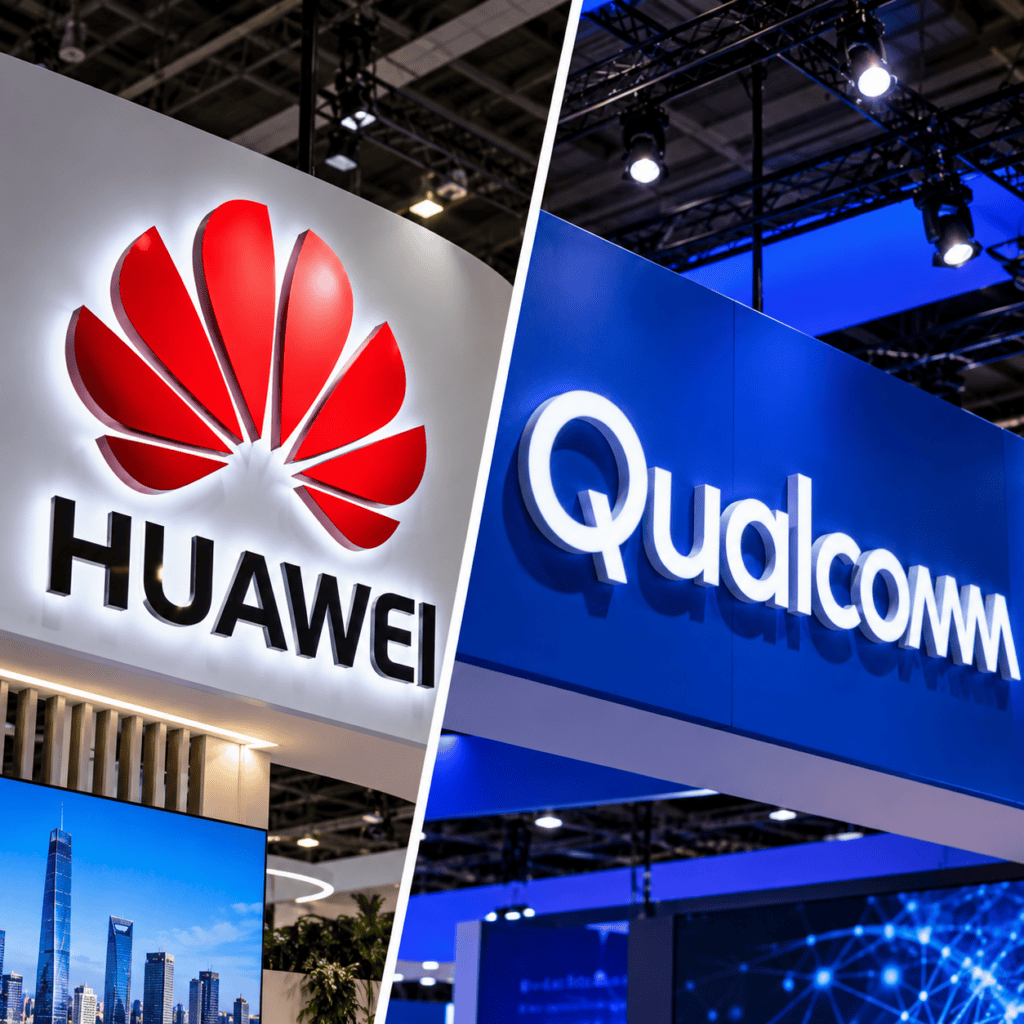
For years, the United States has restricted China’s access to key technologies, seeking to limit the rise of Chinese technology companies such as Huawei. Yet, in October 2026, Huawei reached a patent agreement with American chipmaker Qualcomm, allowing both companies to use each other’s patented technologies. The deal raises a larger question: how effective are technology restrictions in limiting a country’s technological progress?
Huawei, the Chinese company the United States (US) has kept on its Entity List since 2019, has agreed to a patent deal with the American chip maker Qualcomm. Announced on 5 October, the deal lets the two firms use each other’s patents, and Qualcomm will buy some of Huawei’s US patents. It is tempting to interpret this as proof that US restrictions pushed China’s research and development (R&D) ecosystem to build its own technologies. But if one analyses the data carefully, one finds that China’s earnings from licensing its intellectual property (IP) to foreign countries increased in 2017, before the main US restrictions began. And China spends almost as much on research as the US but earns only a small share of what the US earns from licensing. It seems, therefore, that the tide hasn’t turned yet, at least not in a big way.