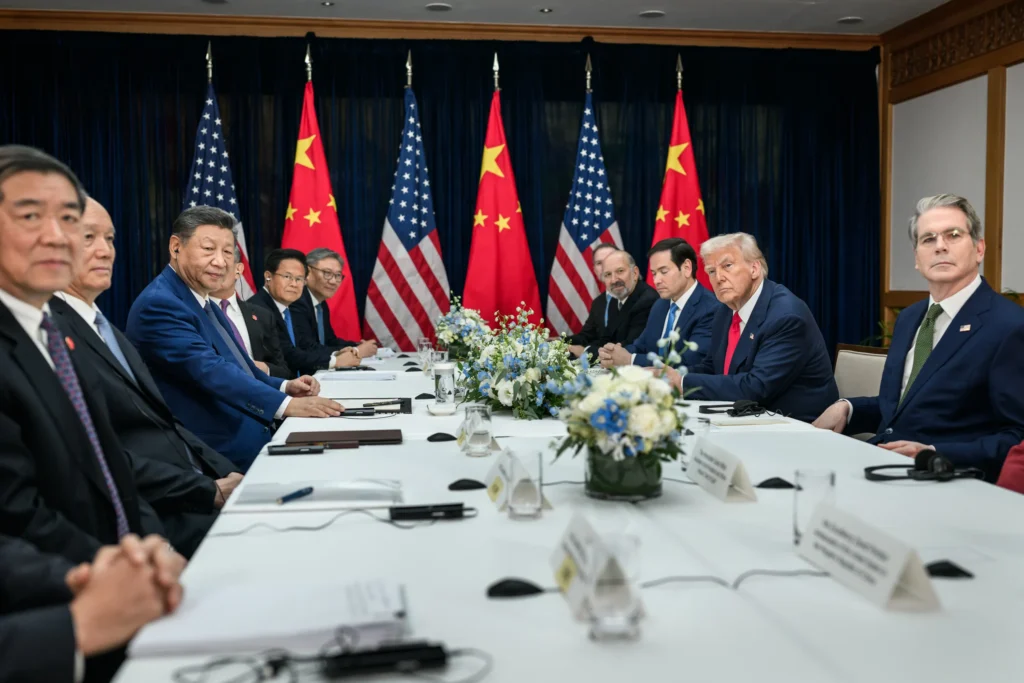
Who will succeed Xi Jinping remains one of the most consequential unanswered questions in Chinese politics. As Xi has reshaped the political and institutional conditions that once governed leadership succession, the question of how the next transition will unfold has become increasingly uncertain. The recent appointment of Cai Qi to head the Central Party School has once again brought the succession question into focus.
In this Long Read essay for India’s World, Devendra Kumar and Jabin T. Jacob examine how Xi has reshaped the political, institutional, and ideological conditions surrounding succession. They introduce the idea of “managed succession” to explain how Xi has consolidated his influence over the process of choosing and grooming his successor.
On 18 June, Cai Qi, a close confidant of Xi Jinping, was appointed as the head of the Communist Party of China (CPC)’s Central Party School – the premier institution responsible for ideological training of senior cadres. The appointment has once again raised questions about who will succeed Xi Jinping as general secretary of the Party. In this article, we propose a new framework – “managed succession” – for understanding how succession will be effected in the CPC by examining the effects of political, institutional, and ideological changes introduced by Xi since 2013.