When India’s Chief Economic Adviser (CEA) warned the global order was “structurally challenged,” he was describing a $775 billion import bill, a currency near all-time lows, and a central bank burning reserves to hold the line. Here is what V. Anantha Nageswaran said, what he left unsaid, and what it means.
What Nageswaran Said
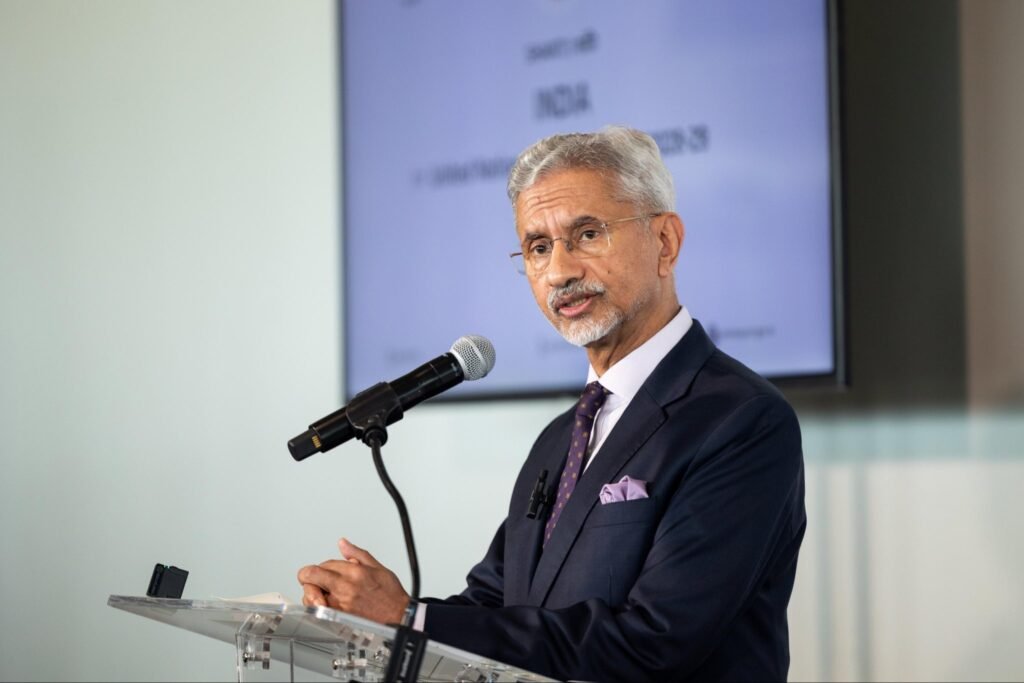
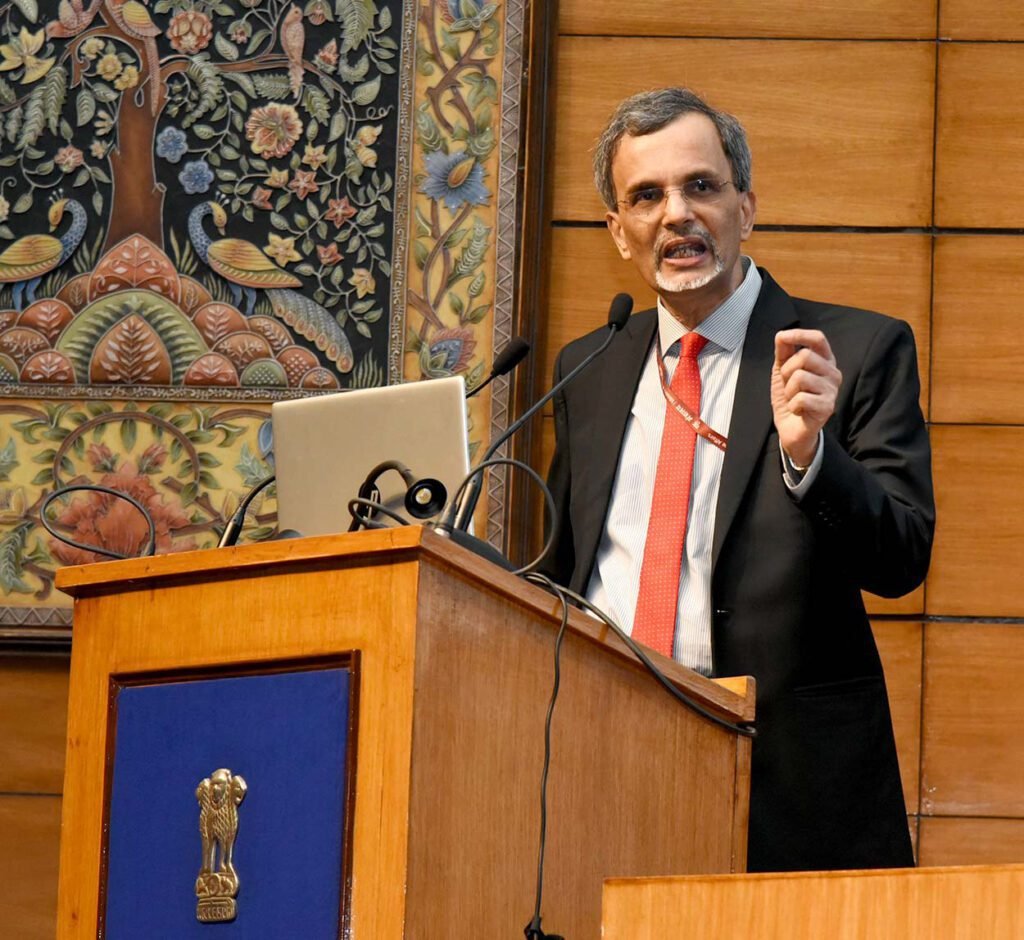
On 13 May 2026, at the Confederation of Indian Industry’s Annual Business Summit, Chief Economic Adviser V. Anantha Nageswaran delivered one of the more candid diagnoses of India’s external predicament by a sitting policymaker. Speaking at a session titled “Fractured Global Economy, Shifting Faultlines,” the CEA said: “What we are experiencing is not a crisis within the system. It is a structural challenge to the organising principles of the system itself.”
He identified four structural shifts reshaping the global order: geoeconomic fragmentation, technology bifurcation, the politically costly energy transition, and what he called the “permanent repricing of geopolitical risk” across energy, capital, and commodity markets. He warned that the assumption India’s rise would be “enthusiastically facilitated” by those whose current advantages it would eventually challenge “requires scrutiny rather than comfortable acceptance.”
Why the Timing Matters
The CEA spoke as India absorbed what analysts describe as a “double shock”: a trade policy shock from the United States, with tariffs on Indian goods raised as high as 50 per cent before an interim deal cut them to 18 per cent in February 2026; and a commodity price shock triggered by the West Asia conflict, which sent Brent crude past $120 a barrel in early March 2026.
The effective closure of the Strait of Hormuz, through which roughly 20 per cent of global oil supplies normally flow, was described by the IEA’s head as “the greatest global energy security challenge in history.” India sources approximately 50 per cent of its oil imports from West Asia. Container freight rates from the Gulf surged sharply year on year, fertiliser prices rose steeply, and bunker fuel costs climbed from $520 to $700 per tonne.
What Do the Numbers Show?
India’s total import bill soared to $775 billion in FY26, nearly double the $393 billion of FY21, according to CMIE data. Crude oil alone cost $134.7 billion. India’s oil import dependence, tracked by the Petroleum Planning and Analysis Cell, has risen to nearly 88.6 per cent of requirements, a near-record high. Gold imports reached a record $72 billion, having grown 24 per cent year on year. Together, oil and gold accounted for over a quarter of the entire import bill.
The rupee absorbed much of this stress. The currency depreciated approximately 9 per cent in FY2025–26, reaching ₹93.88 per dollar at fiscal year-end, and has fallen further since, hitting a record intraday low of ₹95.63 on 13 May. To defend it, the RBI made net dollar sales of $50.8 billion between April 2025 and January 2026. India’s forex reserves fell from a peak of $728.49 billion to around $700.9 billion as of 10 April 2026, according to the RBI’s weekly statistical supplement.
How Safe Are $700 Billion in Reserves?
At first reading, India’s forex reserves appear formidable, providing import cover of roughly 11 months. In 2013, when India was among the “Fragile Five,” the current account deficit reached 4.8 per cent of GDP, inflation was entrenched, and reserves were thin. Today’s numbers are qualitatively different. But the comfort must be read against the pace of drawdown, not the stock. The RBI’s own weekly data show reserves falling roughly $28 billion from peak to April 2026. India has buffers, not immunity.
Gold import duties were raised sharply, following a pattern used in 2013 and 2022 when the rupee came under pressure. Prime Minister Narendra Modi urged citizens to use fuel carefully, avoid unnecessary foreign spending, and defer gold purchases for at least a year. The optics of a prime minister appealing for personal austerity are a policy signal in themselves.
How Does the Current Account Deficit Cascade?
India’s current account deficit was manageable at 0.8 per cent of GDP in the first half of FY26, as assessed by ICRA. But it is under growing pressure. ICRA has estimated that a $10 increase per barrel in crude raises India’s import bill by $13–14 billion and widens the CAD by about 0.3 per cent of GDP. The IMF’s April 2025 Article IV consultation on India warned that greater exchange rate flexibility was warranted to absorb external shocks. With Brent at times breaching $120, that caution looks prescient.
A widening CAD creates a reinforcing loop: a weaker rupee makes every imported barrel costlier, which further widens the CAD, which pressures the rupee further. The fertiliser channel compounds this. As West Asian gas supply disruptions elevate global natural gas prices, ammonia production costs rise and fertiliser prices climb, feeding through to food prices and hitting farming households hardest.
What Bind Is the RBI In?
The RBI executed a cumulative 125-basis-point easing cycle through 2025, cutting the repo rate to 5.25 per cent by December 2025. This narrowed the interest rate differential that attracts foreign capital. The central bank now faces a classic dilemma: tighten to protect the currency and risk amplifying the growth drag from higher energy costs, or stay accommodative and risk entrenching inflationary expectations.
The IMF Article IV review explicitly recommended greater exchange rate flexibility and a cautious approach to monetary easing. The PIB release on the April 2025 MPC meeting noted that strong services exports and remittance inflows had helped cushion the merchandise trade deficit, but warned that global trade tensions and energy price risks remained significant. That cushion has since been tested by the scale of the West Asia shock.
What Was the CEA’s Strategic Warning?
Nageswaran’s most pointed remarks were aimed at India’s strategic assumptions. He warned that “large and developed economies which are rule-setters have their own interest in managing the pace and character of any aspirant’s rise.” On technology, he was equally direct: “The choice of technology partner has become inescapably a geopolitical choice,” framing India’s strategic autonomy doctrine not as neutrality-as-virtue but as neutrality-as-impossible. He also cautioned that India’s trade agreements, with the UK, EU, EFTA, Australia, UAE, and the US, “create value only at implementation, not at signing.”
What This Means for Citizens
For the individual Indian, the macro stress is tangible. Higher crude prices raise transportation costs, which feed into the price of almost everything. Fertiliser prices could rise 15–20 per cent in the first half of 2026 if the crisis persists, pushing up farm input costs and stoking food inflation. A weaker rupee makes overseas education, foreign travel, and dollar-priced electronics more expensive. The government was forced to cut levies on fuel to manage the crude price spike, putting FY27 revenue targets in doubt.
For the large share of Indians who work in agriculture, the transmission is even more direct. Rising freight, insurance, and fuel costs mean sowing decisions for the kharif season are being made under unprecedented cost pressure. Disrupted export routes to West Asia mean lost income for exporters and farmers alike, in a region that accounts for a significant share of India’s rice and other agricultural exports.
Is This Structural Exposure or an Episodic Shock?
What distinguishes the current moment from India’s 1991 and 2013 crises is that the shocks are no longer episodic. Oil import dependence has risen to near-record levels despite years of renewable energy investment. India’s services surplus, which covers roughly two-thirds of the merchandise trade deficit according to ORF, and remittances are genuine strengths. But as ORF noted, these buffers were “supported by soft oil through mid-2025 and front-loaded exports ahead of tariff deadlines,” conditions that no longer hold.
The ORF analysis makes the deeper point: India’s export basket will need to shift towards higher-value goods if depreciation is ever to function as a meaningful adjustment mechanism. A weak rupee raises the cost of imported oil but does not automatically generate export revenues large enough to offset it. This asymmetry—an economy weighted towards commodity imports and services exports—is the underlying condition Nageswaran was addressing.
What Does This All Add Up To?
India’s position is materially stronger than in 1991 or 2013, but the nature of the challenge has changed. The question is no longer whether India can survive a shock, but whether its economic architecture can absorb a permanent shift. Real GDP growth of 7.6 per cent in FY26, confirmed by the Ministry of Statistics and Programme Implementation, alongside robust tax collections, is not the signature of an economy in distress. But the relevant question is not whether India can survive a shock; it is whether its economic architecture can absorb what Nageswaran described: a world in which the “permanent repricing of geopolitical risk” across energy, capital, and commodity markets is a baseline condition, not a temporary shock. On that test, a $134.7 billion oil bill, near-89 per cent import dependence, and a currency near all-time lows suggest the answer requires more than austerity appeals and duty tweaks. The CEA is right: the world will not go back. The question is what India builds in its place.
Note: This article has been researched, edited, and fact-checked by India’s World staff and prepared with AI assistance.