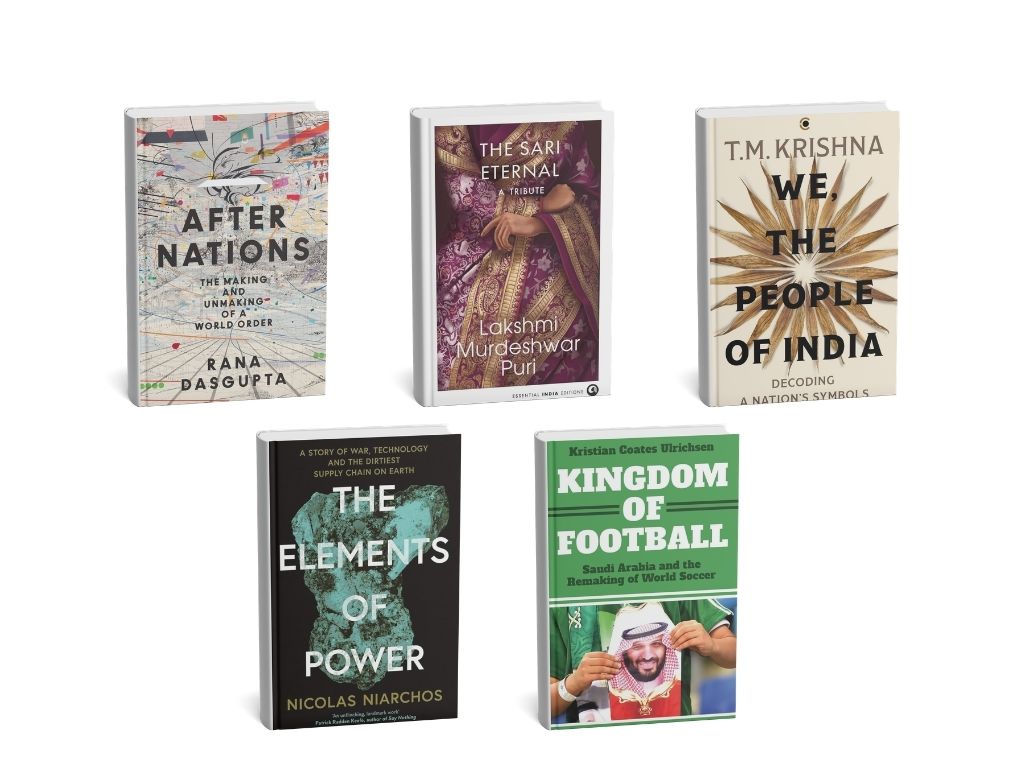
A selection of recent books shaping debates on economics, politics, and social life at large.
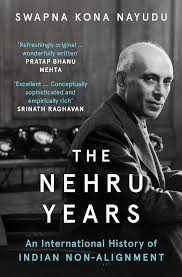
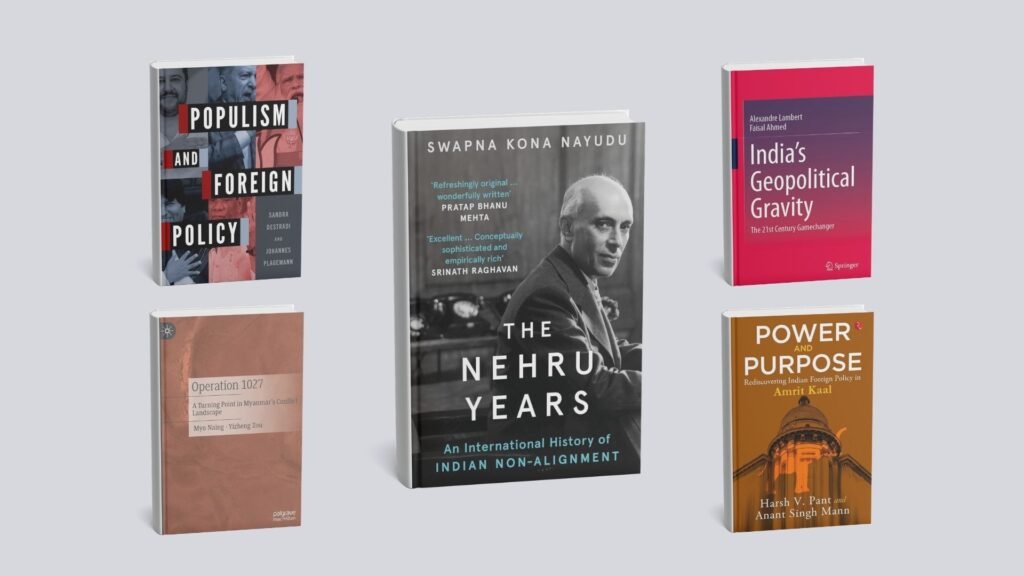
The Nehru Years: An International History of Indian Non-Alignment
By: Swapna Kona Nayudu
Published: April 2025
A meticulous diplomatic history of India’s first Prime Minister from 1947 to 1964, this book reinterprets non-alignment as a proactive foreign policy rather than passive neutrality. Drawing on multilingual archival research, it examines India’s role in the Korean War, the Suez Crisis, and the Hungarian and Congo crises. Nayudu argues that non-alignment was a sophisticated vision for world order, not merely a strategy of Cold War avoidance. A rigorous, document-based study that recasts Nehru’s non-alignment as an ideational legacy, an essential read for scholars of international relations in South Asia.
India’s Geopolitical Gravity: The 21st Century Gamechanger
By: Alexandre Lambert and Faisal Ahmed
Published: August 2025
This policy-oriented volume argues that India’s rising geopolitical gravity makes it a central actor in Asia’s evolving order. The authors map India’s regional role, covering neighbourhood diplomacy and strategic ties with major powers, including the United States, the European Union, the Middle East, and China. They assess India’s multi-vector strategy, its Indo-Pacific engagement, and challenges such as the China–India rivalry. Its strength lies in the range of contemporary examples, but it offers limited theoretical critique. A comprehensive survey of India’s expanding strategic space, insightful and current, though it at times underplays internal limits to great-power ambitions.
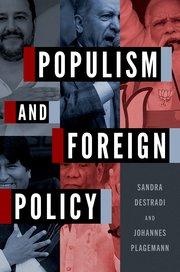
Populism and Foreign Policy
By: Sandra Destradi and Johannes Plagemann
Published: November 2025
This comparative politics volume examines populist-led foreign policy across four countries, including India. It argues that the impact of populism depends on the personalisation of leadership and the domestic use of foreign policy. The chapter on India suggests that Narendra Modi’s populism has shaped diplomacy differently in relation to Pakistan and China. The book is analytically rigorous and theoretically grounded. However, the India-focused section forms only part of a broader study, so readers seeking a dedicated analysis may find its insights limited. A serious scholarly work on the foreign policy effects of populism, offering a broad framework with illustrative Indian cases rather than a focused national study.
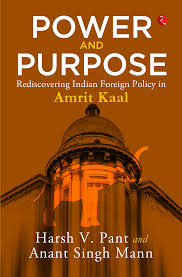
Power and Purpose: Rediscovering Indian Foreign Policy in Amrit Kaal
By: Harsh V. Pant and Anant Singh Mann
Published: March 2025
This volume presents seventy-five pivotal moments shaping Indian foreign policy from Nehru to Modi. The authors combine historical narrative with commentary on key events, including wars, nuclear tests, and recent crises. The short chapter format makes the book accessible, though the analysis remains largely descriptive, with limited critical engagement. It lacks a strong scholarly framework and a diversity of perspectives. Its main strength lies in bringing together a wide range of events in a single volume. An encyclopaedic timeline of Indian diplomacy that is rich in detail but limited in analytical depth, best suited as a reference rather than a critical study.
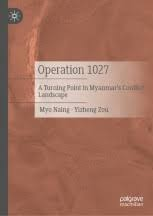
Operation 1027: A Turning Point in Myanmar’s Conflict Landscape
By: Myo Naing and Yizheng Zou
Published: January 2026
Drawing on field data and historical analysis, the book argues that the Operation 1027 offensive by Myanmar’s Three Brotherhood Alliance marked a significant shift in the country’s civil conflict, reshaping rebel alliances, illicit economies, and battlefield dynamics. The book’s strength lies in its detailed empirical focus, particularly its documentation of inter-group cooperation and the operation’s wider effects. However, its specialised subject matter, including ethnic armed organisations and the Kokang region, may limit its broader applicability. The writing is academic and dense, prioritising thoroughness over narrative flow. Overall, it is a valuable scholarly resource for understanding the dynamics of Myanmar’s conflict politics.