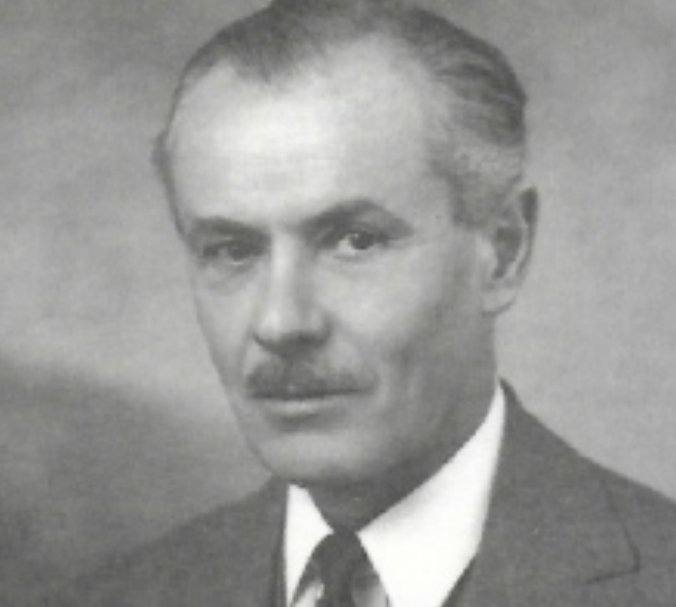
In January 1940, as war loomed in Europe and uncertainty deepened across Asia, Sir Olaf Kirkpatrick Caroe—Foreign Secretary to the Government of India—set out to define what the North-East Frontier meant for imperial defence. His note did not describe a fixed boundary so much as a layered strategic space, shaped by buffers, ambiguities, and competing claims. The excerpts below are drawn from this paper, reproduced in Parshotam Mehra, The North-Eastern Frontier, Vol. 2 (1914–1954), pp. 111–124.
The Frontier as “Glacis”
The traditional foreign policy of the Government of India… may be defined as the defence of the Indian glacis by and through the stabilisation of minor States or tribal organisations situated thereon, so denying occupation to any Great Power.
Caroe’s formulation captures the essence of British frontier thinking: security lay not in hard borders but in a protective zone of influence.
The Inner Ring
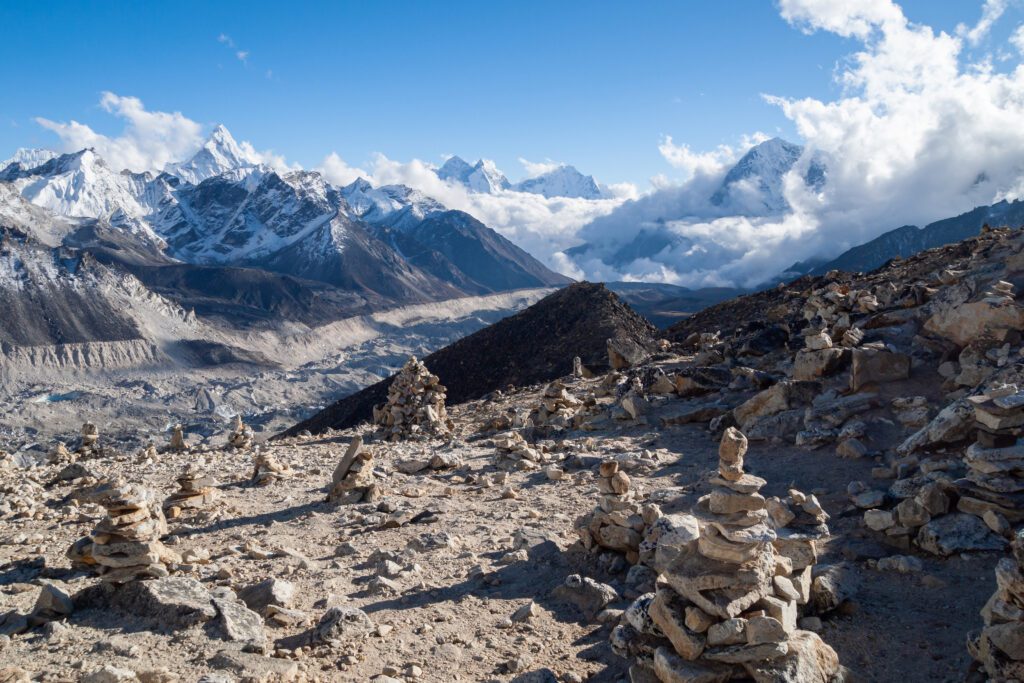
In the North-East we have in the forefront the juridically independent State of Nepal, Sikkim, hitherto considered as an Indian State, and the Protectorate of Bhutan, a semi-independent State in special treaty relations with the Government of India; while behind them stands Tibet, also in special treaty relations with us but under the shadowy suzerainty of China…All the States in the inner ring have Mongolian affinities
Here, Caroe maps a layered frontier composed of Himalayan states, including Tibet, viewed through both strategic and racialised lenses.
The McMahon Line
Article 9 of the Convention specified an agreed frontier line which has come to be known as the ‘Red Line’ or the ‘McMahon Line’ between India and Tibet… It lays down the international frontier between Tibet on one side and India (which then included Burma) on the other.
The result has been that the Tibetans have established considerable influence, and in many cases actual administration, in many parts of these tribal areas on the Indian side of the ‘Red Line’.
These passages refer to the boundary emerging from the Simla Convention (1914 ), a line that existed more clearly on paper than on the ground, with Tibetan influence extending southward in practice.
Tibet as an Ideal Buffer
We want Tibet as a buffer to India on the north. Now there are buffers and buffers, and some of them are of very little use. But Tibet is ideal in this respect. With the large desolate area of the Northern Plains controlled by the Lhasa Government, Central and Southern Tibet governed by the same authority, and the Himalayan States guided by, or in close alliance with, the British-Indian Government, Tibet forms a barrier equal, or superior, to anything that the world can show elsewhere.
Tibet, in Caroe’s view, was not merely adjacent territory but a crucial strategic cushion. He draws on Sir Charles Bell’s Tibet: Past and Present (1924) to underline how British India conceived of its northern defence.
China’s Irredentist Ambitions
The preceding paragraphs are intended to show that the whole of this frontier, and not only Tibet, is regarded by China as irredenta. China’s tradition is to work through Tibet, and to claim for Chinese suzerainty whatever Tibet can influence.
Written decades before the Sino-Indian War, this passage reflects an early recognition of China’s expansive territorial imagination.
The Mongolian Fringe
It seems to me to be two-fold—first that India cannot afford to admit any Power in supersession of China to obtain control of Lhasa and second that she must attach to herself in indissoluble union of interest all those parts of what I have called the Mongolian Fringe which look to her for protection and whose disintegration would throw open her own defences.
Caroe’s concluding observation brings together his strategic vision: a frontier secured not by fixed borders alone, but by influence, alignment, and the careful management of a vulnerable periphery.