Over the past decade, the Environmental, Social and Governance (ESG) framework emerged as a dominant paradigm shaping corporate behaviour and investment strategies. Conceived as a corrective to the Friedman Doctrine, which reduced corporate responsibility to profit maximisation, ESG sought to embed environmental risk, social responsibility, and governance accountability into financial decision-making. Its institutional ascent is often traced to the 2004 UN-backed report Who Cares Wins 2004-08, which catalysed the integration of sustainability metrics into global capital markets.
At its core, ESG rests on three interconnected pillars. The environmental dimension addresses climate change, emissions, biodiversity loss, and resource management. The social dimension focuses on labour practices, inclusion, human rights, and supply chains. Governance concerns internal corporate structures, including board accountability, executive pay, transparency, and shareholder rights. Together, these categories aimed to align capital flows with long-term societal and ecological stability, and have since been widely institutionalised through frameworks such as the Principles for Responsible Investment.
Why Did ESG Lose Momentum After Its Peak?
A key inflection point came in 2025, when approximately $84 billion flowed out of ESG-labelled mutual funds and exchange-traded funds. While part of this shift, particularly in Europe, was technical and driven by institutional investors moving into customised mandates, the broader trend indicated waning confidence in ESG as a coherent investment category.
The European Union, once the epicentre of ESG expansion, introduced regulatory instruments such as the Carbon Border Adjustment Mechanism (CBAM), signalling a move from voluntary frameworks to enforceable regulatory regimes. This shift exposed a central tension. ESG was designed as a market-led solution, yet its effectiveness increasingly depends on state intervention.
In the United States, ESG became deeply entangled in partisan politics. Republican leaders framed ESG as a form of ideological overreach, often labelled as “woke capitalism,” leading to legislative pushback and a sustained period of capital withdrawal from ESG funds.
By 2023, interest in ESG had peaked, and subsequent years saw declining investor inflows and growing scepticism about its longevity. Media narratives amplified this shift, with outlets such as The Wall Street Journal characterising ESG as “the latest dirty word in corporate America.” What had once functioned as a consensus framework fractured along political lines.
Are the Structural Drivers Behind ESG Still Intact?
Despite this discursive retreat, the structural drivers that gave rise to ESG remain firmly in place. Climate risks continue to intensify, supply chains remain ethically scrutinised, and consumers increasingly demand transparency in sustainability claims.
Regulatory frameworks, though contested, are not disappearing but evolving unevenly. The European Union’s Corporate Sustainability Reporting Directive faces political resistance, while the U.S. Securities and Exchange Commission has softened elements of its climate disclosure agenda. These developments suggest not a rollback of sustainability concerns, but a renegotiation of how they are governed.
Another factor reshaping ESG is the rapid rise of artificial intelligence. Capital that once flowed into renewable energy sectors is increasingly being redirected toward generative AI infrastructure. This reflects shifting expectations of future growth, but also introduces new contradictions. AI systems require vast data centres with significant electricity and water demands, often in tension with environmental sustainability goals. The result is not simply a diversion of capital, but a re-ordering of priorities within the broader landscape of future-oriented investment.
Why are ESG Models Diverging Across Regions?
China presents a distinct trajectory in this regard. Unlike the market-driven ESG models of the West, China’s approach is state-led and strategically aligned with national development goals. Its ESG architecture is embedded within commitments to peak emissions before 2030 and achieve carbon neutrality by 2060.
State-owned enterprises and government-guided funds play a central role in mobilising capital, using public investment to attract private participation. However, this model remains heavily skewed. Estimates suggest that approximately 97% of green financing is debt-based, with less than 3% coming from equity. While this enables rapid scaling, it raises concerns about long-term innovation and financial sustainability.
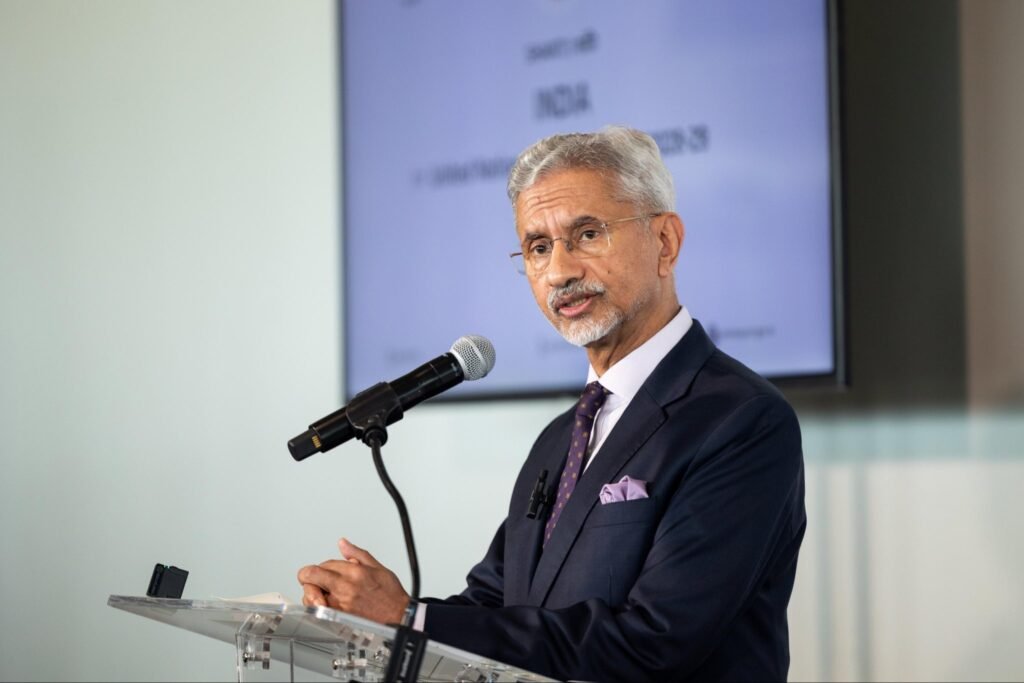
India, meanwhile, represents a hybrid pathway. Through regulatory interventions led by the Securities and Exchange Board of India, the country has sought to position itself as a responsible global actor. The introduction of the Business Responsibility and Sustainability Reporting Core framework, mandatory for the top 1,000 listed companies, signals a move toward formalising ESG disclosures. However, as in other jurisdictions, the central challenge lies in translating disclosure into substantive transformation.
Is ESG Declining or Simply Being Reconfigured?
The fragmentation of the ESG market underscores its current crisis of credibility. Surveys indicate that nearly 30% of investors struggle to identify suitable ESG products, reflecting inconsistent standards, opaque metrics and persistent concerns about greenwashing. The absence of universally accepted benchmarks had eroded trust, making ESG less legible as a unified category.
However, it would be premature to interpret this moment as the demise of ESG. What is unfolding is better understood as a semantic and institutional shift. Increasingly, firms and investors are reframing ESG concerns under alternative labels such as risk management, resilience, or long-term value creation. This linguistic shift reflects a strategic recalibration. Rather than foregrounding ethical commitments, corporations are embedding sustainability within the logic of financial prudence.
In this sense, ESG’s apparent decline may paradoxically signal its diffusion. As a branded framework, ESG may be losing coherence. As a set of practices, however, it is becoming more deeply integrated into the functioning of global capitalism. Climate risk is now widely recognised as financial risk. Supply chain ethics are linked to reputational and operational stability. Governance failures are understood as systemic vulnerabilities. These insights, once associated with ESG, are increasingly treated as baseline expectations.
The current moment therefore marks a transition from ESG as a normative project to ESG as a pragmatic one. Its early promise that markets could self-correct through better information and voluntary alignment has proven overly optimistic. What is emerging instead is a more fragmented, state-mediated, and politically contested landscape in which sustainability is negotiated rather than assumed.
ESG has not failed. It has matured under pressure. Its decline as a buzzword reflects the limits of its initial framing, not the disappearance of the problems it sought to address. As climate crises intensify and global economic systems adapt, the underlying concerns of ESG will persist, albeit under new institutional forms and vocabularies. The challenge ahead lies not in reviving ESG as a label, but in strengthening the mechanisms through which environmental, social, and governance risks are meaningfully governed.