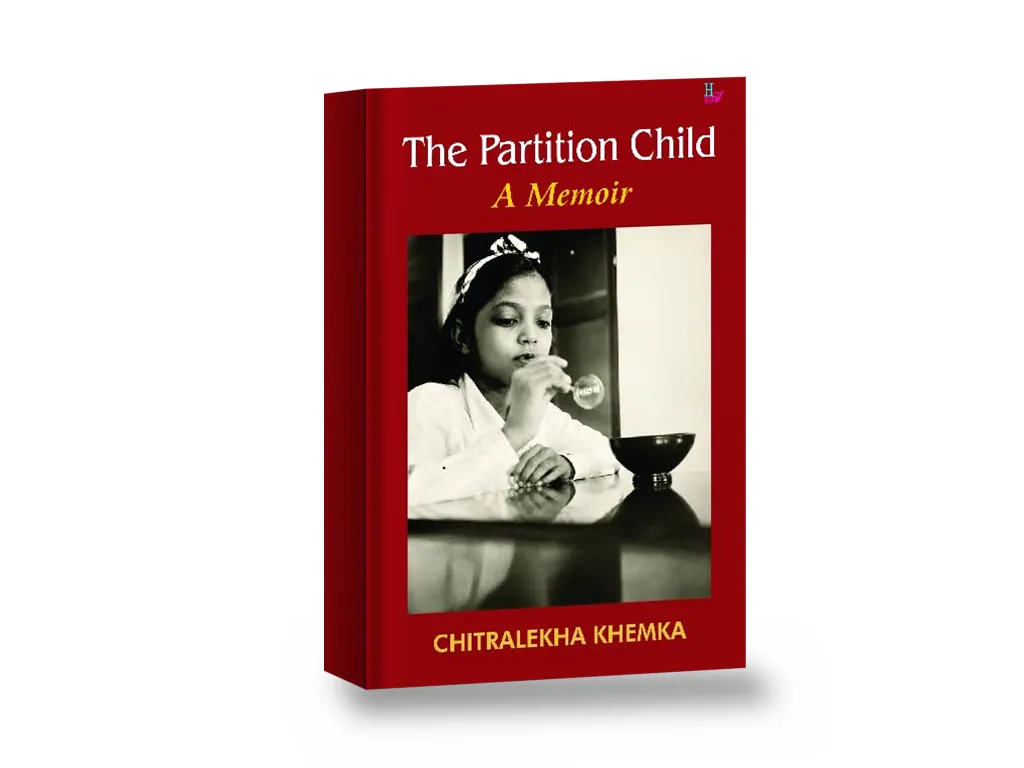
“I had locked away in my heart for decades, rarely speaking it to anyone,” writes Chitralekha Khemka in The Partition Child. This deeply personal memoir revisits the upheavals of the Partition through the memories of a childhood shaped by displacement, family, and loss.
Khemka takes the reader into a world that existed before the division of the subcontinent. Rather than taking Partition just as a political event, Khemka tells a story of how the upheaval transformed an entire world of family, relationships, homes, and familiar landscapes. The reader is introduced to a thriving family life in a large household, surrounded by plants, trees, and relative comfort. One of the memoir’s strengths is the portrayal of the contradictions and complexities of the people. Her father, Babuji, was a successful businessman and an avid gardener, while her mother participated in the freedom struggle and made some of the best pickles. Through her recollection of family members and relatives, Khemka illuminates the contribution of the Marwari community to the freedom struggle. It offers an interesting account of the community that has lived, adapted, and established roots in Bengal.
The memoir is equally revealing in its treatment of the political atmosphere of the 1940’s. The Quit India Movement, the changing Hindu-Muslim relationship, and the role of Congress form part of the larger backdrop. Her account of the 1943 Bengal famine is particularly striking. Economic collapse, destitution, and death intensified popular desperation, while communal politics increasingly became entangled with the struggle to survive.
History is most revealing when viewed from the eyes of a child. Khemka remembers concluding that Churchill and Hitler could not be good people, believing that the world’s troubles were somehow their doing. Her family, too, reflected the political affiliations of the time; her younger Mamaji supported the Forward Bloc, much to the displeasure of Nanaji, who was a Congress supporter. The memoir also reflects on how the Second World War affected the family’s business interests, offering a glimpse into how national and international developments entered the everyday lives of ordinary families.
For the Goenka family, the prospect of the Bengals division was deeply unsettling. The possibility that Sitabganj might fall across the border made partition painfully immediate. Her recollection, “I was standing on the soil which was no longer mine”, captures the emotional violence of losing one’s sense of belonging. Written with warmth and simplicity, The Partition Child is a valuable personal record of a changing Bengal. Its strength lies in the way personal memories open a window into a wider historical landscape. While its perspective is necessarily shaped by the relative privilege of the family it describes, it offers an important addition to the social histories of Partition, the famine, and the freedom struggle. It reminds us that history is not only about borders being drawn, but about the lives and homes left on either side.