

The Long War on Iran: New Events and Old Questions, by Behrooz Ghamari
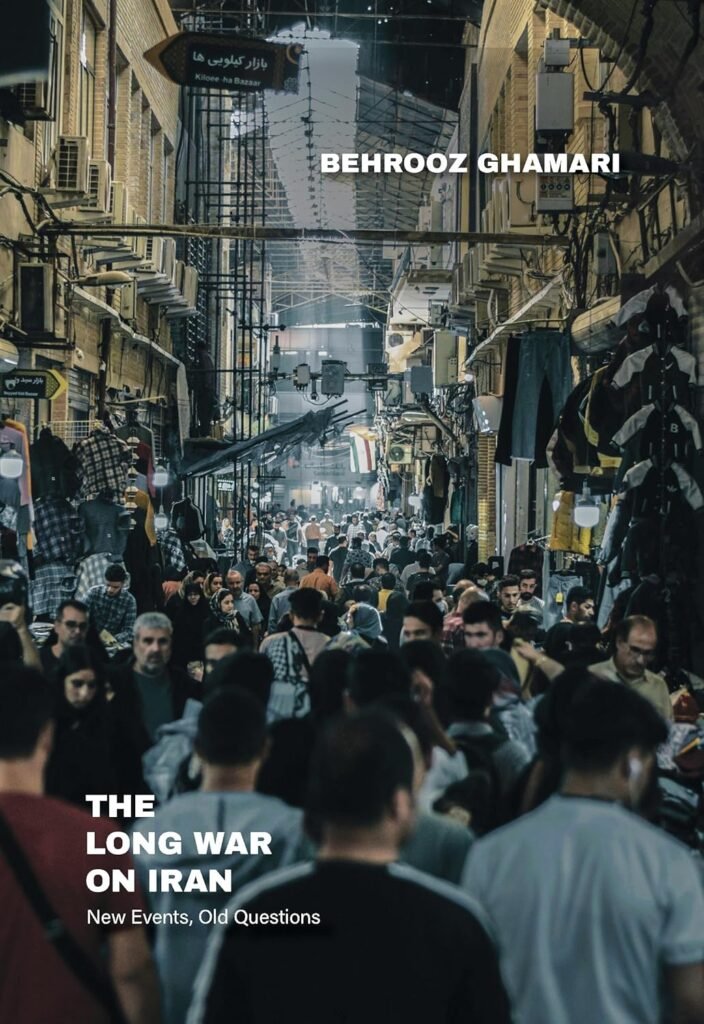
Behrooz Ghamari pens what is effectively a prison notebook, demystifying Iran and showing how US perceptions of the country remain fraught, often producing interventions that cause more harm than they resolve longstanding questions. The Long War on Iran is both a personal testimony and a critique of why US policies have repeatedly failed, rooted in a misreading of Iran’s resilience.
He argues that the US never takes into account Iran’s cultural and literary traditions, its civil society, and social justice movements. Instead, Washington tends to approach Iran through three narrow pillars: sanctions, operations, and threats. Ghamari finds this approach not only reductive but also regressive, particularly given the complexities of a society often simplistically labelled as a rigid theocracy. His account unclutters Iran’s polity, revealing a political landscape far wider and more complex than dominant narratives suggest.
Ghamari offers a measured assessment of what has gone wrong in US policy towards Iran, and why this will persist if Iran continues to be reduced to monolithic perceptions in the Washington–Tehran rivalry. The work qualifies as a political biography of US–Iran tensions and offers compelling evidence of how the US fails to read Iran’s social diversity and intellectual history, and equally provides a pathway to choose diplomacy over coercion. The Long War on Iran is an essential read on a persistently misunderstood society.
King of Kings: The Iranian Revolution – A Story of Hubris, Delusion and Catastrophic Miscalculation, by Scott Anderson
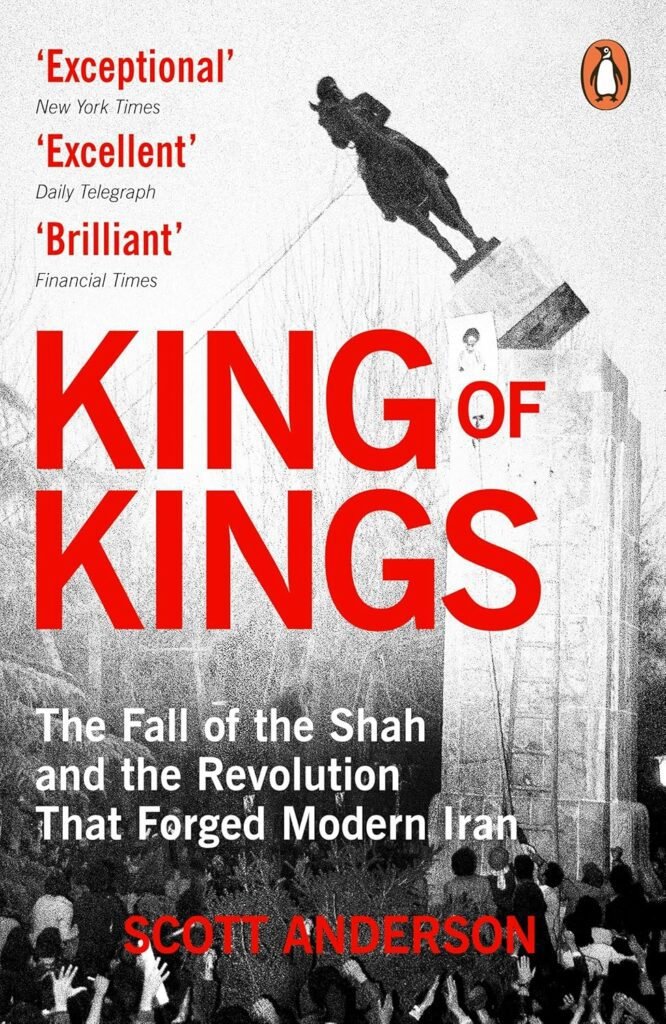
The lens of Scott Anderson is uniquely present in both scholarly and imaginative texts. He is a novelist and a war correspondent who has investigated the narrative history of Iran since the 1979 revolution. The author has a reputation for writing popular accounts, Lawrence in Arabia – War, Deceit, Imperial Folly and the Making of the Modern Middle East (2013). His King of Kings is an intersection of politics, diplomacy, and narrative, connecting accounts of revolution, the structure of Pahlavi’s regime, and the misadventure of US policies on Iran. He deviates from the dominant realist perspective on Iran by moving away from a reductionist security matrix and foregrounding his arguments on how the regime before and after the revolution survived. Anderson’s masterpiece is built on a dialogue between a scholarly worldview on Iran that yields to its theocratic nature, the religionisation of politics and statecraft, and its socio-economic failures. He unpacks the underlying structure of Shah’s autocracy and major misgovernance, revealing an unsustainable approach to managing socio-economic realities. He further navigates US policies and their blunders.
He further analyses two significant revolutions since the 1960s: the White Revolution and the 1979 Islamic Revolution; the fall of the Shah and the rise of Ayatollah Khomeini on the grand chessboard of Iran’s political and social spaces. Anderson’s accomplished work looks deeper into the three critical features that explain Iran before and after the Shah: the hubris of the Shah (ignorance and arrogance), the US misperceptions on Iran (successive failures) and the reconstruction of Islamic ideology (the making of Khomeini’s Iran).
How Islam Rules in Iran: Theology and Theocracy in the Islamic Republic, by Mehran Kamrava
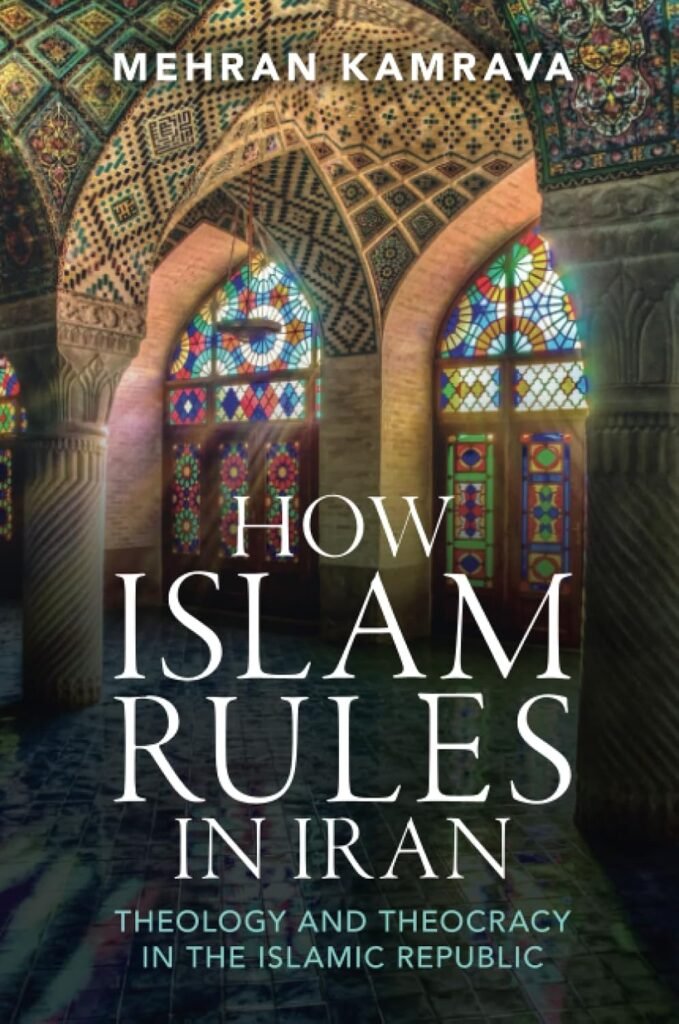
Mehran Kamrava is one of the leading intellectuals on the Middle East and has earned a reputation as a serious scholar who has done extensive work on Iran, its recurring revolutions, the political economy of the Persian Gulf and beyond. Kamrava’s How Islam Rules in Iran is a comprehensive and assertive portrayal of Iran since the 1979 revolution. His work delineates the populist internal structures of religious rule in the making of modern Iran.
Kamrava connects the state-society relations and form of governance in Iran, its process, structures and religious legitimacy drawn on a strict Shia interpretation of Islam. He provides an interesting and critical account of jurisprudential debates of Khomeini’s introduction of Velayat-e Faqih, the most comprehensive document and source of Iran’s governance model since 1979. Velayat-e Faqih resonates with the Shia belief in the occultation of its 12th Imam, Mehdi, and the ruling of learned jurists in his absence. Kamrava digs deeper into the structures of Iran’s governance, the role of seminaries, and narratives built through the churning of practices and beliefs of religious theocracy.
Kamrava explains the inter-connection between religious authority and political power, making Iran’s governance structures an absolute reflection of Ayatollah Khomeini’s influence. He also explains the shift of Iran’s political and governance after the process of democratisation in choosing the supreme leader by figures like President Rafsanjani and the critical role of another cleric, Ayatollah Montazeri. Kamrava brilliantly captures the Islam and democracy debate in Iran, its social and political shift and many attempts at reforms, both successful and failed. Kamrava’s work is a must-read for anyone who wants to know the inner Iran, the surrounding noise and the rupture within.
Iran’s Rise and Rivalry with the US in the Middle East, byMohsen M. Milani
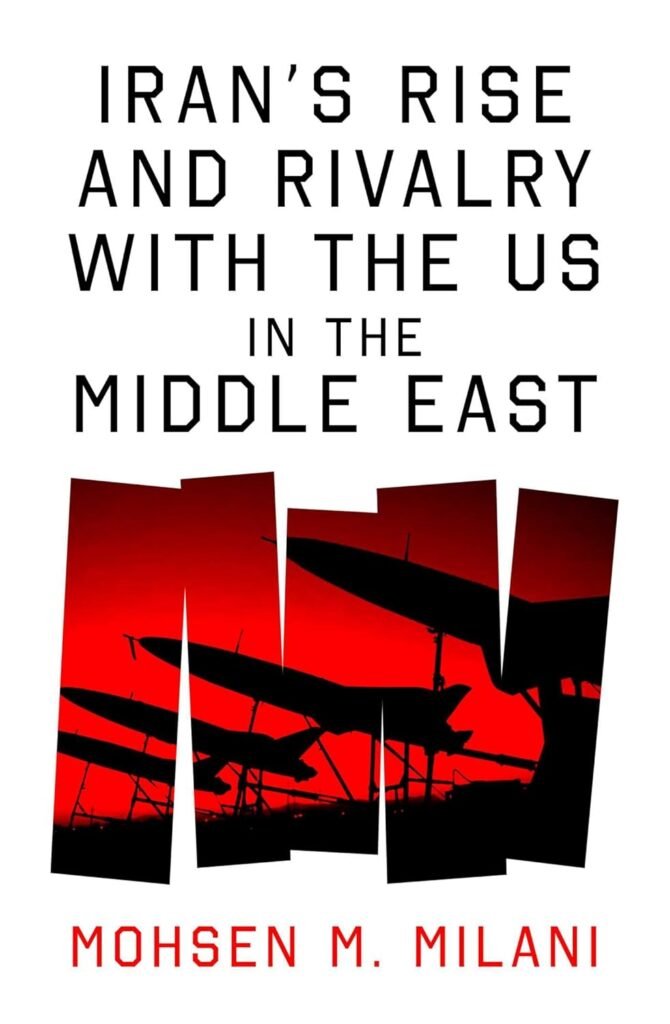
Mohsen Milani’s work is another credible must-read for understanding what’s happening in Iran and why. He is a political scientist with extensive and rich experience in understanding Iran, its behaviour, and the crisis of US-Iran relations. Milani’s work posits a comprehensive overview of Iran’s pursuit of regional hegemony despite being under coercive sanctions. Milani’s core argument provides a detailed and measured analysis of Iran’s resistance amid the interplay of the US, Israel and Saudi Arabia. He dwells deeper into Iran’s act of survival through manoeuvring its policies in building an axis of resistance using proxies across the Middle East.
Milani’s work captures the essence of how US inaccuracies in the 2003 invasion of Iraq subsequently helped Iran’s asymmetric rise. He methodologically binds the strategic buildup of Iran throughout its modern history, particularly the fate of the Middle East after the 9/11 attacks in the US. He looks into Iran’s strategic behaviour through the prism of the US–Iran relations. This work provides an important detail on how Iran works through its proxies, its material and ideological support and the making of Iran’s regional security framework and its impact on Iran’s domestic upheavals. His work appears to engage closely with Vali Nasr’s Iran’s Grand Strategy, but focuses more on regional pursuit.
What Iranians Want: Women, Life, Freedom, by Arash Azizi
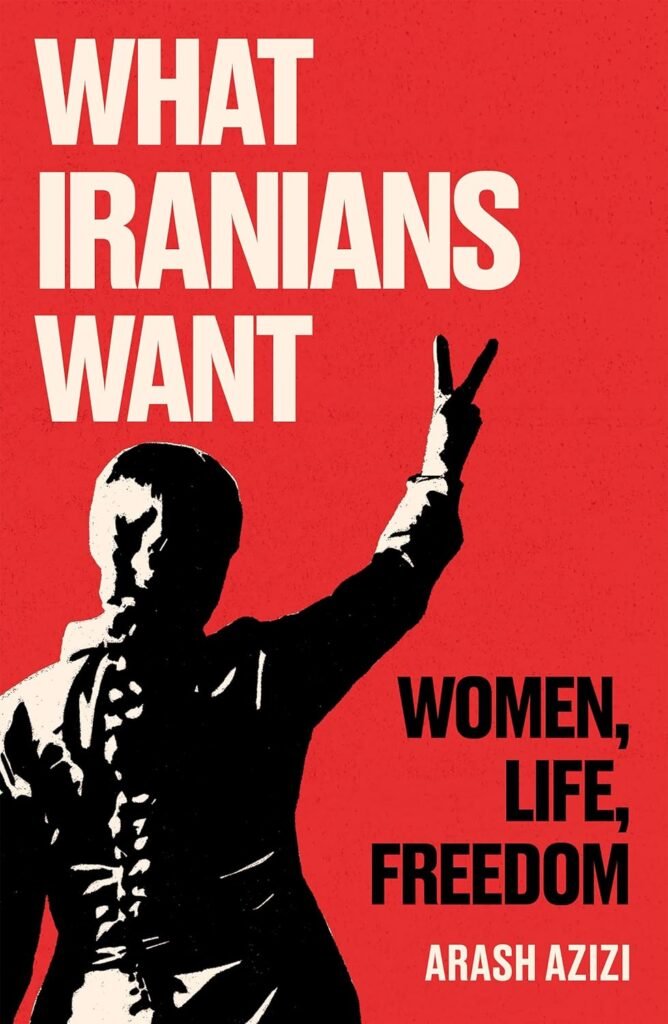
Iran is a country of many contrasts, where patriarchy dominates with an iron hand. The Mahsa Amini incident that provoked the world’s attention was not an isolated event. Iran’s rich literary tradition has also influenced women’s writing, issues of women and their struggles within the theocratic state. Since Shirin Ebadi’s win of the Nobel Prize in 2003, the struggle of Iranian women has found a serious discussion. There has been a flurry of writing raising women’s issues from Ebadi’s Iran Awakening, Marjane Satrapi’s Persepolis & Embroideries, Prisoner of Tehran by Marina Nemat, Marjan Kamali’s many works and the works of Azar Nafisi, including Reading Lolita in Tehran, making a catalogue of extraordinarily rich women’s writings.
Arash Azizi takes the baton and knits together the hollow sense of revolution within and how it has impacted women over the decades. Under the pressure of US policies, Iran has become more conservative, reinforcing a patriarchy that treats women’s freedom as a threat. He is a historian known for his portrayal of previous revolutions and their influence on Iran’s broken promises, protests, movements, and uprisings. In this book, he argues that Iranian women’s struggle is deeper than Mahsa Amini’s incident and that it was just a small chapter in Iranian women’s enduring struggle for life, liberty and the pursuit of happiness. Azizi’s work mirrors the schism within what the Islamic Republic offers and what Iranians really want, particularly women. His account of Women (feminist movements), Life (security), and Freedom (resistance) is exceptional. What Iranians Want deserves to be in every library and in everyone’s hands.