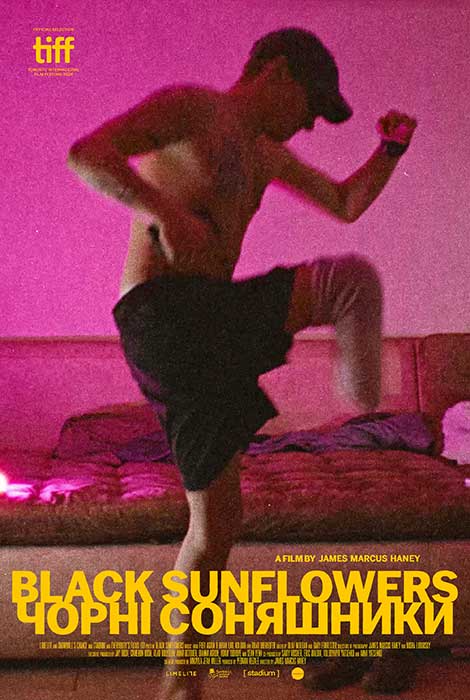
The Russia–Ukraine war is frequently examined through the lens of military strategy, territorial control, and the calculations of political leaders. Black Sunflowers, a documentary directed by James Marcus Haney, shifts the focus towards a generation of young Ukrainians navigating adulthood amid prolonged conflict. Filmed in collaboration with a Ukrainian crew, the documentary follows individuals whose experiences reveal different dimensions of life shaped by war: a military truck driver moving through his hometown, a soldier with a prosthetic leg dancing at a rave, a photographer turning from nature towards documenting wartime destruction, and another individual facing conscription and rifle training. By bringing together experiences from the frontline and civilian life, the film explores how a generation attempts to preserve its identity, relationships, and aspirations amid extraordinary uncertainty.
These intersecting experiences bring together the physical and psychological consequences of conflict without reducing them to a single narrative of suffering or heroism. The contrast between military life and the freedom of the dance floor is particularly revealing: even as war imposes new responsibilities and restrictions, the desire for ordinary experiences, connection, and self-expression persists. The documentary’s multi-protagonist approach allows these different realities to coexist, moving between the immediate demands of survival and the everyday concerns of young people. Rather than treating the war exclusively as a military or political event, Haney presents it as a force that reshapes the rhythms of ordinary life, personal choices, and the transition into adulthood.
Black Sunflowers premiered at the 51st Toronto International Film Festival on 11 September 2026 and was named first runner-up for the festival’s People’s Choice Documentary Award. Its attention to the lived experiences of young Ukrainians provides an accessible entry point into the human consequences of prolonged war. For viewers interested in international affairs, the documentary underscores the importance of placing individual and civilian experiences alongside the strategic calculations through which conflicts are usually understood. By capturing a generation negotiating the competing demands of survival, duty, and freedom, it offers a deeply human perspective on a conflict whose consequences extend far beyond the battlefield.