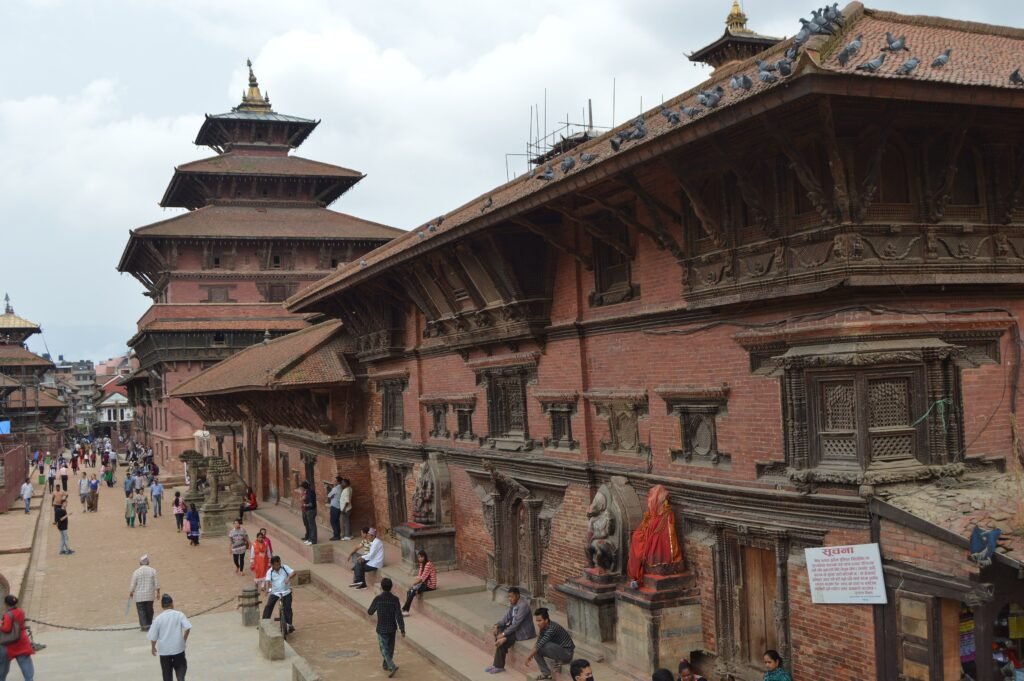
In Nepal’s post-earthquake reconstruction, India has tested a new model of heritage diplomacy. A recent UNESCO award recognising an India-led conservation effort marks a turning point, not only for India’s cultural outreach but for an innovative public-private partnership. Can this approach be scaled as India seeks to assert itself as a civilisational power?
On February 20, UNESCO awarded twelve Asia-Pacific Awards for Cultural Heritage Conservation to ten built heritage sites. Five received the Award of Merit for “high-quality conservation grounded in local typology,” of which two were in Nepal: the Lowo Nyiphug Namdrol Norbuling Monastery in Mustang and the Jestha Varna Mahavihara in Lalitpur. Both were among the many cultural heritage buildings across Nepal that were damaged in the massive Gorkha earthquake on April 25, 2015. Reconstruction of the Jestha Varna Mahavihara, however, was part of a broader project funded by the Government of India and implemented through a groundbreaking public-private partnership with the Indian National Trust for Arts and Cultural Heritage (INTACH), an NGO based in New Delhi.