A year has passed since armed terrorists walked into the meadow at Baisaran and killed twenty‑six Indian civilians. India responded with Operation Sindoor—the most intense and openly declared Indian military response to a Pakistan‑based terror attack in the country’s history. Twelve months on, what does the strategic landscape look like? Has the international community responded the way Delhi had hoped? What has happened to the perpetrators—and what does Asim Munir’s rise to Field Marshal tell us about the incentives that structure Pakistani behaviour? Has India itself changed the way it responds to such attacks? And what has Pahalgam cost India’s larger grand-strategic trajectory, the pivot from Pakistan to China that was defining Indian foreign policy until the attack?
These are uncomfortable questions, and the honest answers are not particularly flattering. But we must ask, and answer them, nevertheless.
The international community has, broadly speaking, decided to move on. The Pakistani military establishment is more globally legitimate today than it was a year ago, or for that matter, in a long time. Asim Munir is now Field Marshal.
The bigger argument I am making through the following reflections below is that Indian foreign policy has long known but has been reluctant to fully internalise as policy: that on the question of Pakistan‑sponsored terrorism, our fights are our fights alone, and that the international community will only pay lip-service, as they have done over the past year.
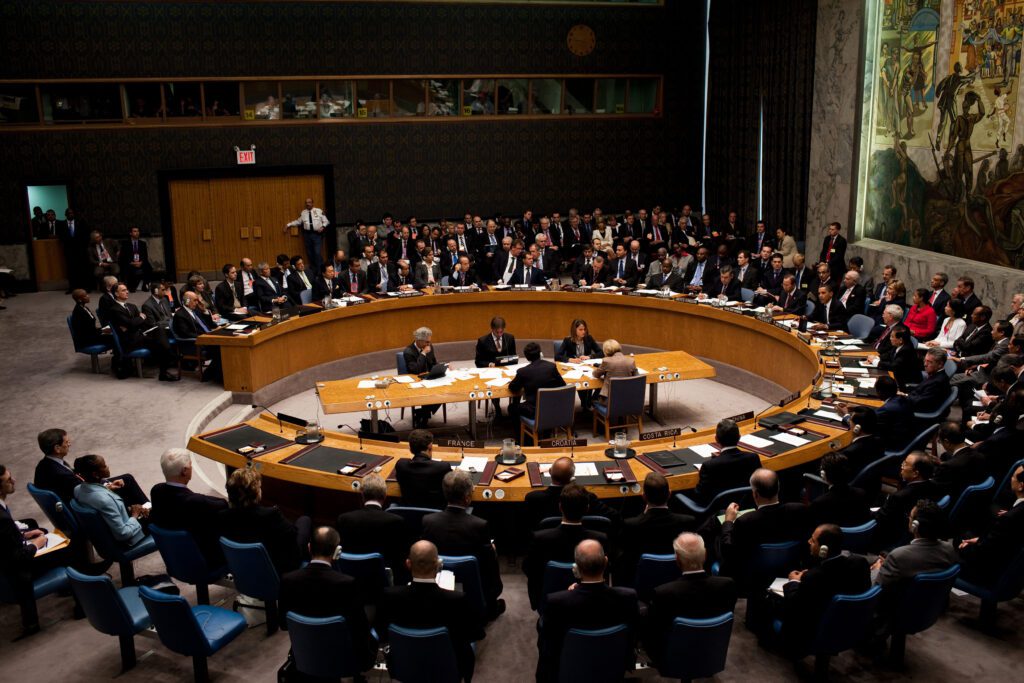
1. The world has chosen to ignore Pahalgam. For three decades, Indian deaths at the hands of Pakistan‑sponsored terrorists have been treated by the international community as a product of the problems between Delhi and Islamabad, while Western deaths have, in sharp contrast, been treated as a global concern. There is “global terrorism”, and then there is “terrorism in South Asia”. Pahalgam belonged to the latter category. International attention to terrorism is not driven by moral weight, but by proximity, by economic exposure, and by political utility. On each of these scales, the terrorism we face scores lower on the Western register than we have been willing to admit. There are today no takers for terrorism perpetrated outside the West and the US, unless it is perpetrated against Israel.
Let’s look at it a bit more structurally. The Trump administration’s posture toward the Pakistani military establishment is not categorically different from the earlier American administrations: The optics and tactics were different, but not the fundamental assumption about Pakistan’s utility. The European reaction to Pahalgam was muted now as before—Europe did business with Pakistan like it would with any other country including selling weapons. The Gulf connection to Rawalpindi continued through both. In other words, there is a structural logic underpinning how the international system reads South Asia and terrorism produced here. That logic is also called “It’s your problem”. Indian diplomacy will need to operate from this recognition, rather than from the hope that the next administration in Washington, or the next election in Brussels, will be the one that finally sees us clearly. There will not be one; the earlier we recognise this, the better it is.
2. The international attention has moved past Pahalgam at least four times in the year since the attack. Iran, the war in Gaza, Ukraine, and Trump’s tariff war kept the world, even us, on the edge. From the perspective of any major foreign‑policy establishment in the world, Pahalgam was crowded out of the agenda not just by indifference, but certainly because the “plate was so full”. The simple reality of international relations is that there are only so many crises any major capital can hold in mind at any one time. Indian diplomacy still appears to operate as if international attention is allocated by moral weight and the merit of the case. The lesson of the past year is a simple one: international attention, even when that is available, is not leverage, and Indian counter-terrorism policy must stop confusing the two. Leverage is what makes others act against their preferences; attention only makes them aware of the issue. What Delhi needs are instruments—economic, legal, financial—that impose costs on perpetrators of terrorism whether or not anyone is watching or approving, and encourages key capitals to put pressure against terror. That takes leverage. So let’s stop running after attention and build leverage.
3. The limits of “strategic partnership”: India has strategic partnerships with a large number of countries. But several of the partners we count among our closest declined to name Pakistan as the sponsor of the Pahalgam attack, and some others declined to condemn it in a language Delhi considered adequate. While the strategic partnerships themselves were real (some more than others), they were perhaps not designed to ensure that our partners stood by us. In April 2025, we still believed our partnerships were what they said they were. In April 2026, we know they didn’t. We must ask why. Not that our strategic partnerships are useless—they remain valuable for what they are, and it appears the terrorism we face is not one of its core concerns. So we must manage expectations while celebrating strategic partnerships as a measure of leverage and solutions to our problems.
4. Beijing’s selective approach to terrorism: China’s posture on the terror question is, and has long been, an instrumental one—it treats terrorism as a serious threat when Uyghur groups are involved, and as a negotiable diplomatic variable when Pakistan-based groups are involved. The past year, since Pahalgam has demonstrated Beijing duplicity with unusual clarity. Beijing’s technical hold on UN 1267 designations of Pakistan-based terrorists have continued. Its material support to the Pakistani military (weapons and intelligence) has provided the very infrastructure that makes sustained Pakistani sub-conventional operations against India possible. In other words, the single most consequential external variable in India’s counter-terrorism environment is not American ambivalence or Gulf indifference, but Chinese enablement. In other words, an Indian strategy against cross-border terrorism must account for the China angle: as an enabler of terrorism against India, and as a disabler of India’s ability to respond to such terror.
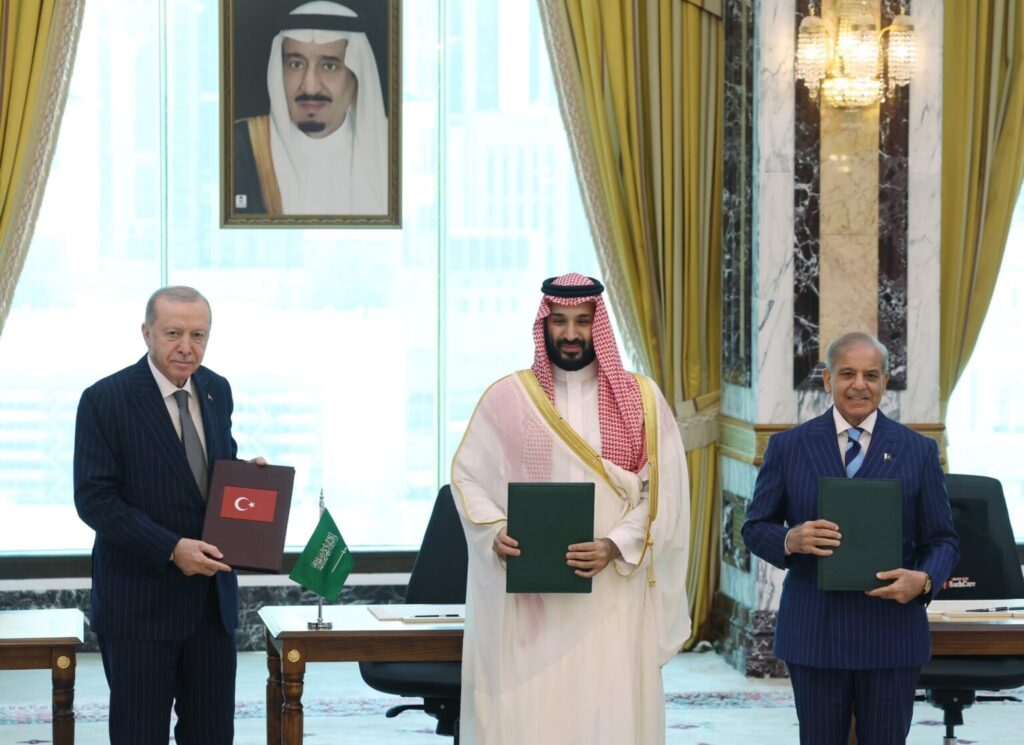
5. Who said terrorism doesn’t pay! In April 2025, Asim Munir was a severely contested, and hardly popular, army chief presiding over a restive army, a failing economy, and a population that had not yet forgiven the establishment for its ill treatment of Imran Khan. A year later, in April 2026, he is a Field Marshal, received in Riyadh, Beijing, and Washington with honours no Pakistani military leader has commanded in a decade. The well-orchestrated Pahalgam terror attack and India’s Operation Sindoor gave him an excuse to rally the country behind the flag. And Trump’s personality weaknesses provided him an opening to be the White House’s favourite Field Marshal.
To put it bluntly, Field Marshal Asim Munir is a creation of the Pahalgam terror attack: each stage of his rise was built on an Indian body count and his willingness to monetise it. Terrorism, in other words, has paid, and paid handsomely.
6. Indian diplomacy has stopped explaining itself. For three decades, the aftermath of every terror attack generated a familiar story: the Indian state presented heaps of evidence to international bodies, hosted foreign investigators, filed dossiers, organised press briefings, and demanded action through formal channels—to no effect, of course. After Pahalgam, that posture has visibly receded, after an initial desire to send delegations across the world to explain the Indian position. The new Indian posture is to act, and to decline to argue—rinse and repeat. There are fewer dossiers, less explanation, and a markedly diminished appetite for the rituals of international justification. The shift, I would argue, reflects an important and long-overdue learning by the Indian state: that our wars are our own, that our fight against terrorism is no one else’s fight, and that the best available answer to a Pakistan-sponsored terror attack is a conventional response rather than another round of evidence-gathering for an international audience that has never been persuaded by the evidence anyway. Whether the new posture will ultimately work, whether conventional retaliation can, over time, impose costs on Pakistan that sustained diplomatic effort could not, is an open question. But the more important thing is the learning itself. The Indian state has, after three decades, come to terms with the simple fact that on the question of cross-border terrorism, it stands alone.
7. Pahalgam has slowed India’s strategic pivot from Pakistan to China. Until April 2025, the trajectory of Indian foreign and security policy was reasonably clear. Pakistan, while a persistent irritant, was no longer treated as India’s defining strategic challenge. China had been correctly identified as the bigger game. The pivot was visible in political attitudes, in force posture along the northern borders, in diplomatic approaches, and in the grand strategic frame within which Delhi was increasingly operating as a rising pole in international politics. There is no getting away from the fact that Pahalgam has slowed that pivot. It has forced the reallocation of attention, capacity, and political and diplomatic capital back toward a western frontier we had hoped to keep on a low simmer. It has reminded us that Pakistan retains the ability to set the Indian agenda through sub-conventional action even when India has chosen not to be set by it.
So the larger question for India today is this: how to deal with Pakistan-based terror and Pakistan in general without allowing the task to consume the grand strategy of a rising pole. There are no perfect answers. Sindoor and the doctrinal shifts that accompanied it are one part of the answer. But the fundamental dilemma persists. An India that is serious about its place in the international order cannot afford to have its foreign policy reduced to firefighting on the Line of Control. And yet, the cost of ignoring the western front, as Pahalgam has just demonstrated, can be twenty-six bodies in a meadow and a year of costly strategic distraction. And potential repeats of that in future. The sober recognition that our fights are our fights alone, and that we must prepare to deal with them, is perhaps the most useful inheritance of the twelve months that have just passed.