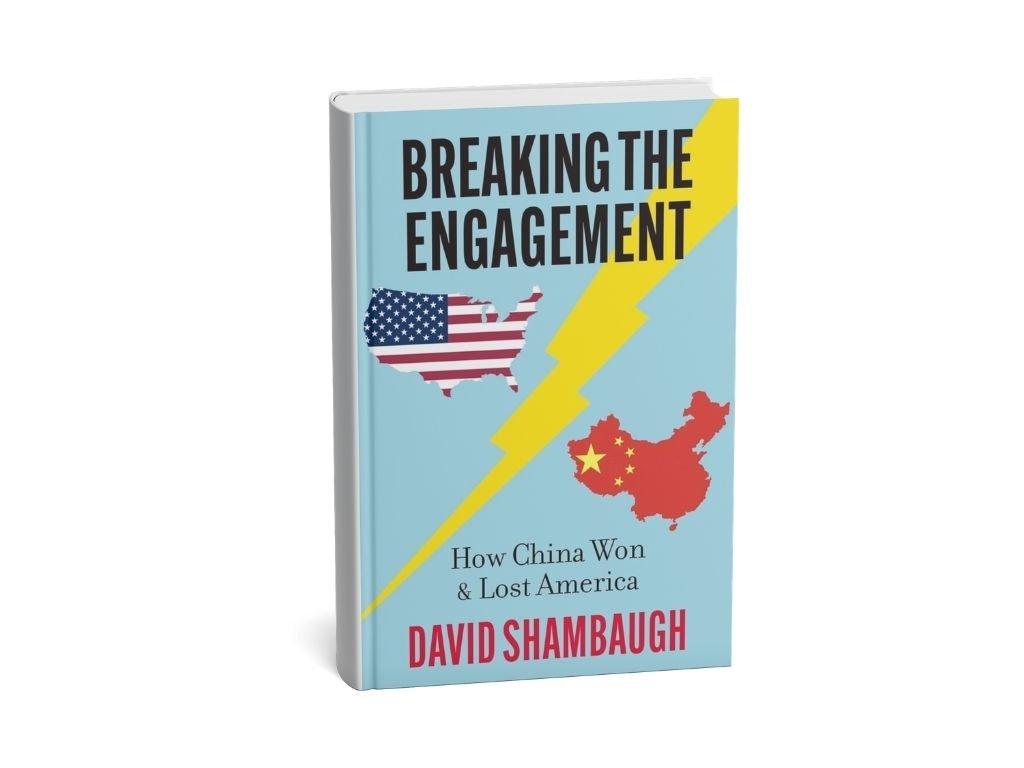
Over the past fifty years, the United States has engaged in a “missionary complex” to integrate China into a liberal direction. In Breaking the Engagement: How China Won & Lost America (2025), David Shambaugh offers a meticulous analysis of this ambition and the fluctuating US-China relationship, drawing on archives, policy debates, and insights from his long engagement with China. One of Shambaugh’s core arguments unsettles liberal internationalist assumptions that deepening engagement inevitably produces cooperation; in the case of US-China relations, it instead intensified suspicions and strategic mistrust.
The book centres around two questions: Why have US-China relations repeatedly oscillated between amity and enmity, and why did the long-standing American strategy of engagement ultimately fracture? Shambaugh argues that the collapse of the US-China relationship is not solely due to the election of President Donald Trump. Scepticism towards China had already mounted during the final years of the Obama administration. With Xi Jinping’s ascension in 2012 and his increasingly assertive policies abroad, the rationale for cooperation steadily eroded. By 2017, the National Security Strategy formally labelled China a “revisionist power,” crystallising the rivalry. Ultimately, it was the widening gap between Washington’s expectations and Beijing’s trajectory that drove the US-China relationship into open strategic competition.
What distinguishes the book is Shambaugh’s storytelling style, shaped by his personal encounters with Chinese officials, scholars, and institutions. His professional engagement with China began during the US-China engagement era, but over the years, he faced increasing restrictions and curtailed access, reflecting the broader contraction in the bilateral environment. Having observed and participated in key policy conversations, he writes with an authority that reflects his proximity to the relationship he analyses.
The book’s timing is salient, arriving when the engagement era was already in tatters. Shambaugh critiques Washington’s fundamental gamble that economic engagement would lead to political liberalisation in China. In the final chapters, he explores strategic alternatives and advances a framework of “competitive coexistence” which accepts the current rivalry while insisting on limited cooperation.
Shambaugh’s analysis, however, remains framed from an American viewpoint. While he examines China’s interpretation of American engagement, it is largely confined to the appendix rather than integrated into the core narrative. In assessing the recent deterioration of ties, he attributes significant influence to Deputy National Security Advisor Matt Pottinger rather than to Donald Trump himself. More broadly, his arguments stem from a realist perspective; he emphasises the structural tension between a rising power and an established power, while giving less attention to the role of individual leaders, aside from Xi Jinping, in shaping the rupture.
This book is an essential read for students and practitioners trying to understand the history of the US-China relationship. While engagement as a strategy may have run its course, Shambaugh’s call for competitive coexistence raises the question of whether rivalry can be managed without transitioning into sustained confrontation.