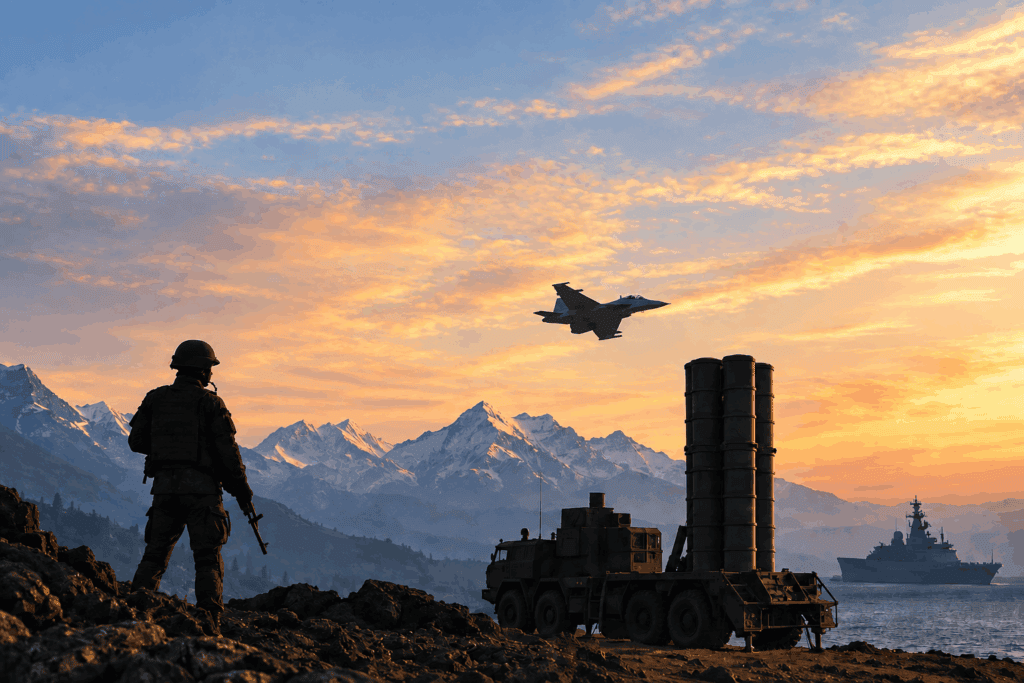
From building roads, railways, airfields, and UAV bases to deploying drones, unmanned vehicles, humanoid robots, long-range rockets, hypersonic missiles, and space-based surveillance, Tibet and Xinjiang are transforming rapidly, signalling far more than economic development. These changes form the backbone of a rapidly modernising Western Theatre Command engineered for long-range, multi-domain operations against India. As China compresses mobilisation timelines and expands its strike envelope, how should New Delhi prepare for the scale and speed of this transformation?
The battlefield in the border area is a remote, complex terrain, inconvenient for transportation, difficult to support, and involves ethnic and religious issues, so combat operations are subject to many restrictions.
—PLA’s Science of Military Strategy, 2020
China’s People’s Liberation Army (PLA) aims to be a world-class military by 2049, to mark the centennial of the founding of the People’s Republic of China (PRC). The Central Military Commission (CMC), under its Chairman Xi Jinping, has set another timeline of 2027 for the completion of the modernisation of the strategic forces of the PLA. While the global focus is on possible Chinese attempts to take over Taiwan by 2027, with the Eastern Theatre Command (ETC) in charge of this action, the CMC has made significant changes in the Western Theatre Command (WTC) that faces India. The increasing gap between Chinese capabilities and Indian ones deserves greater attention from New Delhi and more than just the announcement of new plans.