Donald Trump’s “28-point” Ukraine peace proposal is a draft framework for ending the Russia-Ukraine war that controversially mirrors several longstanding Russian demands. According to news reports, the plan—drafted by Trump envoys (including Jared Kushner and Steve Witkoff) in consultation with Russian officials—was leaked to the press rather than formally released. It calls for Ukraine to make major concessions (confirming Russia’s annexations of Crimea and parts of the Donbas, freezing battle lines in Kherson and Zaporizhzhia, demobilising its army, and renouncing NATO membership) in exchange for vague Western security guarantees and economic integration for Russia.
For example, Point 1 states that “Ukraine’s sovereignty will be confirmed”, while Point 21 would recognise Crimea, Luhansk and Donetsk as de facto Russian territory and freeze the front line in Kherson/Zaporizhzhia. The full text (published by outlets such as Axios and Al Jazeera) outlines other provisions—from capping Ukraine’s army at 600,000 (Point 6) and forbidding NATO membership (Point 7), to U.S. guarantees with penalty mechanisms (Point 10) and mutual amnesty for wartime actions (Point 26).
In short, the plan would halt the war by freezing much of Russia’s 2022 gains and permanently barring Ukraine from NATO, while simultaneously rewarding Russian aggression. U.S. officials have emphasised it is a negotiating framework, not a finished agreement: President Trump himself described it as “just a map” or “a concept” that negotiators are “whittling down”. The White House stressed any final agreement must “fully uphold Ukraine’s sovereignty and deliver a sustainable and just peace.” An updated 19-point version was reportedly drafted by November 2025 (after which Trump said Kyiv’s revised plan was close to final).
Why was it proposed?
Trump publicly framed the initiative as a means to halt the killing and stabilise Europe’s security, likening it to his rapid ceasefire in the Gaza conflict. Reporters have noted that Trump appears determined to deliver peace before year-end, perhaps for domestic political gain and to reset U.S.-Russia relations for economic reasons. Internal U.S. supporters of Ukraine view it as “forcing” Ukraine to accept a deal favourable to Russia; one White House official acknowledged the draft was “not easy” for Ukraine but argued that war fatigue means “the alternative is Ukraine losing more territory”.
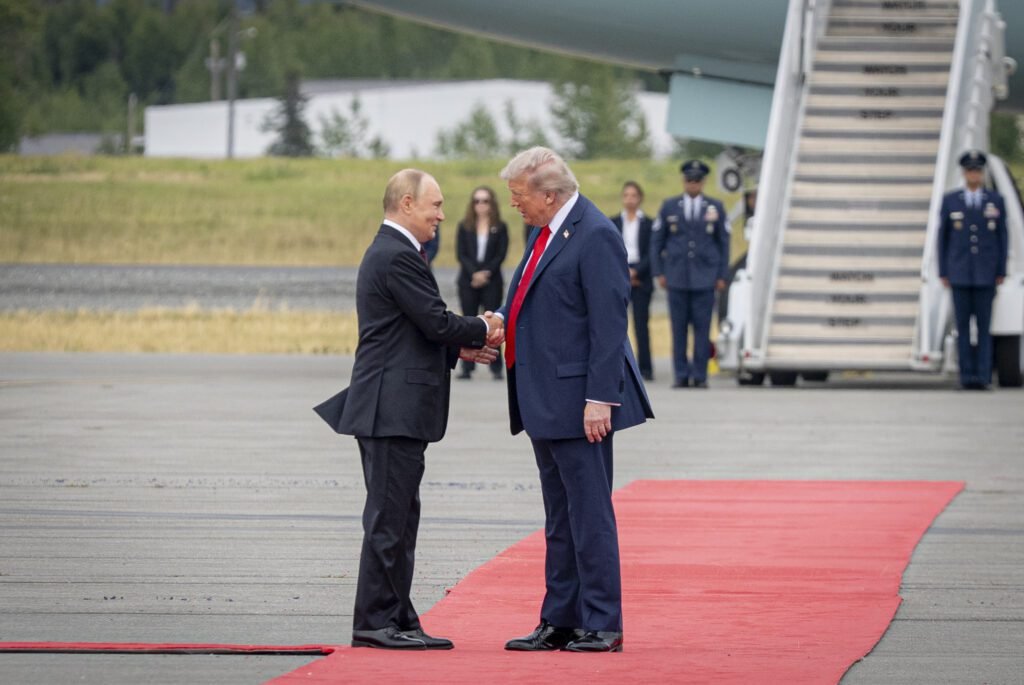
Analysts observe that the plan largely builds on Russia’s own demands. A Reuters investigation found that many clauses were lifted from a Russian 2025 “non-paper” leaked to the U.S. In the Kremlin’s view, the 28-point proposal aligns with understandings from Trump’s August 2025 Alaska summit—a stance that Russian Foreign Minister Lavrov insists must be honoured. In effect, Trump’s team is using hard bargaining tactics (pressured by a looming, self-imposed deadline) to force Ukraine to negotiate on Russia’s terms, a strategy Western experts warn could amount to Ukraine’s capitulation.
How would it be implemented?
The draft envisions a negotiated settlement of multiple complex issues, overseen by a U.S. guarantor. Key implementation steps would include an immediate ceasefire and troop withdrawals (Point 28 stipulates the ceasefire “will take effect immediately after both sides retreat to the agreed points”). A “Peace Council” headed by President Trump would legally monitor compliance (Point 27) and impose sanctions for violations. The plan also calls for a future Ukrainian constitution or statute enshrining neutrality (Points 7–8), and for European and U.S. forces (e.g., “European fighter jets in Poland,” Point 9) to provide security guarantees. In short, it relies on U.S. and allied enforcement (through sanctions, militarily if needed, and U.S. compensation mechanisms) to keep the peace. For example, Point 10 ties U.S. security guarantees to strict conditions: Ukraine must pay for them, and violating them (e.g. attacking Russia) would strip the guarantee, whereas Russian aggression would trigger a coordinated military response and snap-back of sanctions.
Where would it apply?
The plan addresses the full scope of the Russia-Ukraine war and related security architecture. Its geographic focus is Ukraine itself: it stipulates the status of specific regions (Crimea, Donbas, Kherson, Zaporizhzhia) and the Black Sea grain corridor.
For example, Point 21 would “recognise” Crimea, Luhansk, and Donetsk as Russian territory and freeze Kherson/Zaporizhzhia along the current front line, while Point 23 ensures free grain exports via the Dnipro and the Black Sea.
It also covers Europe’s security: it mandates a NATO-Russia dialogue on security (Point 4) and explicitly bars Ukraine from NATO membership (Points 7–8). In economic and global terms, it even calls for Russia to rejoin the G8 (Point 13) and for frozen Russian assets to be used to rebuild Ukraine (Point 14).
Thus, the plan spans from local ceasefires in eastern Ukraine up to transatlantic and global institutions. It would directly reshape the situation in the war zone (dictating which territory remains Ukrainian versus Russian) and also redraw Ukraine’s broader Western ties, banning it from NATO and setting terms for eventual EU membership (Point 11). In practice, it would apply to all parties to the conflict (Russia, Ukraine, U.S., NATO, EU nations) and require action by international bodies (e.g., a U.S.-Russia reconstruction fund, and an unspecified “Europe” to help rebuild Ukraine).
What do key stakeholders say?
President Trump expressed optimism, saying a deal was “very close” and urging a “final” resolution. He dispatched envoys to meet both Putin and Zelenskiy. The White House released a joint statement with Kyiv calling the Geneva talks “constructive” and stressing work would continue to uphold Ukraine’s security. Senate Republicans like Marco Rubio defended the draft as a “living document,” but others (e.g. Sen. Mike Rounds) complained it sounded like a Russian proposal. President Zelenskiy was cautious but engaged. He said Ukraine would “work on” the points with its European allies, and he insisted on a “dignified peace…with terms that respect our independence”. A former Russian diplomat told ABC News that the pared-down 19-point version is “less acceptable to Russia” than the original draft, suggesting Moscow may stall if too many demands are dropped.
EU leaders on November 22 issued a joint statement acknowledging “important elements” of Trump’s plan but warning it would “require additional work” to be acceptable. Notably, UK, French and German leaders quickly published their own 28-point counter-proposal that scraps forced land cessions, caps Ukraine’s army at 800,000 instead of 600,000, and leaves future NATO/EU membership open for discussion. EU Commission President von der Leyen flatly rejected any deal that would “leave Ukraine more vulnerable,” insisting on no “carving up” of Europe’s borders and that the EU be fully involved. NATO has consistently backed Ukraine’s defence and sought a Ukrainian-led peace. In late November, the Alliance held a press conference (NATO Secretary General Rutte) in which he praised Trump for energising the peace push (“for that, I want to commend US President Trump”), but he also warned that NATO will maintain “unwavering support to Ukraine.”
Overall, expert assessments converge on a stark conclusion: Trump’s draft peace proposal is widely seen as unrealistic, imbalanced, and politically untenable. Analysts from CSIS, IRIS and Chatham House argue that it cuts across core Western principles—ceding territory, limiting Ukraine’s defences and overlooking Russian accountability—making it more favourable to Moscow than any previous framework. Many warn that accepting such terms would amount to capitulation, while rejecting them could risk a loss of U.S. support and leave Ukraine more vulnerable. Taken together, the commentary suggests the plan is unlikely to gain meaningful traction. As one analyst put it, it is simply “another iteration of the merry-go-round,” a proposal destined to face strong resistance and little chance of implementation in its current form.