Day 18 Of The War
In my initial reflections on the ongoing Iran war, written on the night the US-Israeli strikes began, I proposed thirteen arguments containing several open questions to which I had no answers at the time. Many of those remain unanswered, while some have been answered in ways that, I think, should unsettle those of us in India. The war is now eighteen days old, Tehran has pulled the gun on the Strait of Hormuz, sending energy prices soaring, and two more of Iran’s senior-most figures have just been killed after the Iranian Supreme Leader Ali Khamenei was assassinated early on in the conflict. And the war is showing no indications of winding down. All of the above necessitates a second look at the ongoing war. In this article, I propose ten more reflections on the war.
1. The Continued Killing of Iranian Leaders Will Spike the Violence
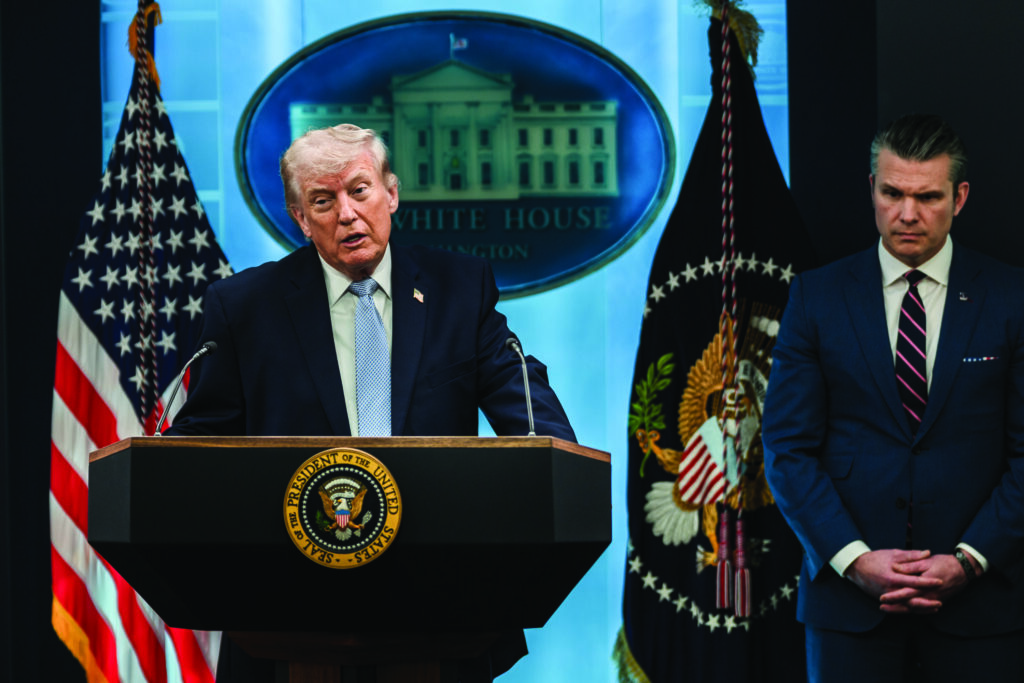
The killing of Iran’s security chief Ali Larijani and Gholamreza Soleimani, head of Iran’s Basij paramilitary forces, removes two of the regime’s senior figures with institutional weight, which is likely to further radicalise the regime rather than weaken its resolve. The regime now belongs to hardliners with little interest in an off-ramp. The new Supreme Leader, Mojtaba Khamenei, is untested, installed mid-war, and has everything to prove as and when his health allows him to make decisions. Trump calling him “lightweight” could only make restraint politically harder for him. In any case, by all accounts that I have seen, he is likely to be more hardline than his predecessor, his father, not less.
History tells us that the decapitation strategy does not work. Look at Al-Qaeda after bin Laden, the Taliban after Mullah Omar and in some ways even Iraq after Saddam: organisations fragment into more autonomous, less controllable cells and persist rather than disappear. And in this case, applied against an ideologically driven and militarily powerful revolutionary regime that has prepared for this war for years, if not for decades, the decapitation of its supreme political and spiritual leader will prove to be a mistaken strategy. The IRGC has publicly stated that most of its weapons cache remains intact and that what has been fired thus far dates from a decade ago. That may or may not be true. But the war is not seemingly winding down. And the hopes for a quick victory after the killing of Khamenei, and an outpouring of Iranian dissent on its streets to topple the regime, were deeply misplaced. We now know.
2. How This Ends Matters More Than That It Ends
All wars end; so will this. But how it ends matters. Let me offer three scenarios, each producing a fundamentally different Middle East. In the first one, Trump claims victory and moves on to other things. Iran almost certainly does not stand down, and the war continues without American direct attacks on Iran but with American defence of Israel. In the second, a negotiated settlement is arrived at, which produces a path to some stability. Iran has signalled openness to Hormuz talks. Israel has hinted at talks, too. But Tehran has little reason to trust a diplomatic process that was once used as cover for strikes already planned (the Geneva deception will not be forgotten quickly). Moreover, this will require concessions, which none of the three sides are prepared to make. In the third and the most undesirable scenario, a protracted attrition war unfolds with diminishing interest from the US, opportunistic strikes by Israel and occasional retaliation by Iran. Iran’s current asymmetric doctrine—degrade Gulf infrastructure, exhaust adversaries economically, use cheap drones to create constant disruption—is built for this kind of scenario. To me, it looks as if this may well be the most likely outcome.
A regime pushed to the wall does not calculate like a regime managing routine geopolitics
The wild card in each scenario is Israel. Iran has no reason to trust Israeli commitments, and Netanyahu’s domestic political incentives, as I will return to later, seek continuation rather than settlement of the war. My first reflections when the war started asked what would happen after the war. I am unsure if there is an “after” in the near term at all.
3. Hormuz: The Red Line That Wasn’t Supposed to Be Crossed
For years, there was a belief that Iran would never really close the Strait of Hormuz because the costs would fall on everyone, including Iran. This was a major error because high costs during a war do not create constraints but often add to permissibility. A regime pushed to the wall and fighting for survival does not calculate the way a regime managing routine geopolitics does, or the way the rest of us reason.
Iran has closed the Strait of Hormuz to its enemies. Twenty vessel incidents, hundreds of ships paralysed, oil prices surging, and even the ‘friends’ states of Iran aren’t sure if they should take the risk of crossing it at all—what if a random missile falls on it? Trump has publicly requested America’s allies to send warships, but found few takers—Australia, Japan, and the EU have stepped back. Iran’s foreign minister has since said Tehran is open to discussions with countries wanting safe access, which effectively converts Hormuz from a weapon to a bargaining chip. It would be interesting to watch what those negotiations involve. India is one of the countries that could get a deal from Iran, but would Iran want something in return?
4. The Economic Cost is Here
The Iran war has arrived in Indian households. Energy prices are rising, not in projections on charts but on the country’s streets. Chabahar, a billion-dollar investment three decades in the making, now sits inside an active conflict zone. Iran has not signalled closure of the port to India, and likely will not since the port serves Iranian interests as much as Indian ones. But operational normalcy there in the near future is a fiction for now. The IMEC corridor looks like a project from an impossible past travelling towards an impossible future. The corridor’s entire logic assumed a stable Gulf. That Gulf is gone. And with it goes the grand infrastructure vision.
Is it the uncomfortable lesson that alliances without domestic constituencies collapse under pressure?
The million-strong Indian diaspora in the Gulf is not watching this from a safe distance but is at the receiving end of the war, in real time, facing airspace closures, missile intercepts over Gulf capitals—my younger brother, who lives in Doha, calls me daily to tell me the horrid stories of living in the middle of a warzone. I jokingly tell him he should write a book when the dust settles. He might. But the dust needs to settle first.
5. The Indian Ocean Is Now Part of the Theatre of War
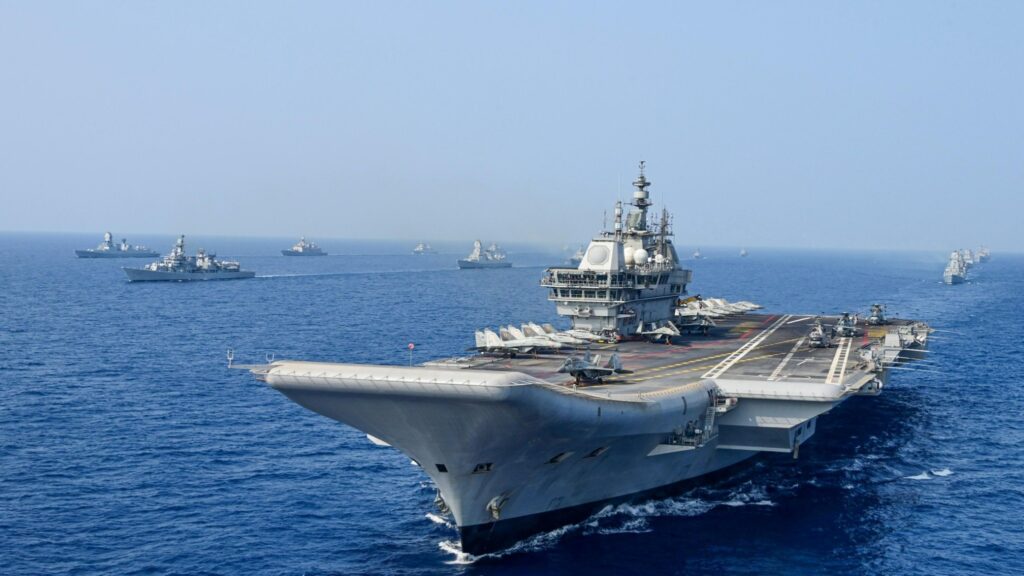
Is the Indian Ocean part of the theatre in which the Iran war is being fought? The sinking of IRIS Dena has settled the question. The Iranian frigate had just participated in Exercise MILAN 2026 and the International Fleet Review in Visakhapatnam—India’s flagship maritime diplomacy event, attended by 74 nations—when USS Charlotte hunted it down in international waters off Galle, Sri Lanka, and fired two torpedoes. Eighty-seven Iranian sailors were killed. The ship sank in under three minutes. The Iranian Navy chief had met India’s Chief of Naval Staff at MILAN just days earlier. Iranian FM Araghchi called the Dena “a guest of India’s Navy.” Admiral Arun Prakash, former Chief of Naval Staff, called it an act of treachery. He is right. Iranian and American sailors had marched together in a parade in Visakhapatnam, and within days, one had hunted the other down. A second Iranian vessel, IRIS Lavan, sought refuge at Kochi and was interned there. Analyst Brahma Chellaney put it plainly: Washington had transformed India’s maritime neighbourhood into a war zone. He is right.
Look at the broader picture. Dubai airport struck by drones, Fujairah’s oil zone attacked, Gulf states intercepting missiles daily, and over twenty vessel incidents recorded across the Persian Gulf, Hormuz, and the Gulf of Oman. Trump has publicly asked countries to send warships to secure the strait and found few takers for it. India, which has spent decades building its reputation as the Indian Ocean’s preferred security partner and net security provider, has been caught in a bind. The Indian Ocean has been forced into the war by the US. If the Quad was built to secure the Indo-Pacific, and that region has been forced to shift from a diplomatic theatre of mostly like-minded powers to an active American combat zone that hurts India’s interests, has the Quad too quietly sunk alongside the IRIS Dena? Has the United States, which was almost never sympathetic to India’s continental difficulties, now become a maritime problem as well for India?
6. The Regional Balance Of Power Is Being Reordered
This war will ensure that a Washington-aligned, stable Middle East remains a distant dream. It will likely produce ungoverned militia spaces, Chinese economic opportunism, and growing Russian relevance, inflated by high oil prices. China’s pattern is now consistent across Ukraine, Gaza, and Iran: maximum options, minimum commitment despite being a superpower in waiting. While being “highly concerned” is no strategic play, Beijing will be first in line when the reconstruction contracts are handed out by the Gulf states. Russia, facing reduced Western attention as Washington is split across two theatres, is a quiet beneficiary in the European theatre and will return to the Middle East once the dust begins to settle.
What my first reflections called the problem of headless militias will accelerate. Decentralised Shia networks across the region, unmoored from Tehran’s centralised control, will not be contained neatly within the Middle East. Their spillover will reach India’s extended neighbourhood over time, and what comes to our shores could take forms beyond the sectarian Shia identity. Delhi must find ways of getting into conversation to end the war and propose options for post-war settlement. If not, it will inherit the consequences of a regional order it had no hand in building.
7. What the War Has Revealed About International Politics
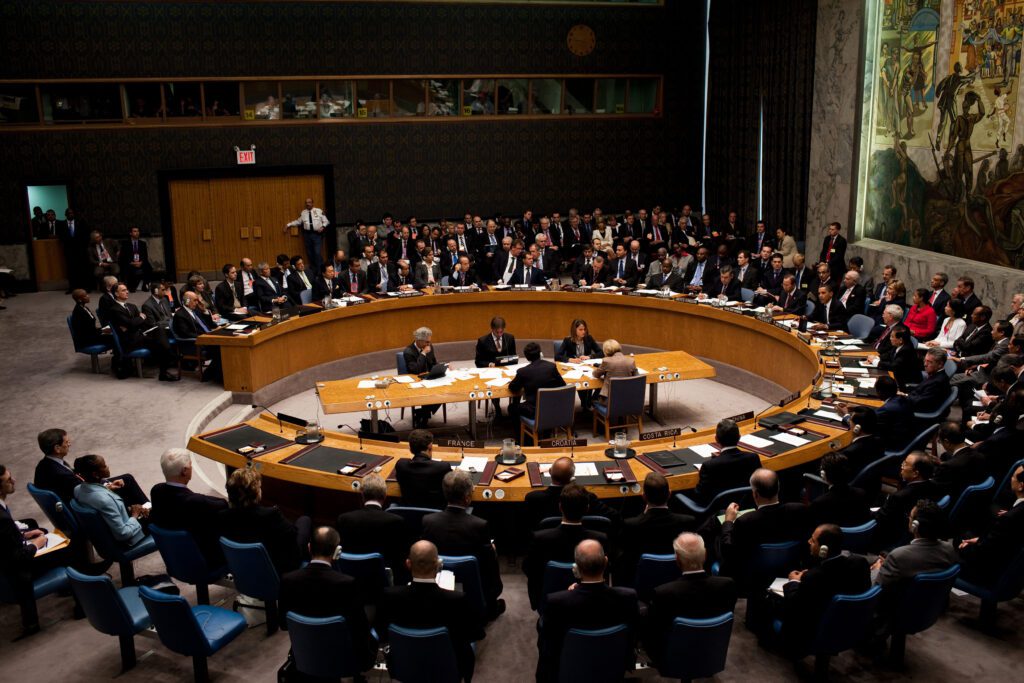
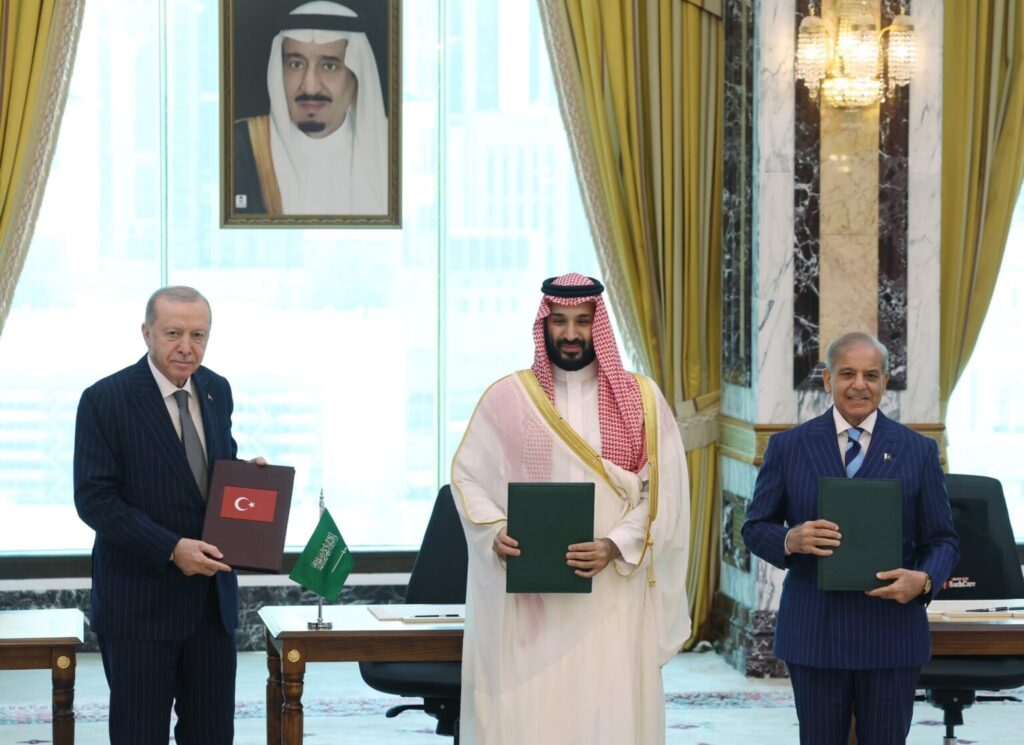
This conflict has been a stress test of the institutions and arrangements, security or otherwise, that the world relies on. State solidarity has not worked—Iran’s allies offered rhetoric, not action. Formal defence agreements have not worked—when Iran struck Saudi territory, Pakistan did not move. The Pak-Saudi pact, which caused anxiety in Delhi when it was signed, has been revealed as a mere diplomatic gesture. American alliance management has not worked either, given that Washington has not been able to produce a coalition even for a mission it initiated. Third-party mediation has not worked: Oman’s foreign minister declared peace “within reach” hours before the strikes began. And today, there are no peacemakers in the fray. Qatar had established itself as the region’s premier peacebuilding powerhouse. Now, with the region’s most critical backchannel actor under fire, the mediator itself has no one to turn to for its own protection. The biggest, but not the most surprising, failure has been the UN. The UN’s spectacular failure lies in the fact that no one expects the UN to do anything in this conflict.
One thing has clearly worked. The US-Israel relationship has held, delivered, and produced coordinated military action precisely because it is not merely a security arrangement but a politically embedded, domestically irreversible partnership driven by American domestic political calculations and the power of the Israeli lobby in the US. Netanyahu needs the US for the war, and Trump needs Israel for domestic reasons. The strategic and the domestic are fused in this case, making it dangerously durable. Is it then the uncomfortable lesson that alliances without domestic constituencies collapse under pressure? India has spent decades resisting formal alliances to preserve strategic autonomy. That instinct is not wrong. But this war has also exposed the limits of informal partnerships that carry no mutual obligation and no domestic weight on either side. More importantly, we in India must also note that arguments about solidarity disappear at the first sniff of war.
8. What Will Happen to BRICS?
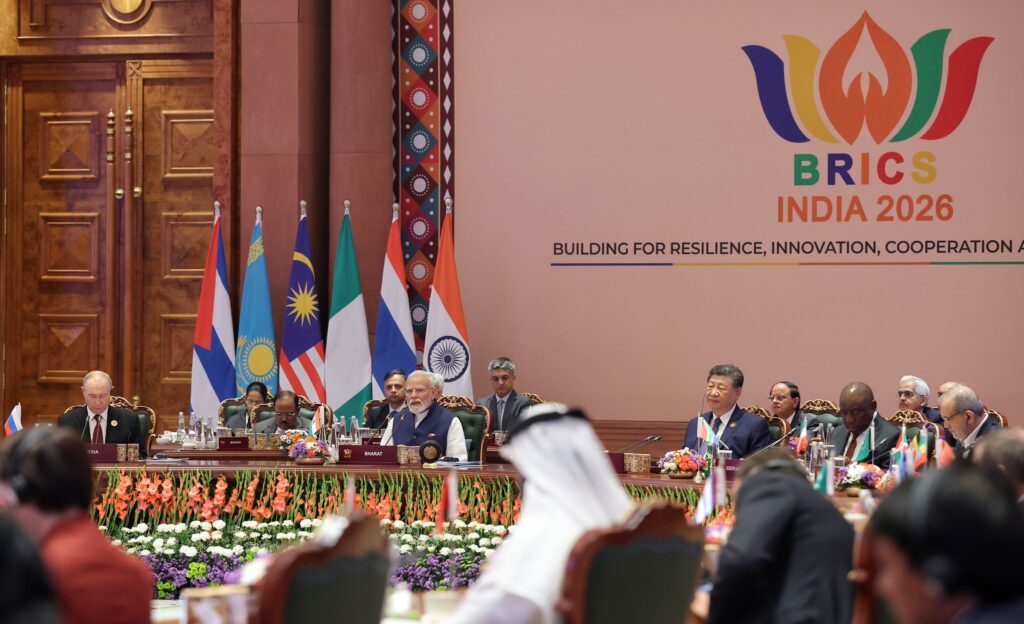
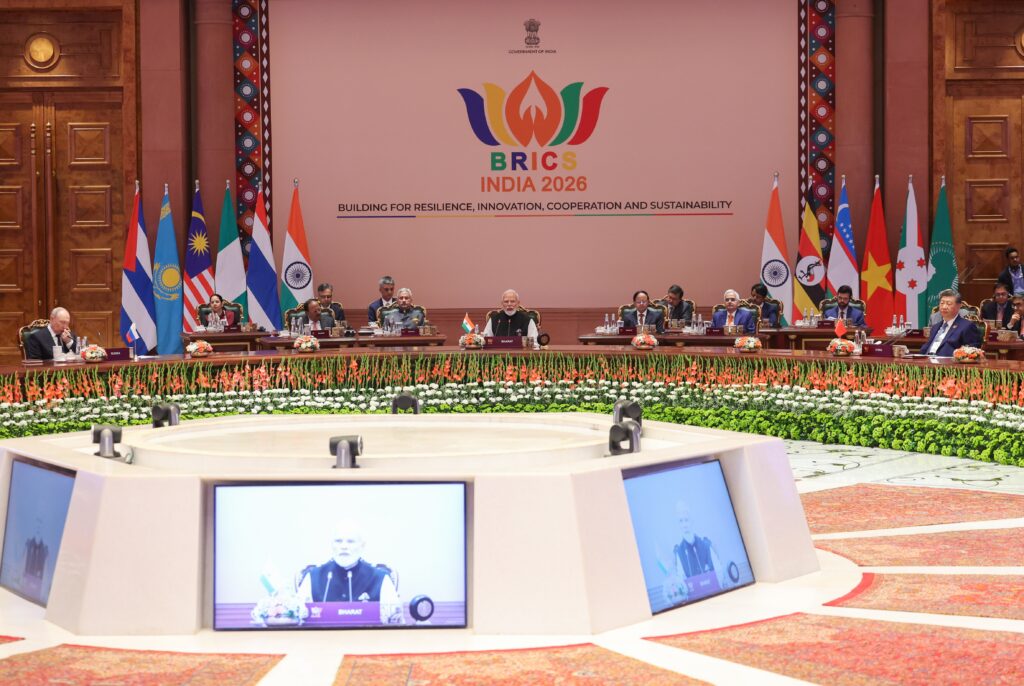
BRICS is in deep trouble at several levels. A BRICS member-state is being bombed by the world’s sole superpower. But that same BRICS member-state (Iran) is retaliating by striking Gulf states, several of which are also BRICS members. Iran’s missile and drone attacks on Saudi Arabia and the UAE—both inside the BRICS tent—mean the grouping is not merely watching one of its members being attacked from outside but its members attacking each other. The organisation has no mechanism, no language, no willingness, and no unity to deal with it.
The grouping that was supposed to represent a genuine alternative pole in world politics has been exposed: BRICS solidarity has a ceiling, and that ceiling is anything that risks a direct confrontation with Washington. Or any real confrontation at all. The political claim that BRICS is an alternative to Western-led unipolarity has been retired by events. What remains is the intent and language of multipolarity, which is not bad insofar as ideas are useful. BRICS is witnessing its own irrelevance. And unfortunately presiding over this wreckage, as the current BRICS chair, is India, which is on friendly terms with every party to the conflict: the US, Israel, Iran, Saudi Arabia, and the Gulf states. Being in this difficult spot is also an opportunity if Delhi would like to see it as such.
9. What the Wargames May Have Missed
In my opinion, three things were not adequately modelled in the simulations that may have been conducted on this war, including the ones I know of. First, Trump’s person and method: the willingness to use diplomatic negotiations as a deception instrument, to publicly humiliate a new head of state, and to demand allied participation in a war of his own making and to view this as some kind of game. The Geneva talks-as-cover-for-strikes was not a scenario most analysts seriously entertained. Second, Netanyahu’s incentive structure: a leader with active domestic legal jeopardy and a political base that rewards the continuation of war does not calculate the way a leader fighting a conventional war does with a normal incentive structure. Third, I think the analytical community treated Iran’s Hormuz threat as a deterrent too costly to exercise until, of course, Iran exercised it. The error was applying rational-actor cost-benefit logic to a regime fighting for survival or acting on the basis of its ideological predilections.
10. What India Must Do Now
Delhi’s studied ambiguity is running out of runway. India’s Day 1 posture—two phone calls, one message, all three doors kept open—was a reasonable opening move for want of a better strategy. That was then. On day 18 of the war, Delhi needs new strategies. As I argued in a recent column in Hindustan Times, clarity without leverage is posturing, not principle. Can studied silence without a plan help our cause?
There are several things India can still do. Let me highlight four things. First, allow the Indian Parliament to speak a different language. There is a ready template. The current government could allow Parliament to express concern about the violation of Iran’s territorial integrity without the executive formally condemning the strikes. It is a precedented and measured path. Read my latest Hindustan Times column for more on this.
Second, maintain a quiet channel to Tehran. Whoever is functionally running Iran now, and it seems the IRGC increasingly is, India needs a line open. Back-channels matter most when official ones are stressed. The reality at the moment is that we need the Iranians as much as we need the Americans, thanks to the trouble in Hormuz.
Third, take a specific public position on Hormuz and get international support for this. Not on who is right or wrong in the war but on freedom of navigation in the strait, appealing to Tehran’s goodwill and future dividends. That is a position India can hold without implicating itself in the larger conflict.
Fourth, connect the dots to the northwest frontier. The instability being generated in the Middle East will spill over to India’s maritime sphere of influence. So Delhi must find partners willing to work with India on Hormuz access, Iran outreach, and broader regional maritime security.
My first set of reflections ended with the observation that India must think clearly and urgently. Eighteen days on, that urgency has only grown.