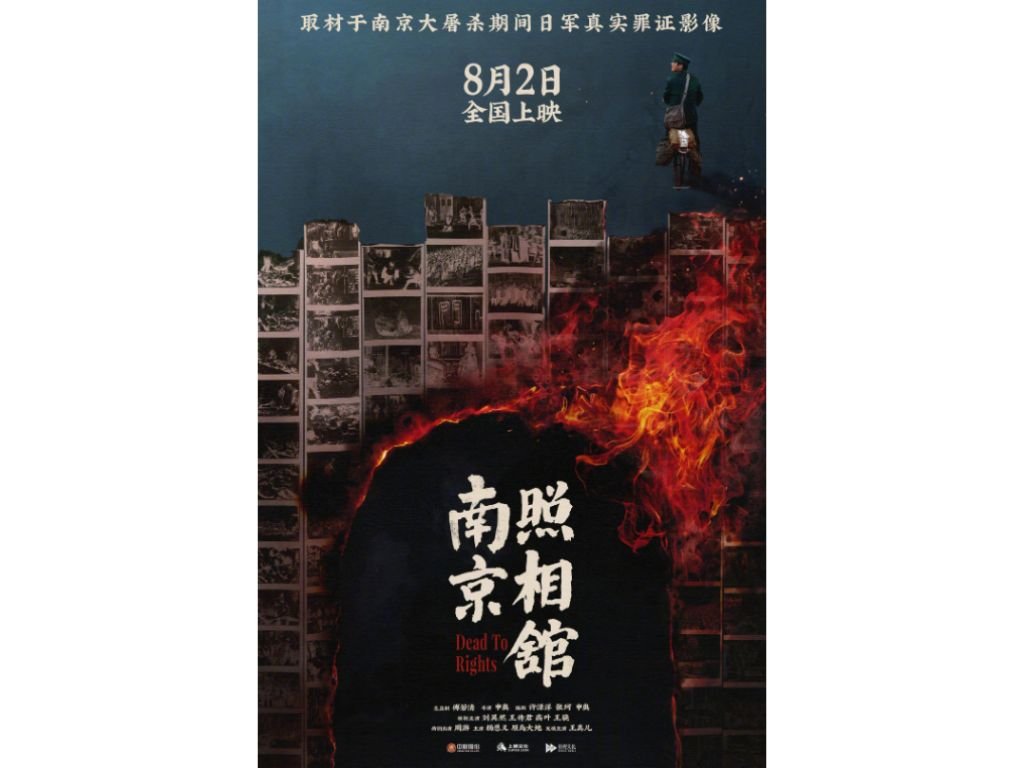
The Nanjing Massacre was one of the most devastating episodes of the Second Sino-Japanese War. In December 1937, the Imperial Japanese Army (IJA) advanced from Shanghai towards Nanjing, believing that capturing the capital would cause the total collapse of Chiang Kai-shek’s Nationalist government. The film situates itself around a lesser-known yet profoundly consequential act of resistance—the story of 15-year-old Luo Jin, a photo studio apprentice at the Huadong Photo Studio who, upon seeing images of atrocities, secretly made extra copies of 16 photographs and compiled them into an album. These images were later presented at the Nanjing War Crimes Tribunal as “Jing” Character No. 1, contributing to the conviction of General Hisao Tani of the IJA 6th Division and standing as some of the most compelling visual evidence used to establish responsibility for the atrocities committed.
Directed by Shen Ao, the historical drama follows Ah Chang, an ordinary postman who is mistaken for a photo studio employee by the Japanese soldiers. As the city descends into chaos, Chang is forced to cooperate with Japanese military photographer Hideo Itō in producing propaganda images while staying in the studio, where he encounters families and other refugees hiding beneath its floorboards from occupying soldiers. Realising that the photos are “dead to rights” proof of the atrocities, the group decides to preserve the negatives through acts of sacrifice. The narrative culminates in a high-stakes escape to ensure the photographs reach the Nanjing Safety Zone, allowing the truth to survive even when its witnesses do not.
Dead to Rights was selected as China’s official entry for the Best International Feature Film at the 98th Academy Awards. Through its meticulously constructed 25,000-square-meter replica of 1930s Nanjing, layered visual metaphors, and the contrasting colour palettes resembling aged silver-halide photographs, the film evokes the texture of archival memory while remaining immersive and compelling.